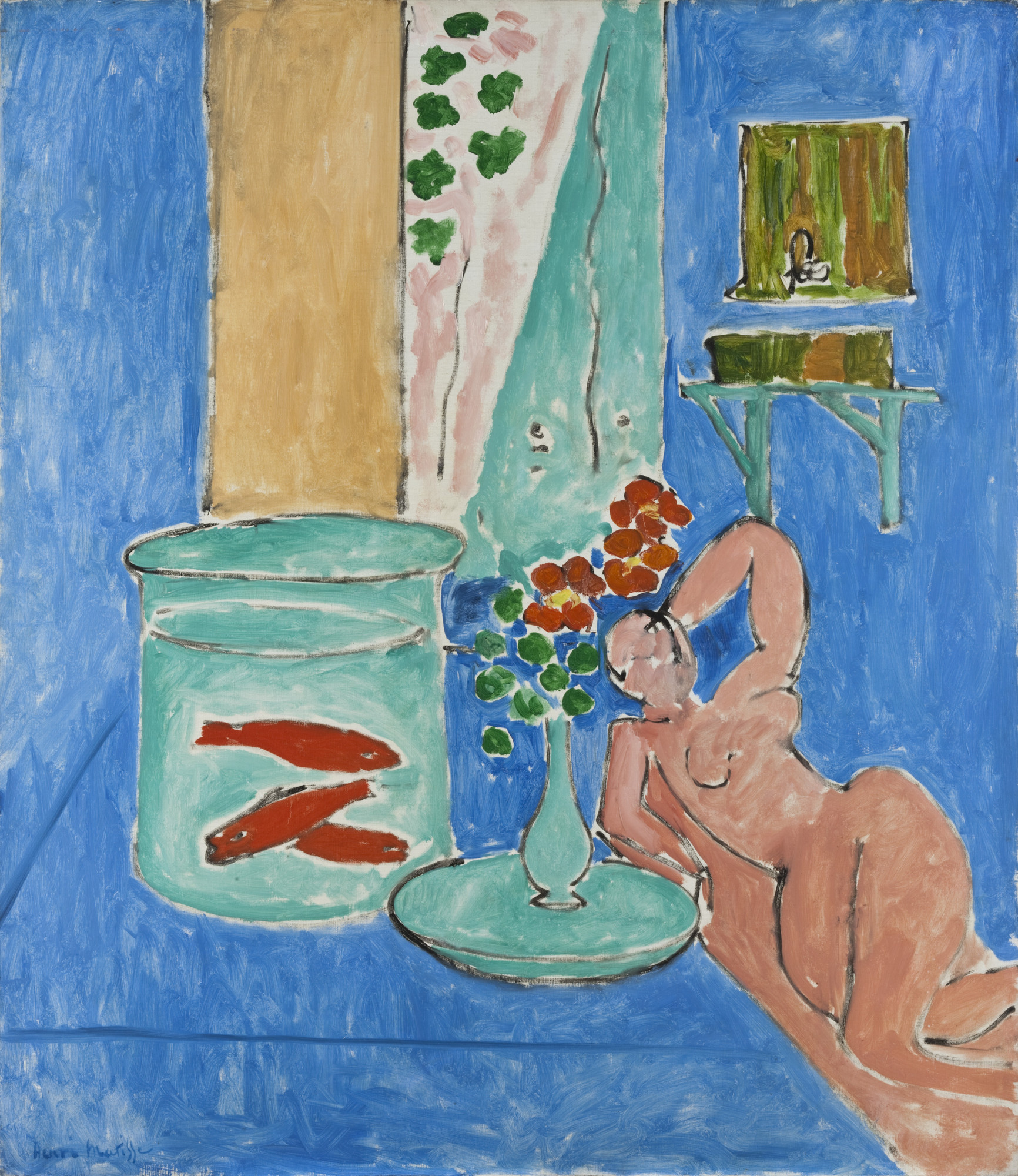
Curator, Ann Temkin: The studio was a really important theme to Matisse from his earliest days as a painter. Goldfish and Sculpture depicts a wall in Matisse's real studio, and this studio was in the Parisian suburb of Issy-les-Moulineaux. It was the first studio that Matisse had built purely for himself.
What's quite beautiful is that he uses that blue paint to basically take over the picture. The wall, the floor, the table, it's all blue, but a very kind of thin washy blue that just envelopes everything except the goldfish, except the sculpture, except the vase of flowers and a few other details.
He always was grounding his work in observation. So whether it was the observation of his studio or the observation of a human being, he needed that and wanted that starting point. But then as his work became more and more adventurous during that first couple of decades of the 20th century, Matisse and so many others were saying, in part, because photography now did exist, it's not the job of the artist to tell you what the world looks like. It's the job of the artist to create something out of his or her imagination that's brand new.
So we see like this moment when Matisse has almost liberated himself from needing to have color describe a certain part of a room or a certain part of a still life and can just really be so inventive with the way he imagines a space.