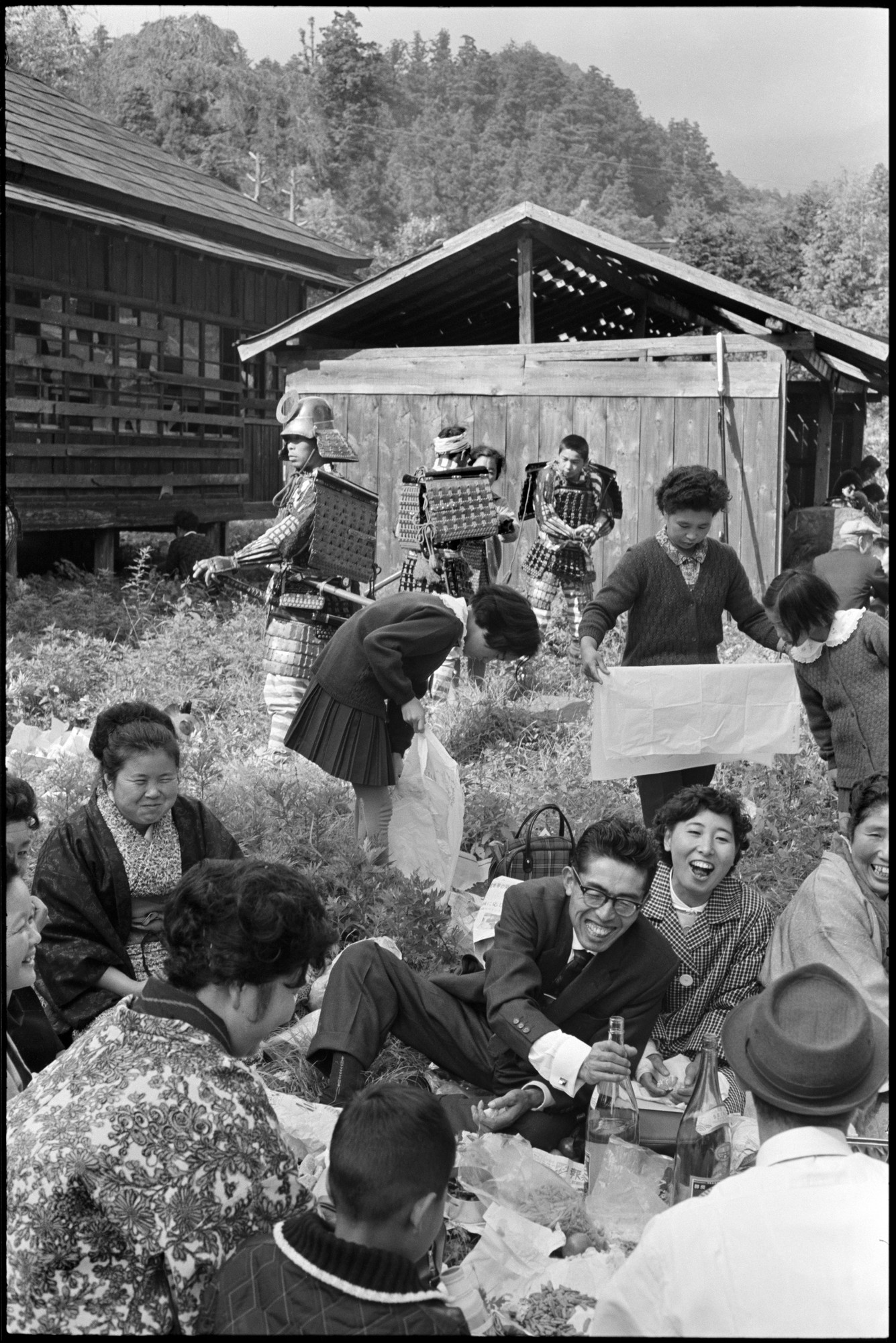
Curator, Peter Galassi: It was very surprising to me, as I worked on the project, to find towards the end of his active career in the 1960s, in some cases, the work got more complicated. And flexible. Less simplified and controlled. And I think that part of the reason that may have happened is Cartier-Bresson's responsiveness to the changing contemporary world.
This picture made in Nikkō, Japan, in the mid-60s, and the other pictures around it, made in Mexico, the United States, France, all represent contemporary leisure. The old world of work is gone. Now we're all comfortable and we can relax. And yet it's not a very attractive world.
There are also the ironies of this world, especially in the Japanese picture, where it's a gathering for a historical recreation of scenes from the time of the Samurai, but it's time for the lunch break. And so you have the Samurai characters in costume in the background, and then the little picnic in the foreground.
Nearby you have a picture made in Los Angeles where the American cowboy, the symbol of pioneering, adventure, and grit, has ended up in the parking lot.