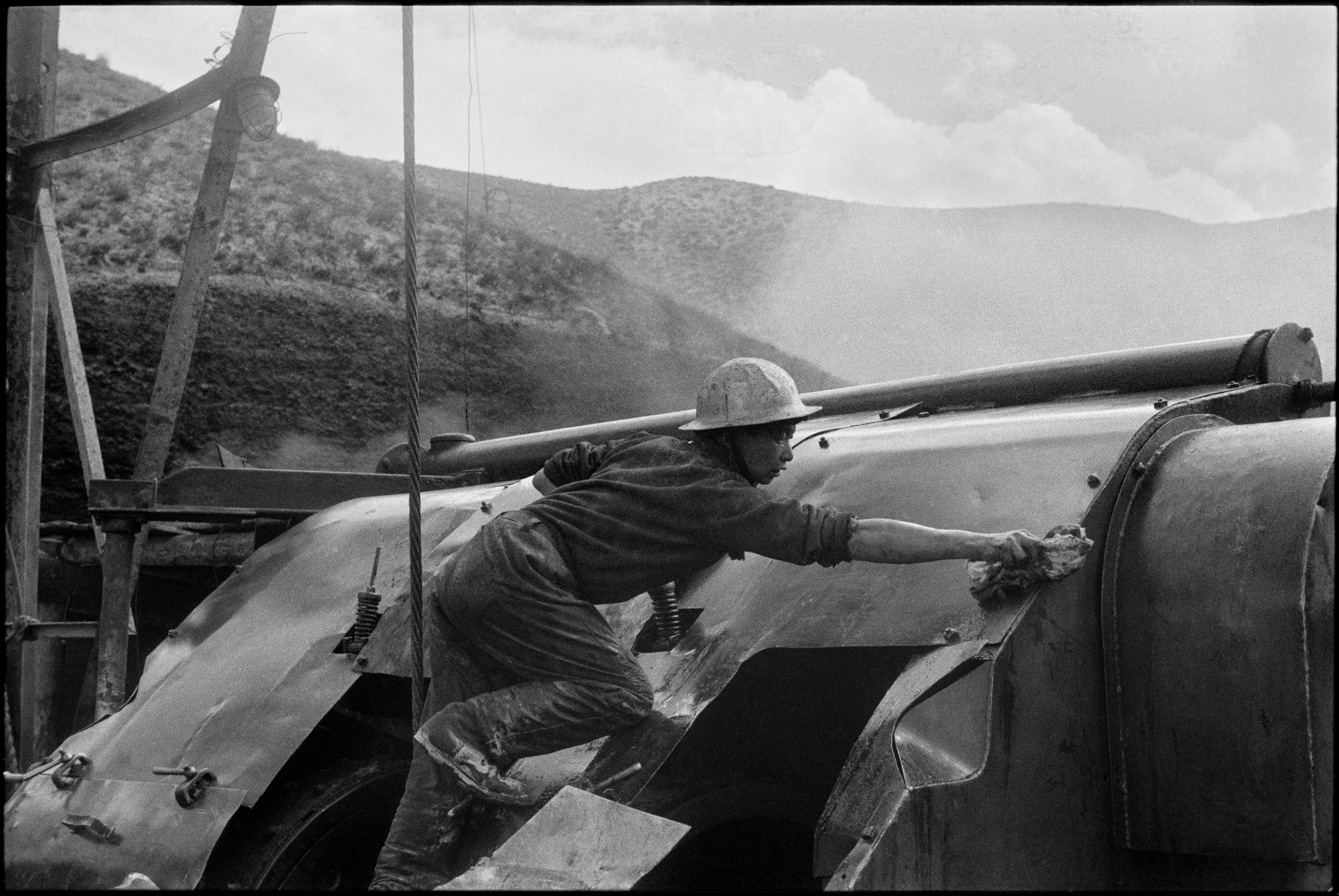
Curator, Peter Galassi: This is a picture of a Chinese oil rigger in the Gobi Desert, made in 1958, in the course of a four-month trip that Cartier-Bresson made to China, to photograph the Great Leap Forward. The Great Leap Forward was Mao Tse Tung's program of forced industrialization.
Cartier-Bresson was actually very frustrated that he was so much under the thumb of the censors and managers who limited where he could go, and what he could photograph. Even with that constraint, the richness of the factual document, both in terms of the concrete things that he photographed, and in terms of the extensive captions, which he wrote himself is absolutely astonishing. And that's what this whole section of pictures is about, the standard product of photojournalism during this great time of the magazines, after the war, before television really took control, wasn't the individual picture. It was the picture story. This is a very good example of how Cartier-Bresson really mastered that form of building up a story from a lot of little individual observations.
He was a fabulous photographer of people at work. His ability to evoke not just the physical labor, but the complete engagement of the individual worker with his or her machine is a theme that runs throughout his post-war work, but is also particularly rich in this Chinese body of work.