Curator, Peter Galassi: Cartier-Bresson made two extended visits to the Soviet Union. The first was in a sense news in its own right, because he was the first Western photographer to be admitted to the Soviet Union after Joseph Stalin died in 1953. [He] didn't get permission to go until 1954. But that was a very big deal, because by then the Soviet Union was a substantial mystery to the West. In the vitrine below the Soviet Union pictures is the complete first story that he did in Paris-Match about the people of Moscow.
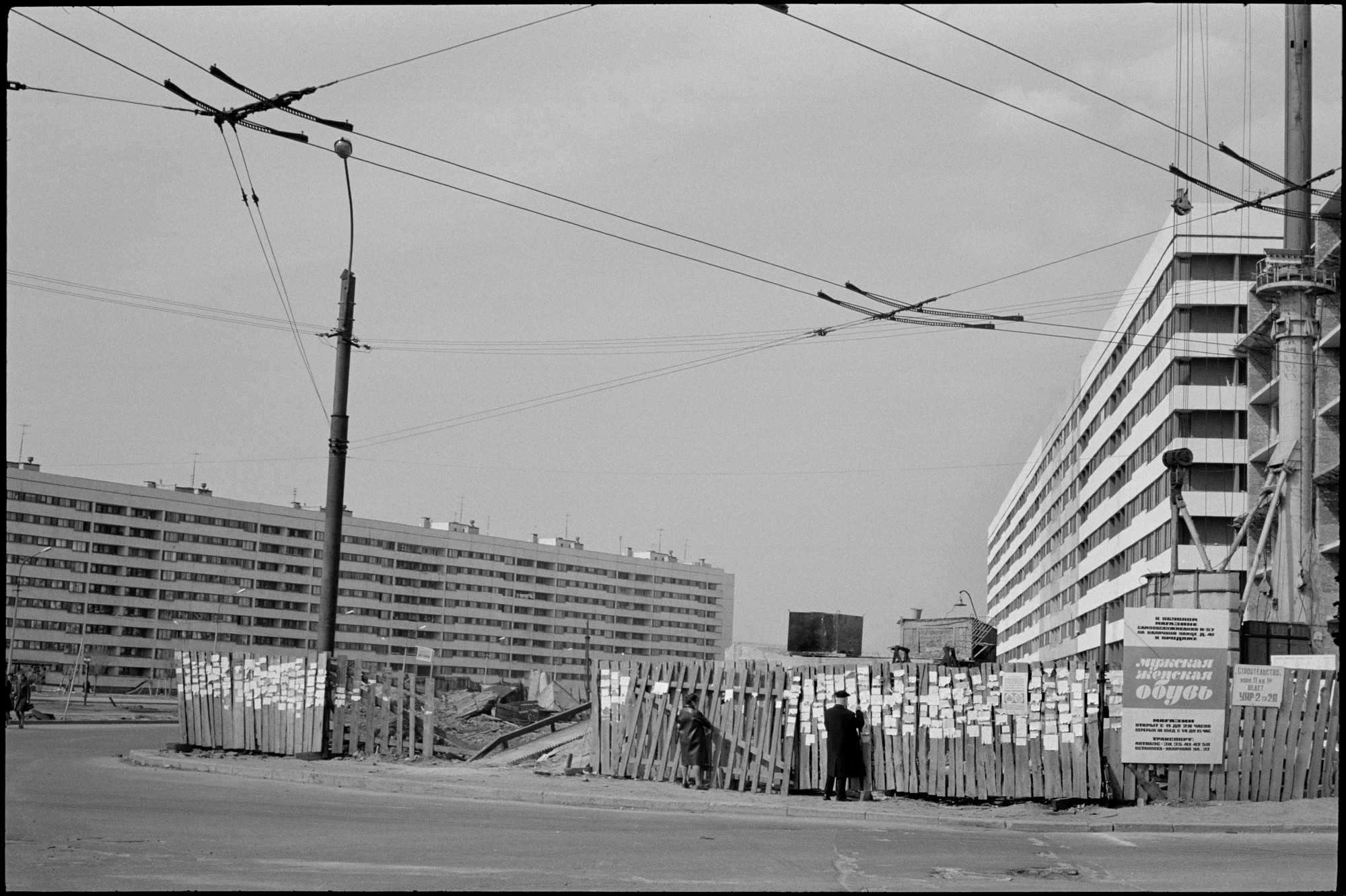
This picture and the handful of pictures around it, are representative of a very different note that emerges in his work of the early '70s, compared to what he'd done in the Soviet Union 20 years earlier. Which is the description of a, kind of grim, bleak, situation, that hadn't really appeared in the earlier work. And this picture was made in what then, of course was called Leningrad, and now again is called St. Petersburg.
Here we are in obviously the new part of Leningrad. Perhaps the fences are around what is still a construction site. On the fences are little notices tacked up that are offers to trade living quarters. Because all of these living quarters are assigned by the state, but it was permitted that if you found somebody who wanted to trade with you, that they could, and so the whole modernist looking style of the architecture, the sort of forward looking, ideal Communist state, is contradicted by the old fashioned wooden palings and then all these little notices.