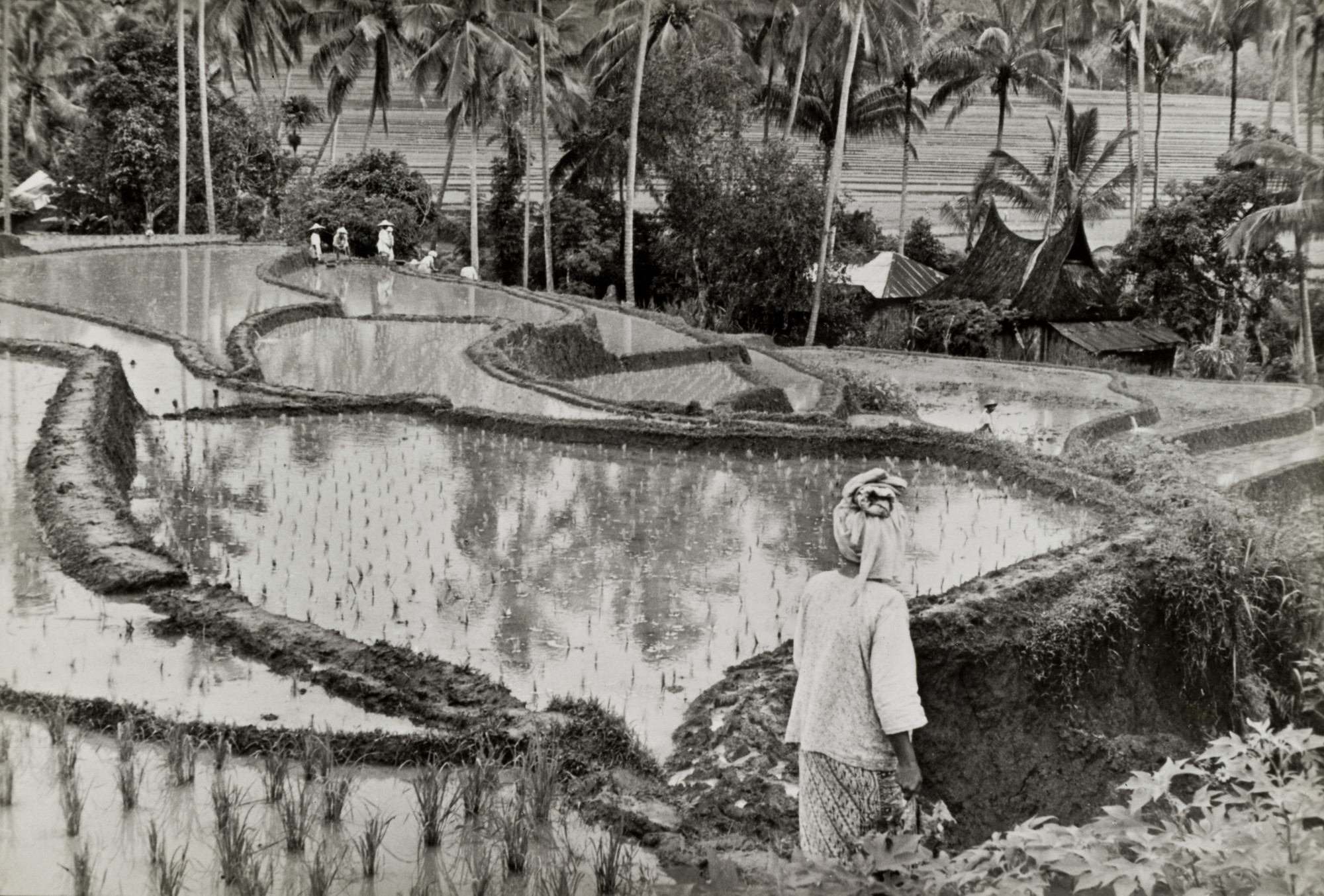
Curator, Peter Galassi: Many of Cartier-Bresson's best pictures could have been made hundreds of years ago. And this picture, made on the Island of Sumatra, in what was just then becoming the new nation of Indonesia in 1950, is a perfect example of Cartier-Bresson's loving descriptions of pre-modern life.
Cartier-Bresson was married for the first time in 1937 in Paris to a Javanese dancer. This place is where her mother had been born. So he also had a personal connection to this particular landscape.
Every now and then, in the course of the exhibition, you'll come across a landscape. But I think that it's probably true that in Cartier Bresson's entire career, he never made a single picture of nature untouched by man. Because his fundamental subject was the current state of civilization, wherever he happened to be. The ways that people have invented to live together, culture, society, civilization, that was fundamentally his theme. And part of what is so extraordinary about his work is that he was so responsive to the very different manifestations of civilization.