Curator, Alexandra Schwartz: Alina Szapocznikow was one of the most important Polish artists of her generation, and of the post-war period. She had quite a traumatic childhood. She grew up in Jewish ghettos in Poland and then was an Auschwitz survivor.
She is concerned in her work with the body. In her sculpture, she often made casts from her own body and from the bodies of others. She deals with biological and carnal themes. She's often talked about melding a kind of dark surrealism, with humor, a certain kind of irony.
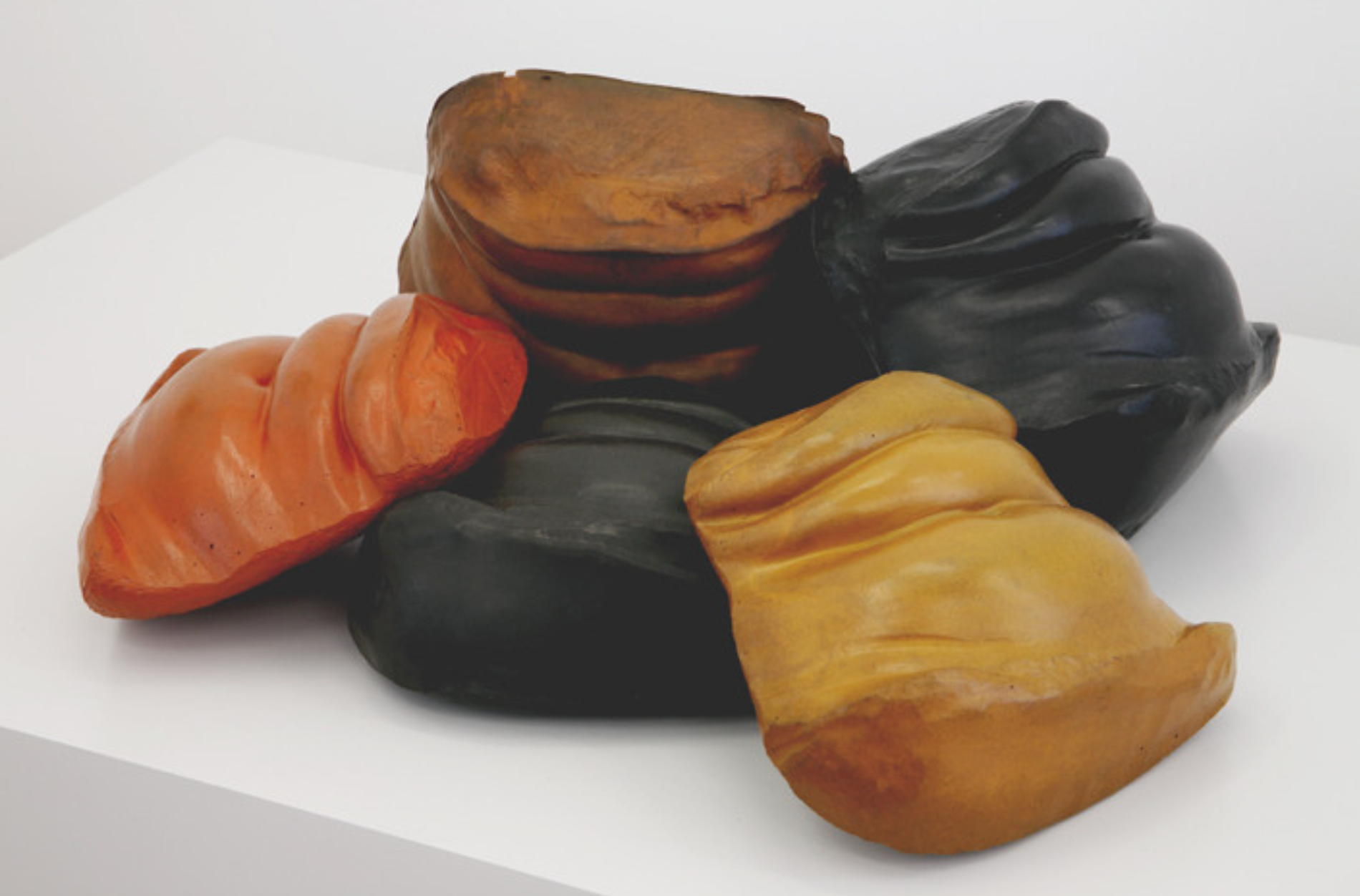
Belly-Cushions from 1968, were cast from a female body. And if you look at it, you can kind of see the folds in a woman's stomach, even though at the same time it's this very abstract form. So she's taking the body, a very familiar form, and making it new, making it strange and disorienting by casting it in these new materials and in different colors.
Glenn Lowry: In the drawings and prints hanging nearby, Szapocznikow addressed similar themes.
Alexandra Schwartz: The drawings, they’re basically abstract, but you can pick out forms that look as if they're coming from the human body. So for instance, in one you have these forms that sort of are reminiscent of a head, maybe of a knee joint, or you can imagine some musculature in those forms. But it's impossible to really point out any recognizable forms.