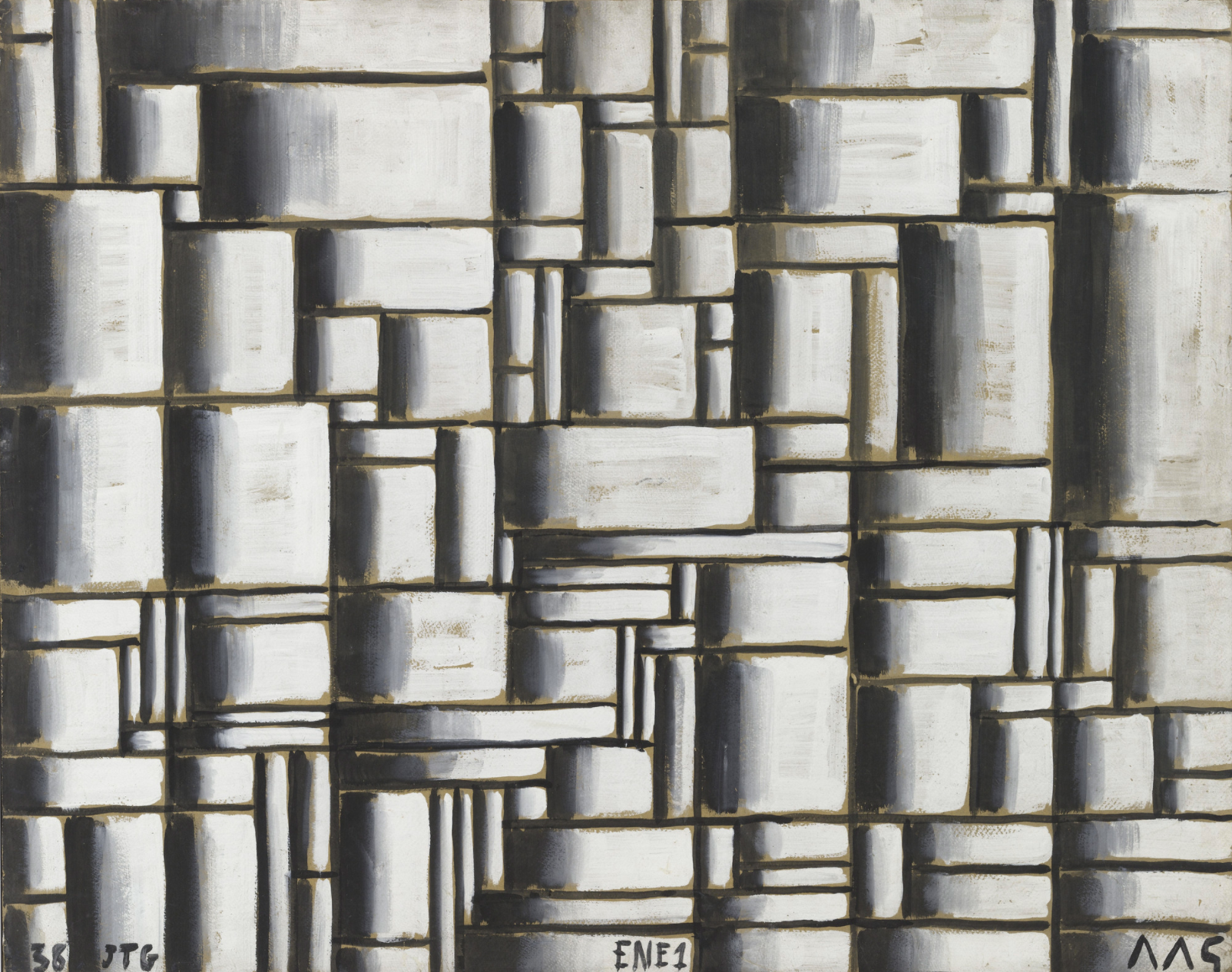
Narrator: Welcome to Joaquín Torres-García: The Arcadian Modern. Born in Uruguay in 1874, Torres-García lived in Europe for most of his adult life during a period of great artistic and political upheaval in the West.
Luis Pérez-Oramas is the Estrellita Brodsky Curator of Latin American Art at The Museum of Modern Art:
Luis Pérez-Oramas: Torres-García was aware that art belonged to something that is always present, something that he would call an anonymous rule that belongs to everybody, and to everywhere. He was also aware that [art] takes a very specific shape at any given moment. He was looking for those eternal elements that are present in art in the moment he was living in the 20th century.
Narrator: Unlike many of his contemporaries, Torres-García embraced the past. The simple materials, rough textures, and unstable constructions he used reflect this fascination. He also believed that art should combine both abstract and recognizable forms.
Curatorial Assistant Karen Grimson:
Karen Grimson: He was attempting to create something that refused external influences and rather, followed strictly the artist's engagements with his place and time.
NARRATOR:** **Torres-García imbued his art with these contradictory impulses, producing a body of work that reflects his ideal—or Arcadian—vision combining the past, present, and future.
MoMA Audio+ is sponsored by Bloomberg.