Curator, Paola Antonelli Buildings also need protection just like human beings, and many designers and architects have been looking for ways to protect buildings not only from bombs, but also from much more normal occurrences, like winds, like excessive sun, like cold.
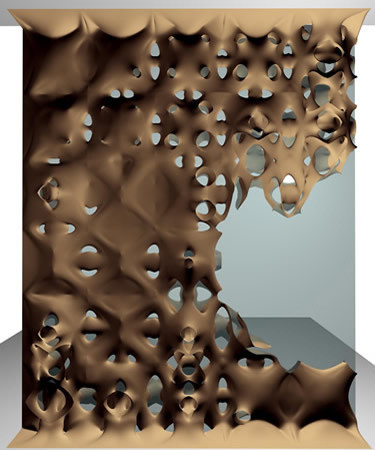
Architects Kol/Mac, Sulan Kolatan and Bill MacDonald, have devised this new type of facade, that can be either retrofitted to existed buildings, or that can be used for new buildings.
It is made of a very sturdy, hard and resistant material called Corian, a material you might already be familiar with because it's used in kitchen counters all over the world. The way the facade is designed and manufactured provides it with a lot of excessive surface. You can see here lots of nooks and crannies, that enable this facade to dissipate strong winds, for instance, or sunlight, or even bomb blasts.
It is definitely a defensive barrier, but at the same time it's also a crafted barrier, and it is beautiful. That's what designers do, they provide grace under pressure, so a defensive barrier becomes almost a decorative element in the hands of talented architects.