
Front / Recto
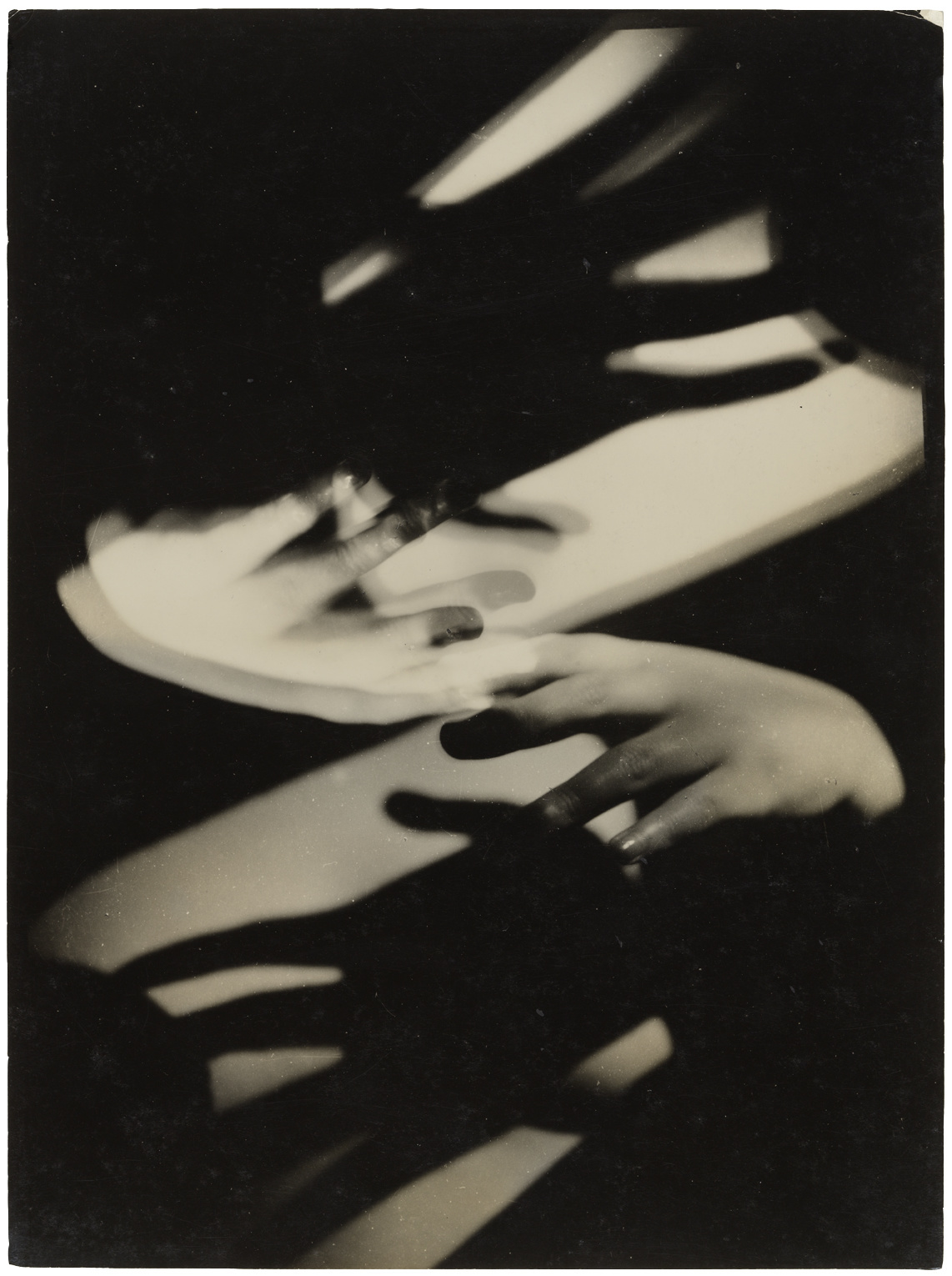
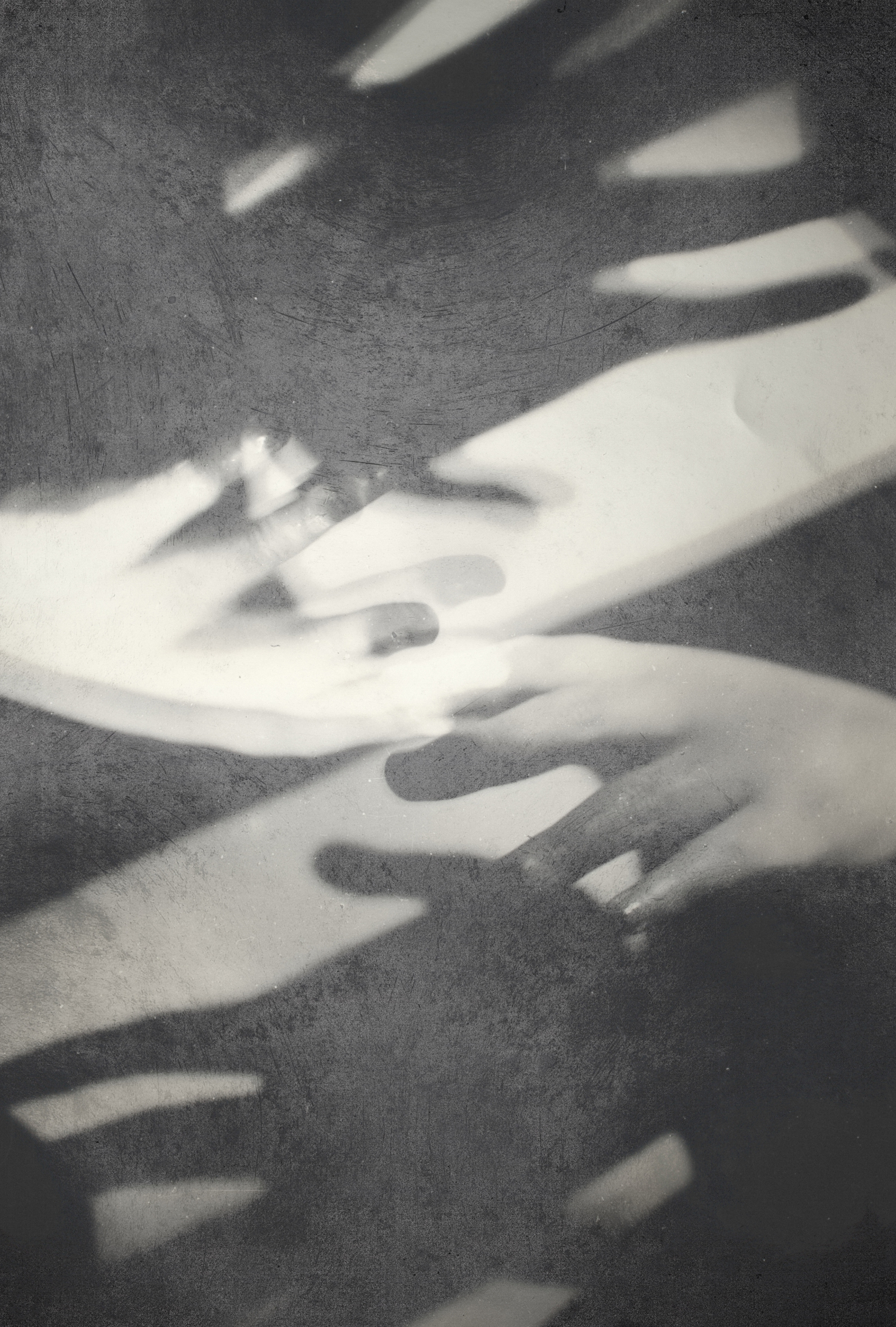
- Title Construction of Hand
- Negative Date 1932–41
- Print Date 1932–41
- Medium Gelatin silver print
- Dimensions Image 11 7/8 × 8 7/8" (30.2 × 22.5 cm)
- Place Taken Tokyo
- Credit Line Thomas Walther Collection. Gift of Thomas Walther
- MoMA Accession Number 1859.2001
- Copyright © 2015 Estate of Osamu Shiihara, care of Tomatsu Shiihara, Japan
-
Description
Although Osamu Shiihara never lived in Europe, he produced a body of Surrealist-inspired photographs in direct response to both the European avant-garde and Surrealism, which was mostly European-based. Trained in Western painting at the Tokyo School of Fine Arts from 1928 to 1932, Shiihara took up photography after he returned to his native Kansai region, in western Japan. In the early thirties, he became a member of the Tampei Photography Club (so named because its members purchased chemicals from the photographic division of the Tampei Pharmaceutical Company). This amateur group, devoted to experimental ideas in photography, was based in Osaka, Japan’s second largest city and one the most active regions in photography. Clubs such as Tampei, along with the proliferation of photography magazines and journals such as Asahi Camera, Koga, and Photo Times, encouraged the blossoming of new tendencies in photographic expression in Japan in the late 1920s and 1930s, but it was the groundbreaking exhibition Film und Foto, presented in Tokyo and Osaka in the spring and summer of 1931, that truly catalyzed these new ideas. Originally mounted in 1929 in Stuttgart, the exhibition featured over 1,100 works by leading European and American modernist artists.
As a member of the progressive Tampei Club, Shiihara mastered new approaches to photography, especially the experimental techniques favored by the group. The club members created images using new photographic techniques such as autotype (a Pigment process), penduram, lightgram, floatgram, Collage, and Photomontage. Shiihara explored a number of techniques, such as Solarization, Double Exposure, Photogram, and a combination of drawing and photography, which he called photo peinture. Although it is unclear exactly which techniques Shiihara employed to create Construction of Hand, the final image was almost certainly made through a combination of studio and darkroom manipulations. Other photographs by Shiihara in MoMA’s collection were created through double exposure, and it is likely that the artist combined two negatives to create the striking motif of the doubled hands. The deep shadows of the image are further emphasized by Shiihara’s choice of paper, a single-weight paper probably made between 1932 and 1941 that was Ferrotyping">Ferrotyped to achieve the maximum aMount of reflective gloss on its surface. The artist’s masterful manipulation of multiple techniques to create this dizzying and elegant image emphasizes that, for him, photography was above all a medium of light. Although dislocated from an immediate Surrealist context, Shiihara’s adoption of Surrealist techniques is a testament to the far reaches of experimental photographic vision.
—Hanako Murata, Eva Respini
Back / Verso
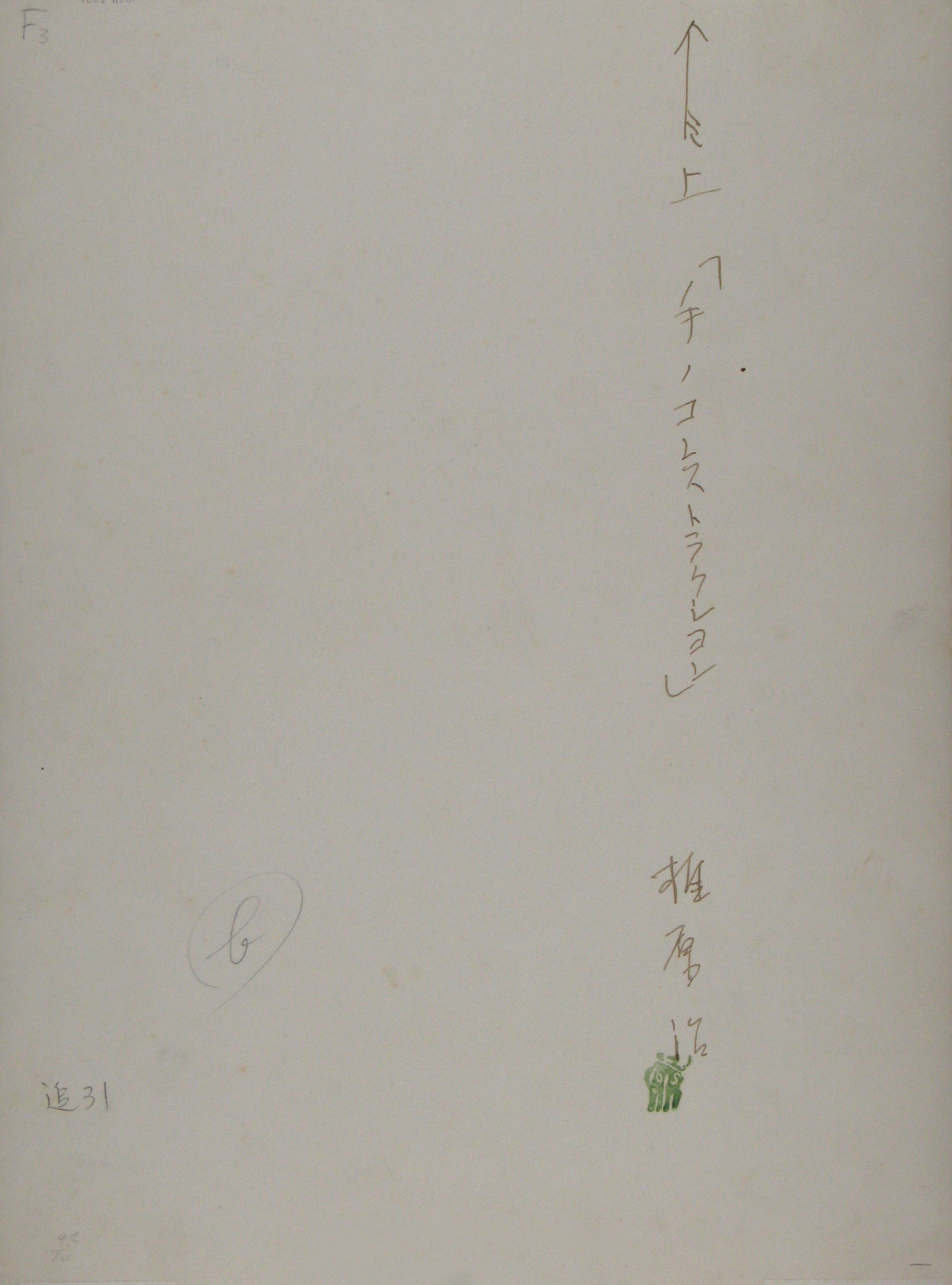
- Mount Type No mount
- Marks and Inscriptions Inscribed in pencil on sheet verso, top left: F3. Inscribed in black ink on sheet verso, right: [↑/up/Japanese characters reading "Construction of Hand/Shiihara Osamu"]. Inscribed in pencil on sheet verso, left: b [circled]. Inscribed in pencil on sheet verso, bottom left: [Japanese character reading "add"] 31. Stamped in green ink on sheet verso, bottom-right corner: OS [inside renderings of two green human figures]. Inscribed in pencil on sheet verso, bottom-left corner: 4.2/10.
-
Provenance
The artist, Osaka; by inheritance to the artist’s son, Tamotsu Shiihara, Osaka, 1974 [1]; to Priska Pasquer, Photographic Art Consulting, Cologne, 1998 [2]; purchased by Thomas Walther, June 22, 1998 [3]; given to The Museum of Modern Art, New York, 2001.
[1] MacGill/Walther 2001(4), p. 13; and Priska Pasquer, letter to Maria Morris Hambourg, October 28, 2013.
[2] MacGill/Walther 2001(4), p. 13; and Pasquer, letter to Hambourg.
[3] MacGill/Walther 2001(4), p. 13; and Priska Pasquer, Photographic Art Consulting invoice, June 22, 1998.
Surface
- Surface Sheen Glossy
- Techniques Retouching (additive) Enlargement Ferrotyping
-
PTM
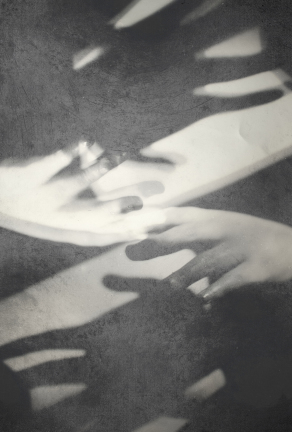 Detail view of the recto of the artwork made using reflectance transformation imaging (RTI) software, which exaggerates subtle surface details and renders the features of the artwork plainly visible. Department of Conservation, MoMA
 -
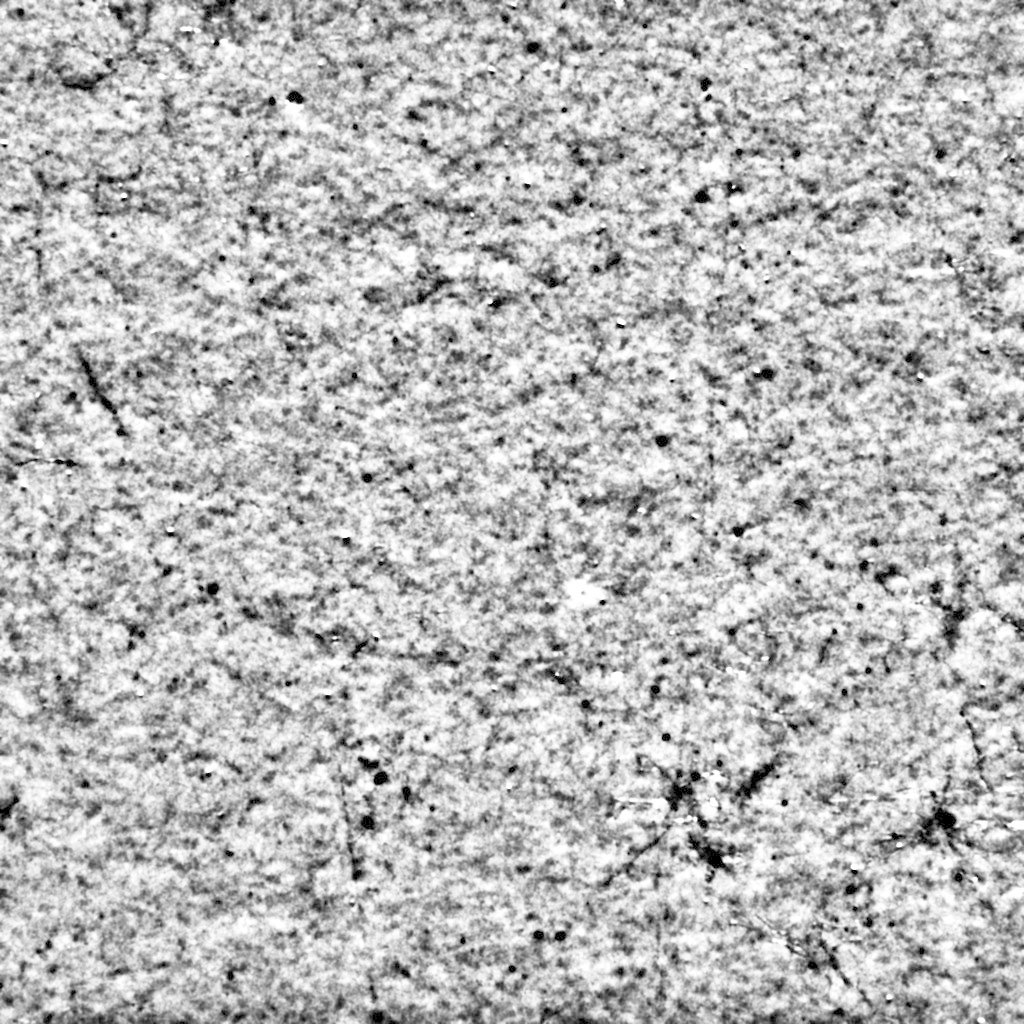
Micro-raking
 Raking-light close-up image, as shot. Area of detail is 6.7 x 6.7 mm. Department of Conservation, MoMA
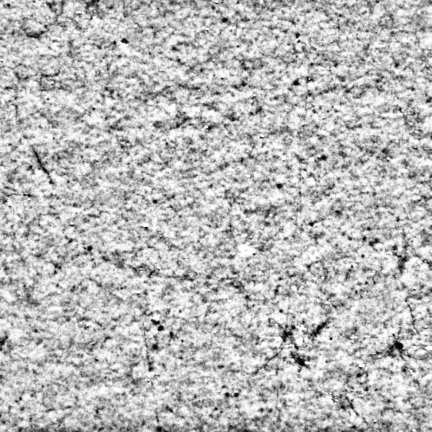 Raking-light close-up image, processed. Processing included removal of color, equalization of the histogram, and sharpening, all designed to enhance visual comparison. Department of Conservation, MoMA

Paper Material
- Format Metric
- Weight Single weight
- Thickness (mm) 0.18
- UV Fluorescence Recto negative Verso negative
- Fiber Analysis Hardwood bleached sulfite 37% Softwood bleached sulfite 63% Softwood bleached sulfite
- Material Techniques Developing-out paper
-
XRF
This work was determined to be a gelatin silver print via X-ray fluorescence (XRF) spectrometry.
The following elements have been positively identified in the work, through XRF readings taken from its recto and verso (or from the mount, where the verso was not accessible):
- Recto: Al, P, S, Zn, Sr, Ag, Ba
- Verso: Al, P, S, Ca, Zn, Sr, Ba
The graphs below show XRF spectra for three areas on the print: two of the recto—from areas of maximum and minimum image density (Dmax and Dmin)—and one of the verso or mount. The background spectrum represents the contribution of the XRF instrument itself. The first graph shows elements identified through the presence of their characteristic peaks in the lower energy range (0 to 8 keV). The second graph shows elements identified through the presence of their characteristic peaks in the higher energy range (8 to 40 keV).
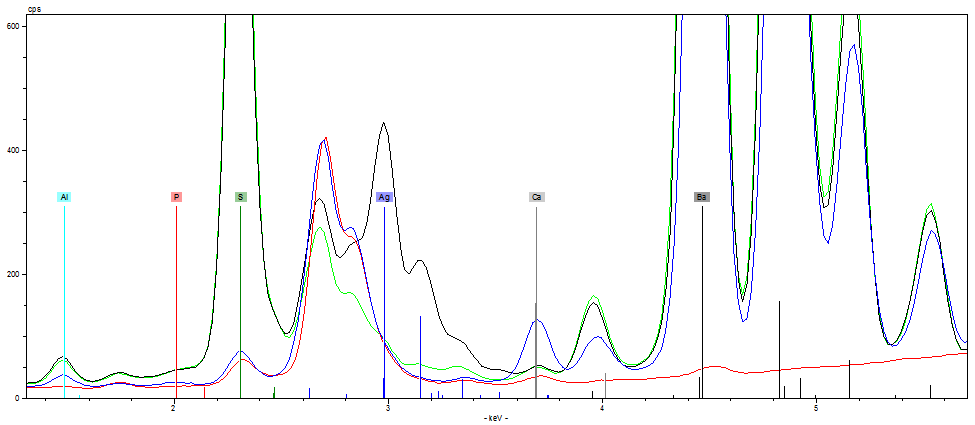 Areas examined: Recto (Dmax: black; Dmin: green), Verso or Mount (blue), Background (red)
Elements identified: Al, P, S, Ca, Ag, Ba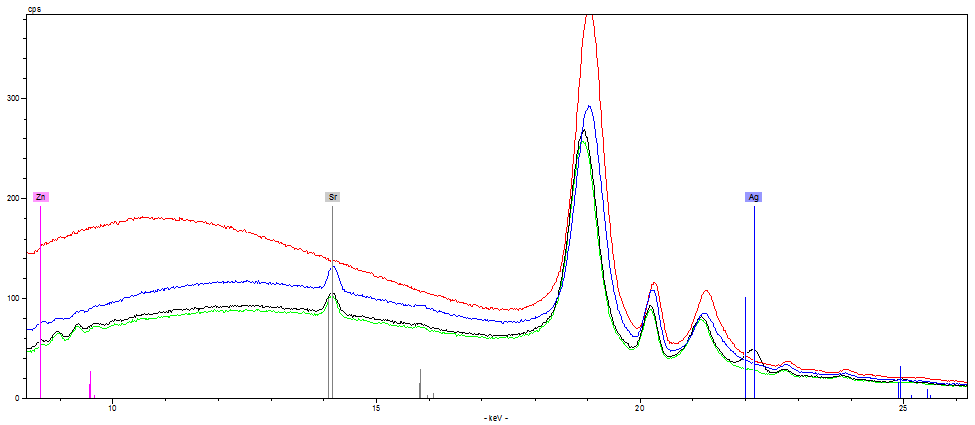 Areas examined: Recto (Dmax: black; Dmin: green), Verso or Mount (blue), Background (red)
Elements identified: Zn, Sr, Ag
In Context
Related People
-
Artist
