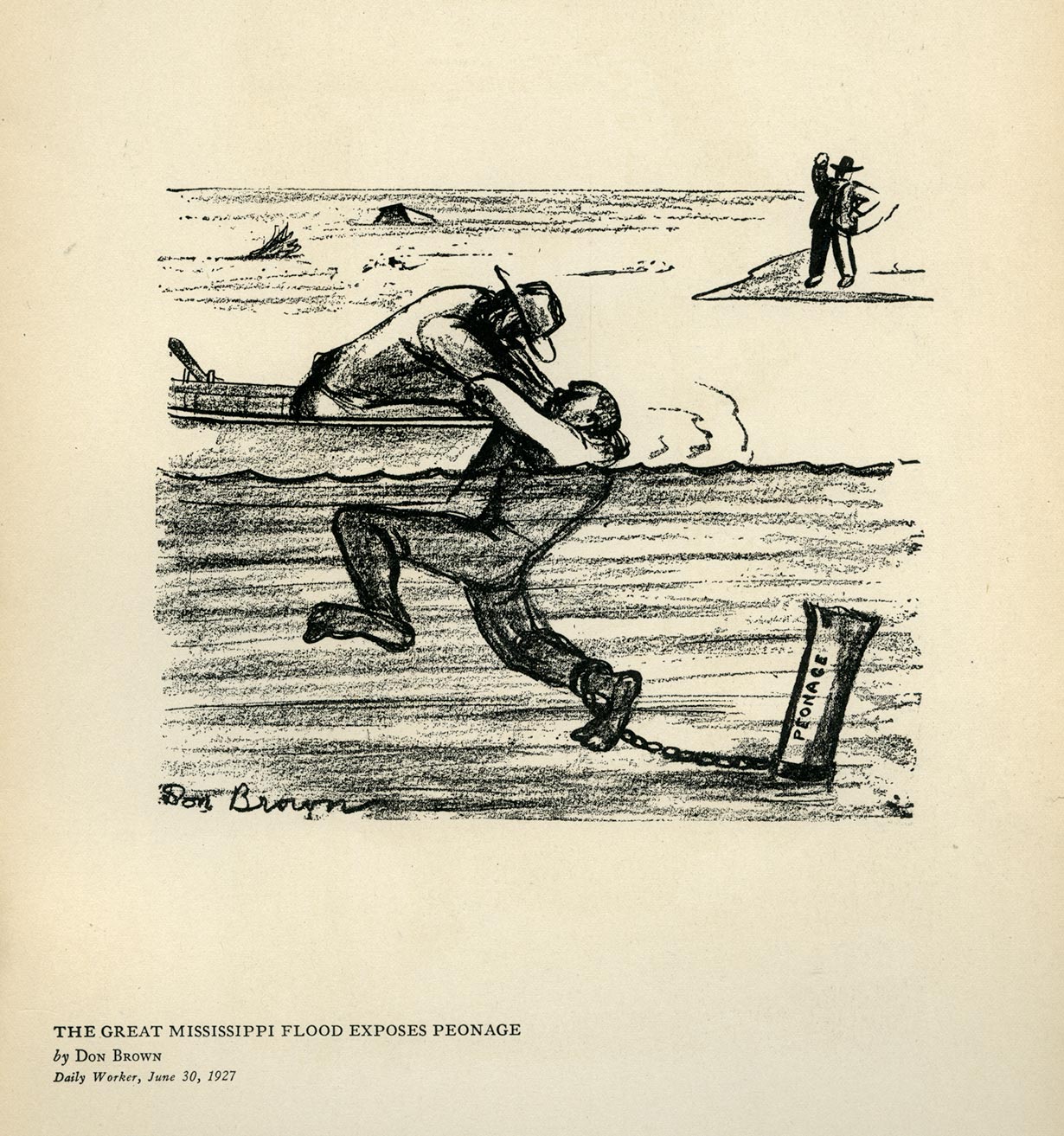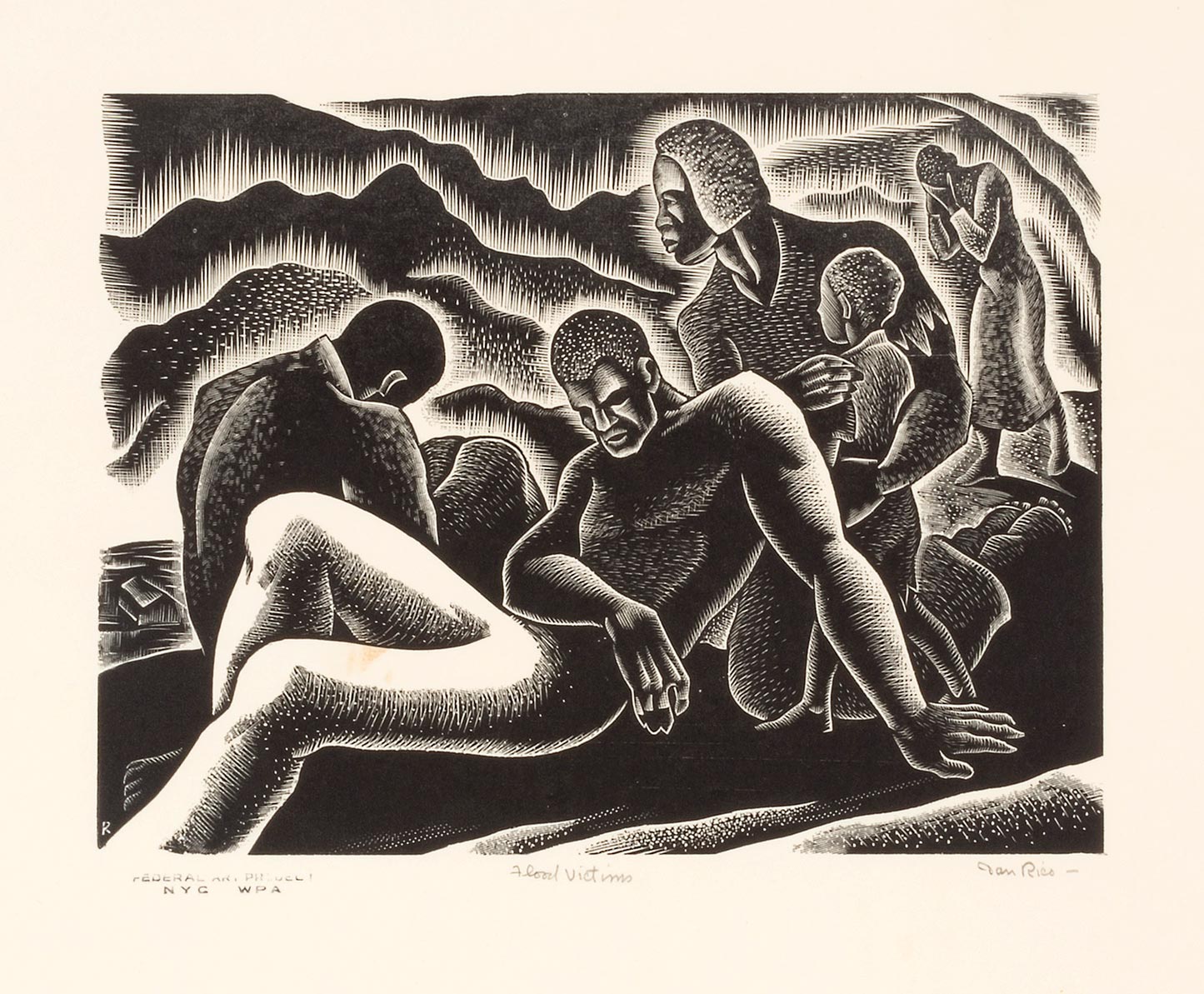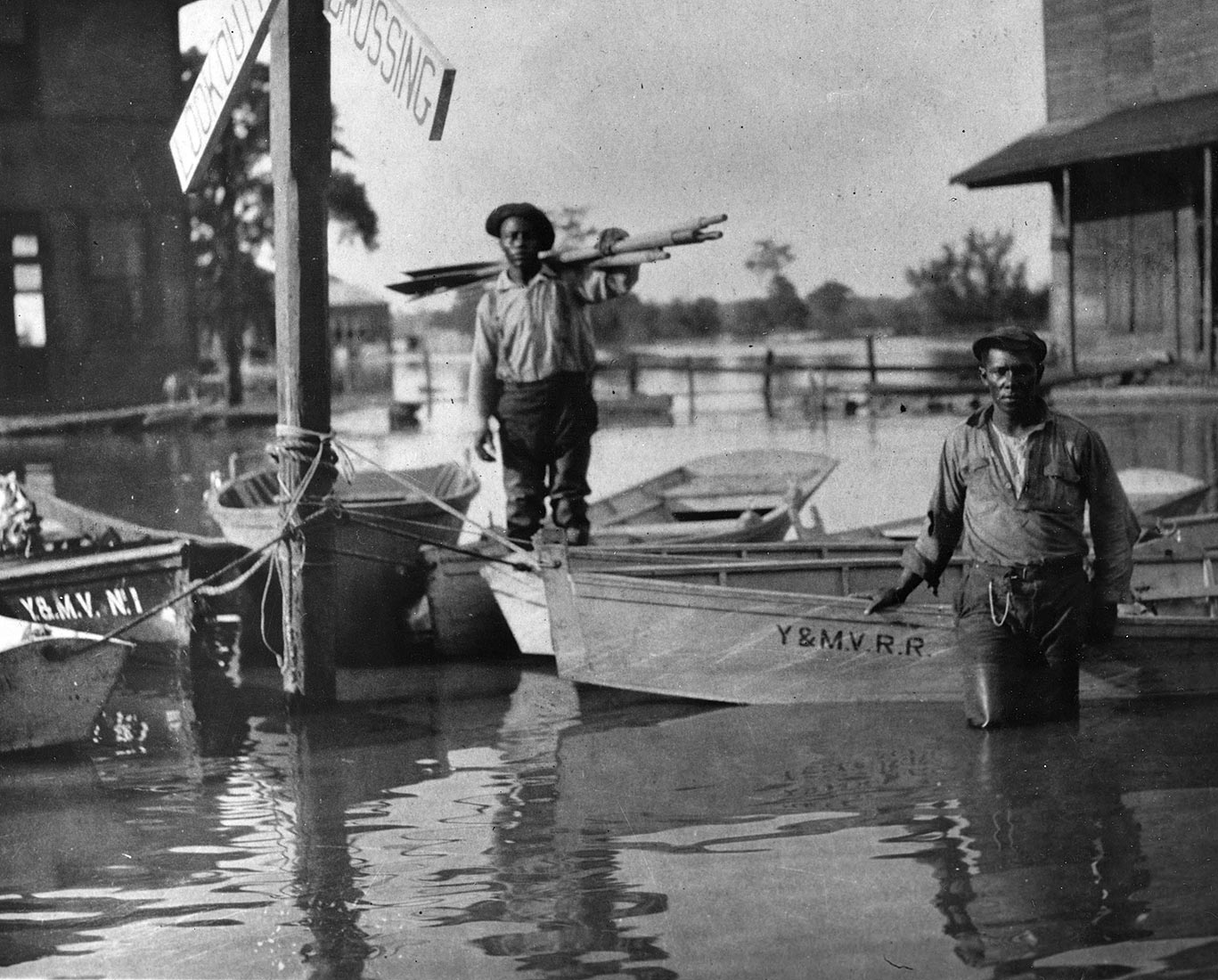
Many of the hundreds of thousands of individuals who escaped the flood as it spread from Cairo, Illinois, to New Orleans were left homeless and lived for months in bare-bones refugee camps. The calamity exposed the exploitative practices of many southern landowners: as bad as nature could be, men could be worse. In Greenville, Mississippi, for example, LeRoy Percy, one of the Delta’s “cotton kings,” thwarted efforts to evacuate African-American residents because he was worried about losing his plantation’s labor force. Once the town’s levees were breached, relief rations were distributed on the basis of race, and many black men were held at gunpoint by the National Guard and forced to perform life-threatening repair work on the embankments. Mistreatment of this kind, along with the devastation of the Mississippi Delta sharecropper economy, caused tens of thousands of people to migrate.

They did not always leave because they were promised work in the North. Many of them left because of Southern conditions, one of them being great floods that ruined the crops, and therefore they were unable to make a living where they were.
Some left because of promises of work in the North. Others left because their farms had been devastated by floods.
- 1941 caption
- 1993 caption
- Close
Two sets of captions accompany Lawrence’s Migration Series: the original 1941 texts and a revised version he wrote in 1993 for a tour of the series organized by The Phillips Collection, Washington D.C. Click on each date to compare the two.

They did not always leave because they were promised work in the North. Many of them left because of Southern conditions, one of them being great floods that ruined the crops, and therefore they were unable to make a living where they were.
Some left because of promises of work in the North. Others left because their farms had been devastated by floods.
- 1941 caption
- 1993 caption
- Close
Two sets of captions accompany Lawrence’s Migration Series: the original 1941 texts and a revised version he wrote in 1993 for a tour of the series organized by The Phillips Collection, Washington D.C. Click on each date to compare the two.
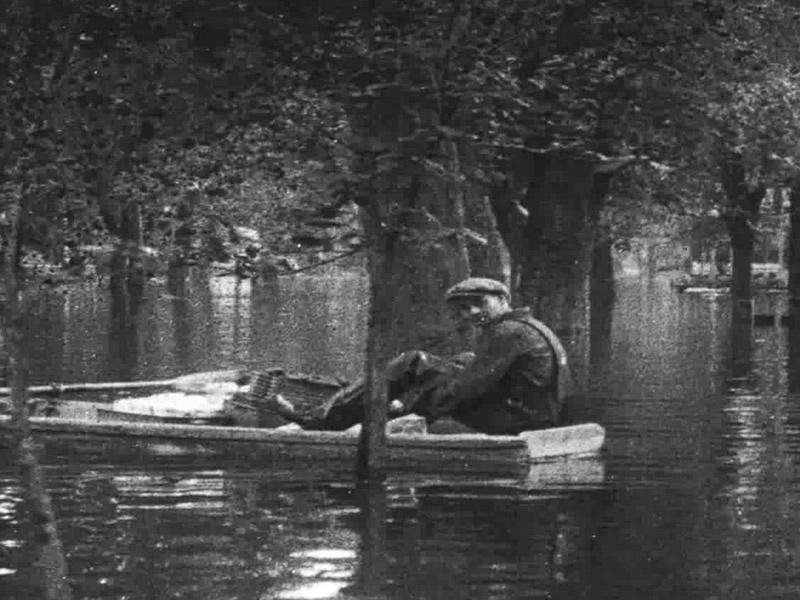
Lawrence covers this panel almost entirely in shades of blue and separates sky from water with a thin strip of brown—the shrunken bank of a river so swollen it has submerged the nearby trees. This sliver of dry land suggests a deluge of biblical proportions. Lawrence evokes the series of floods that ravaged several major agricultural regions in the South during the first decades of the twentieth century, especially the Great Mississippi Flood of 1927, which was the most destructive in American history. That spring, after months of heavy rain, the Mississippi River and its tributaries began to break through levees from Illinois to Louisiana; twenty-seven thousand square miles of land were flooded, countless farms and towns were inundated, and as many as one million people, most of them black, were displaced.