Lawrence’s depiction of orderly voting in the North contrasts starkly with the systematic disenfranchisement of black voters in the South during the Migration years. Between the 1880s and 1910s, southern states enacted a range of laws that essentially annulled African Americans’ right to vote, which had been guaranteed by the Fifteenth Amendment of 1870. The adoption of a “grandfather clause,” for example, allowed state officials to deny suffrage to anyone whose grandparents had not registered to vote before the end of the Civil War: virtually all black citizens. Literacy tests required would-be voters to read and interpret passages from official documents, such as a state constitution, to the satisfaction of white officials, which was nearly impossible. Poll taxes and property requirements also kept poor blacks out of voting booths. Additionally, black citizens who wished to act on their right to vote were often threatened with violent reprisal.
In the North the Negro had freedom to vote.
In the North they had the freedom to vote.
- 1941 caption
- 1993 caption
- Close
Two sets of captions accompany Lawrence’s Migration Series: the original 1941 texts and a revised version he wrote in 1993 for a tour of the series organized by The Phillips Collection, Washington D.C. Click on each date to compare the two.
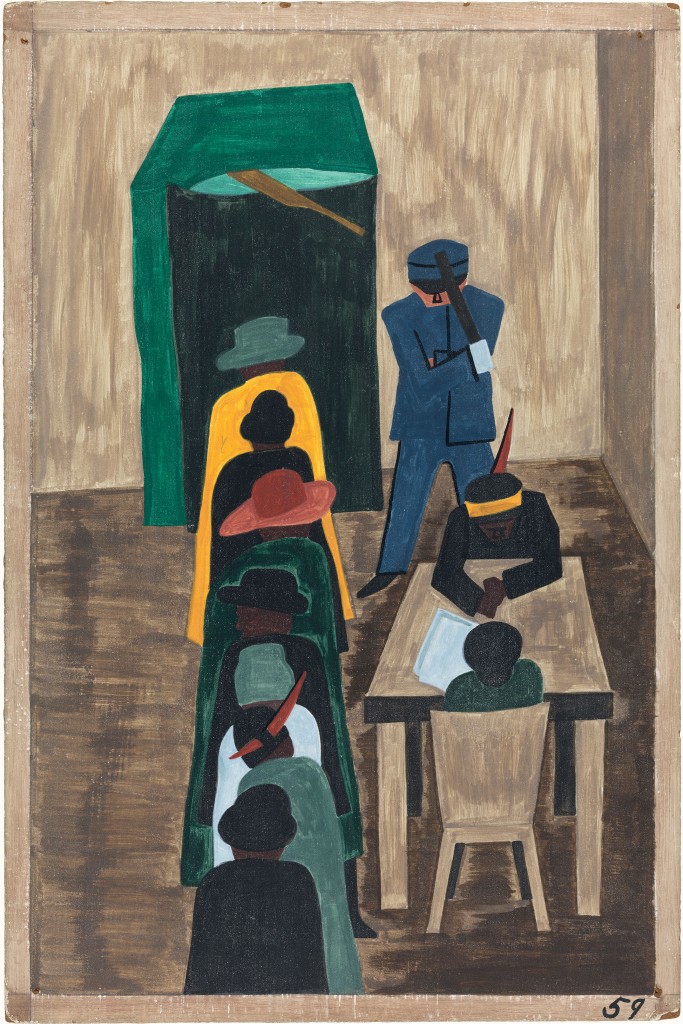
In the North the Negro had freedom to vote.
In the North they had the freedom to vote.
- 1941 caption
- 1993 caption
- Close
Two sets of captions accompany Lawrence’s Migration Series: the original 1941 texts and a revised version he wrote in 1993 for a tour of the series organized by The Phillips Collection, Washington D.C. Click on each date to compare the two.
Men and women stand patiently in a long line, waiting to vote. Beside them two figures sit at a table and process paperwork. The sole white figure, a nightstick-wielding guard stationed at the entrance to the voting booth, is an intimidating presence, but he does not interfere with the procession of African-American voters.
History
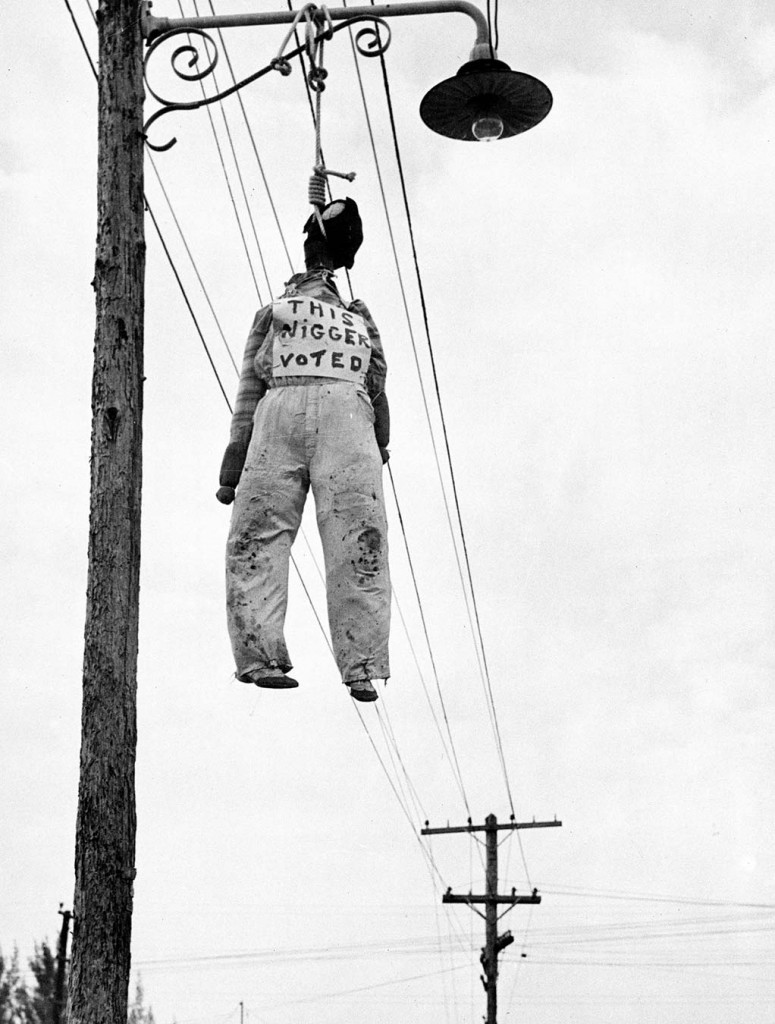
Dummy hung from a lamppost in advance of a municipal primary election, Miami, May 1, 1939
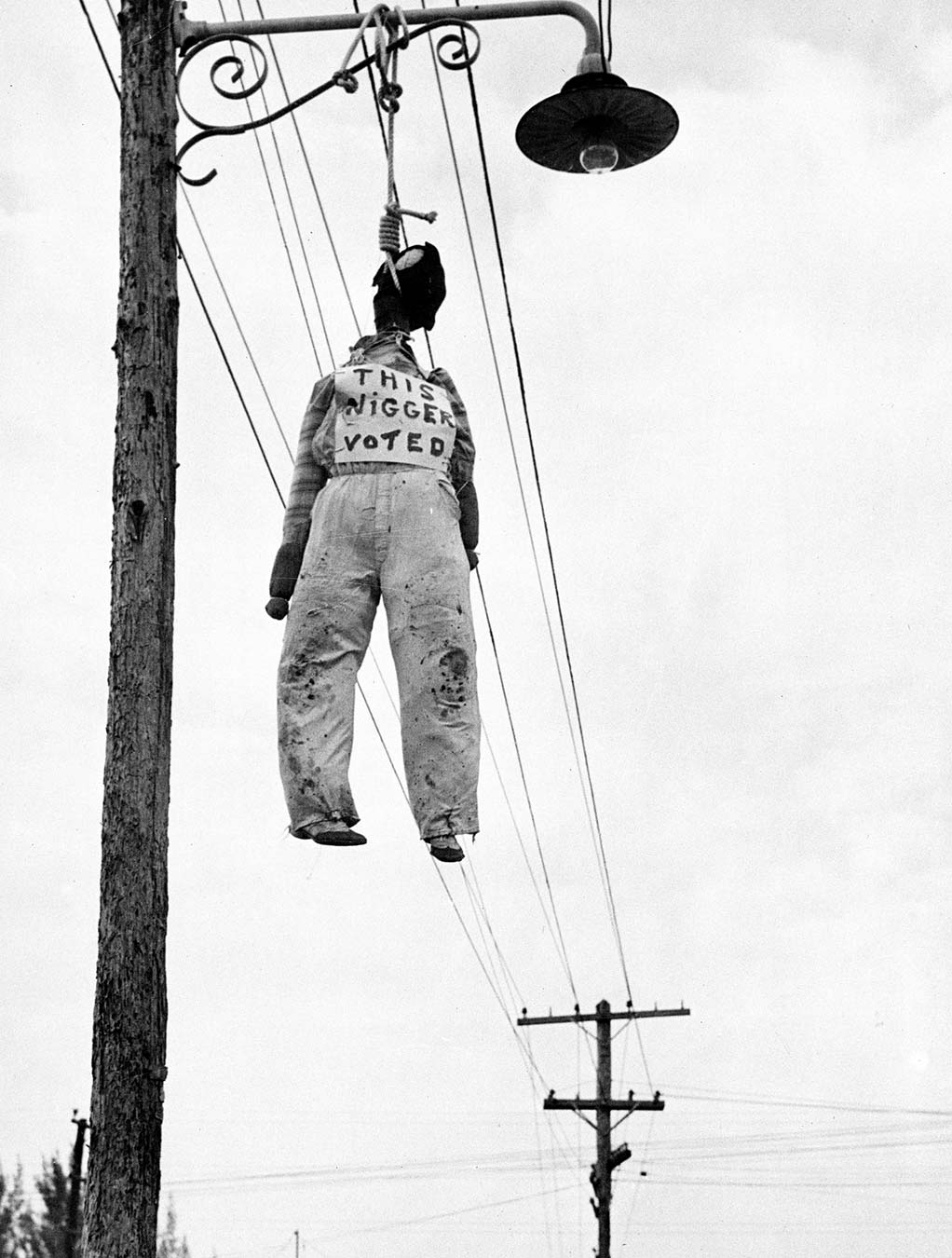
The restrictions on voting were so effective that in 1940 only three percent of black southerners were registered. For many migrants, the North provided their first taste of political empowerment. Areas with dense African-American populations, like New York’s Harlem and Chicago’s South Side, formed congressional districts with black majorities, launching national careers for black politicians like Adam Clayton Powell Jr.Pastor of Harlem’s Abyssinian Baptist Church, activist, and politician Read more and Oscar DePriest.
Culture
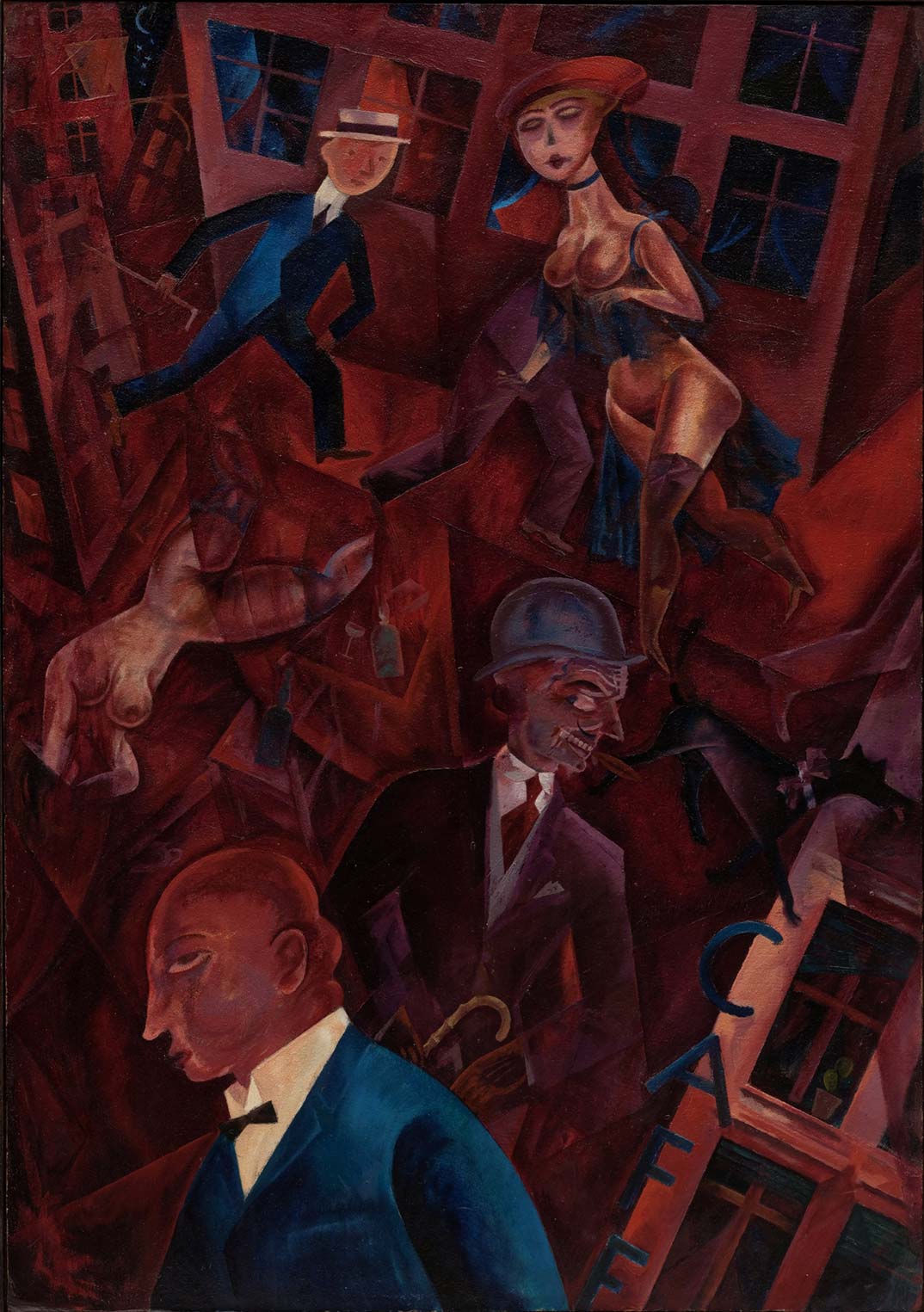
The sociopolitical content of this panel, along with its tilted perspective and stacked figures, evoke great German Expressionists such as George Grosz, whose work reflects his traumatizing stint as a soldier in World War I. Lawrence was exposed to Grosz’s work in the late 1930s, when his friend Romare BeardenHarlem painter, illustrator, and collagist and friend of Jacob Lawrence Read more was studying with Grosz at the Art Students League. Lawrence was greatly interested in the Expressionists’ facility with powerful, graphic protest, and satire. In a 1968 interview, he recalled applying the lessons of the Grosz’s leftist sociopolitical critique to his own milieu: “We all knew who George Grosz was,” Lawrence said. “He was the great German Expressionist and satirist of postwar Germany. … This is what influenced many of us. And I guess it didn’t take much to influence me because I was working in this kind of genre and in any event I took my scenes from the Harlem community, [which] wasn’t an upper class community—anything you would do would be involved with social statements.”
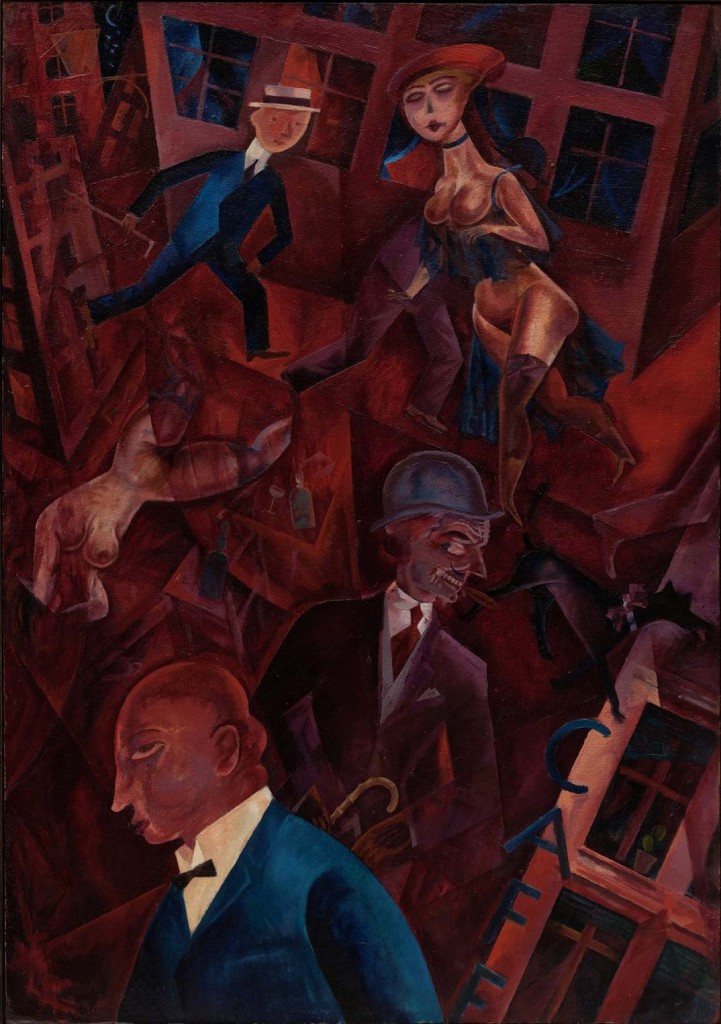
George Grosz. Metropolis. 1917. Oil on board, 26 3/4 × 18 3/4″ (68 × 47.6 cm). The Museum of Modern Art, New York