The railroad construction boom of the late nineteenth century led to numerous job opportunities for African Americans, who were hired as track workers, firemen, brakemen, sleeping car porters, and dining car attendants. A job as a “railroad man” meant stable employment and decent wages, as compared with the unpredictable life of sharecropping. At the same time, conditions could be brutal, job advancement—particularly to engineer and foreman positions—was almost impossible, and the major labor unions not only restricted membership to whites but actively undercut black workers’ interests. By the time Lawrence began to paint the Migration Series, a fierce struggle for black unionization had been underway for years: groups such as the Colored Trainmen of America and the Railway Men’s International Benevolent Industrial Association were established to fight for equal pay, job safety, and freedom from discrimination. The Brotherhood of Sleeping Car Porters, founded in 1925 and led by the Harlem-based activist A. Philip RandolphGroundbreaking labor leader who fronted the first successful black union Read more, was the first African-American union to gain official recognition from the American Federation of Labor (see panel 4).
They also worked in large numbers on the railroad.
They also worked on the railroads.
- 1941 caption
- 1993 caption
- Close
Two sets of captions accompany Lawrence’s Migration Series: the original 1941 texts and a revised version he wrote in 1993 for a tour of the series organized by The Phillips Collection, Washington D.C. Click on each date to compare the two.
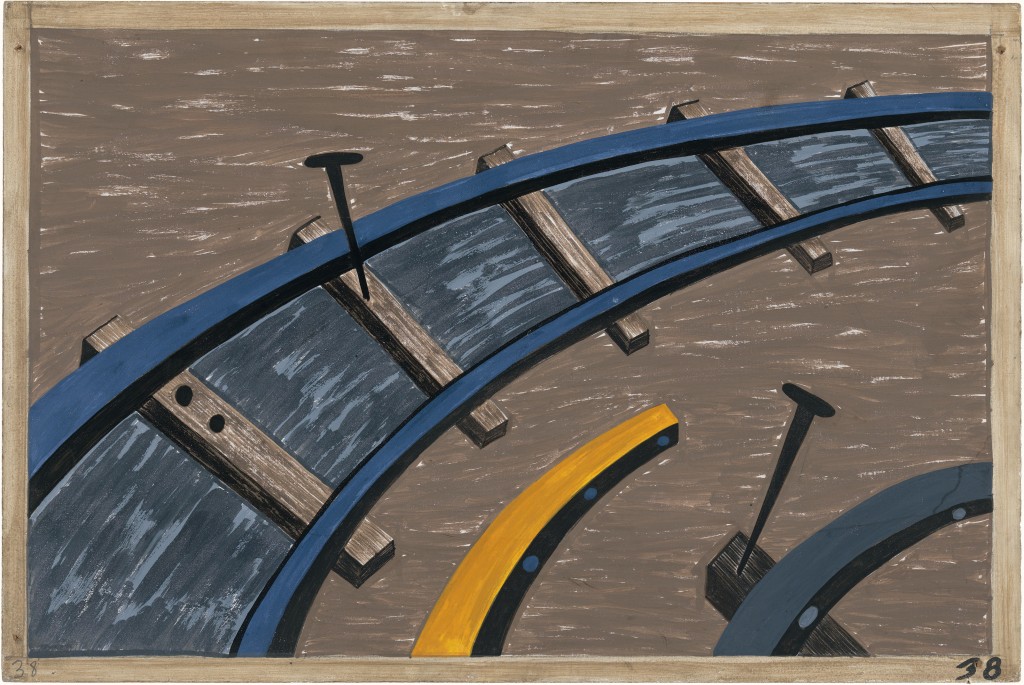
They also worked in large numbers on the railroad.
They also worked on the railroads.
- 1941 caption
- 1993 caption
- Close
Two sets of captions accompany Lawrence’s Migration Series: the original 1941 texts and a revised version he wrote in 1993 for a tour of the series organized by The Phillips Collection, Washington D.C. Click on each date to compare the two.
Lawrence’s train track sweeps dramatically across this panel. Although the painting focuses on only a few wooden ties and a couple of lengths of rail, it calls to mind the thousands of miles of tracks beyond the bounds of the painting. In the early twentieth century, immense resources—both material and human—were devoted to building and maintaining the railroad. African-American labor was crucial to the construction of its infrastructure in the nineteenth century; as Lawrence suggests in his caption, the railroad remained a key source of jobs for black workers.
History
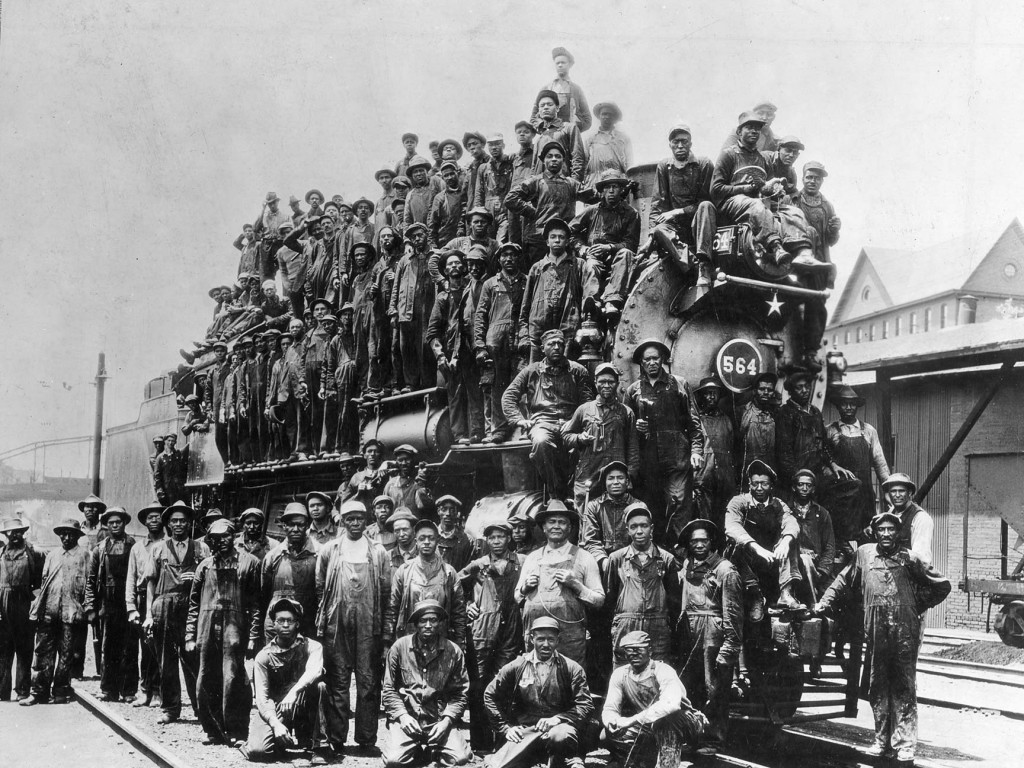
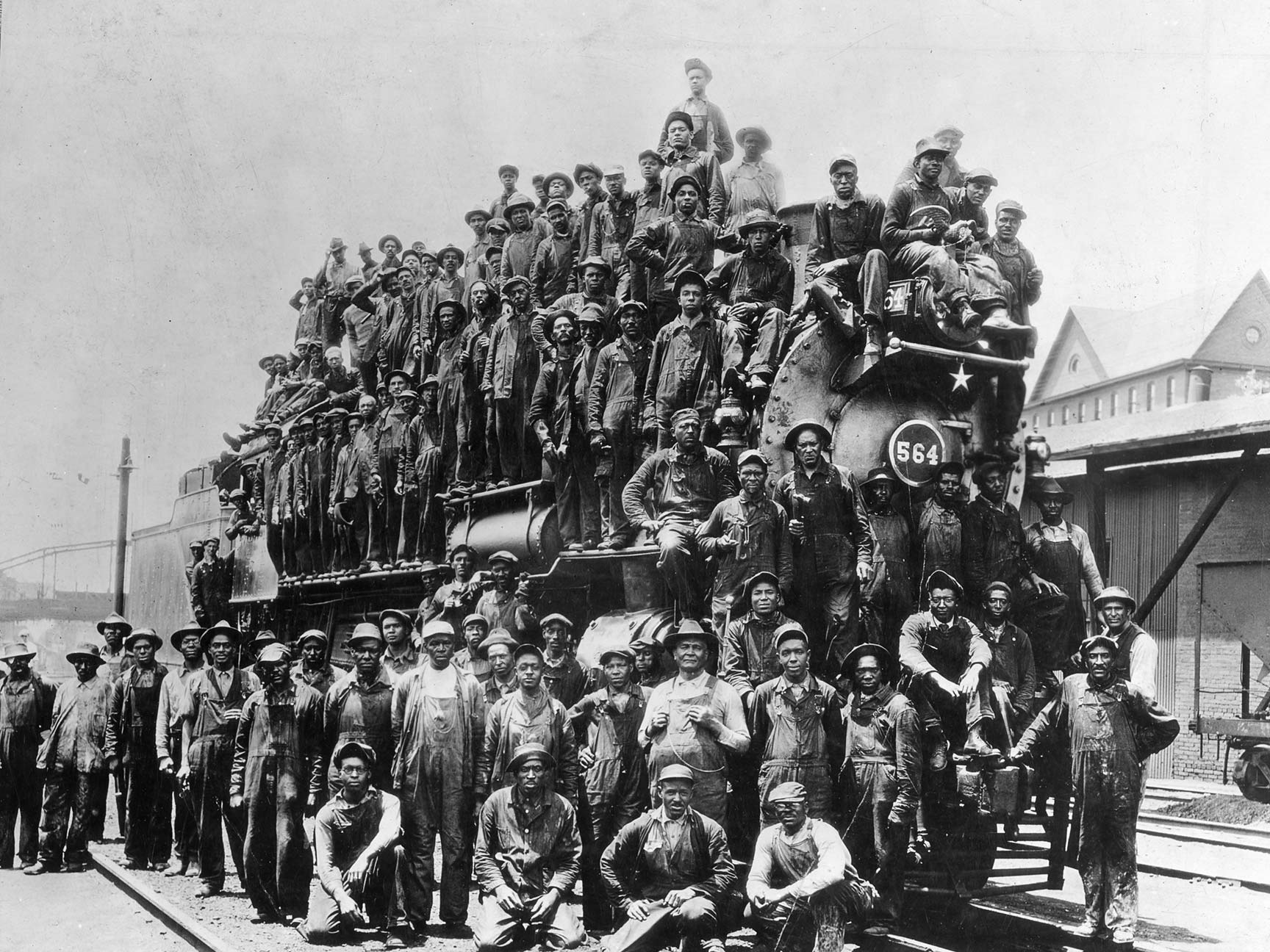
Black employees of the Bluefield, West Virginia workshop of the Norfolk & Western Railway, the town’s largest employer, June 1929
Culture
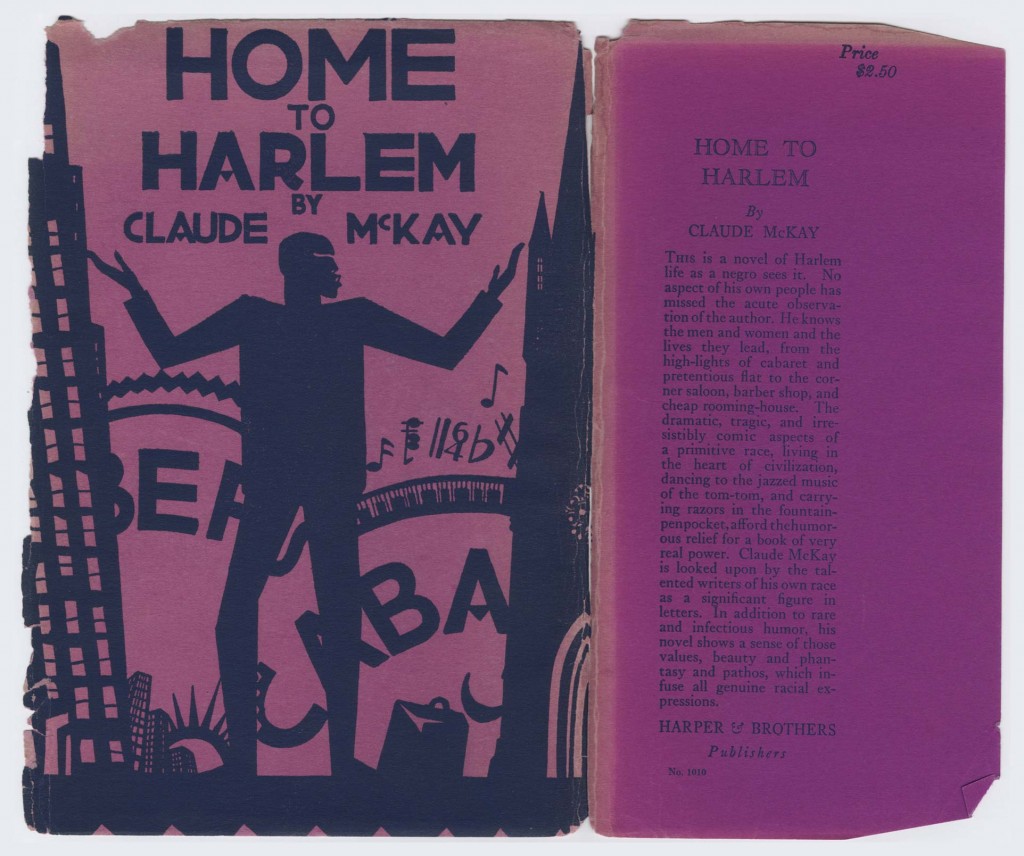
Claude McKay. Home to Harlem. Illustration by Aaron Douglas. New York and London: Harper & Brothers, 1928. Yale Collection of American Literature, Beinecke Rare Book and Manuscript Library, Yale University, New Haven, Conn.

In his bestselling novel Home to Harlem (1928), Claude McKay delves into the world of black railroad workers, drawing from his own experience as a Pennsylvania Railroad dining car waiter from 1917 to 1919. The story follows an atypical friendship forged on that railroad’s New York-Pittsburgh route between Jake, a cook, and Ray, a waiter. McKay explains that according to usual train protocol the “two grades, cooks and waiters, never chummed together, except for gambling.” Despite the workers’ shared race and the intimacy of their quarters, this hierarchy prevailed:
Men working on a train have something of the spirit of men working on a ship. They are, perforce, bound together in comradeship of a sort in that close atmosphere. In the stopover cities they go about in pairs or groups. But the camaraderie breaks up on the platform in New York as soon as the dining-car returns there. Every man goes his own way unknown to his comrades.
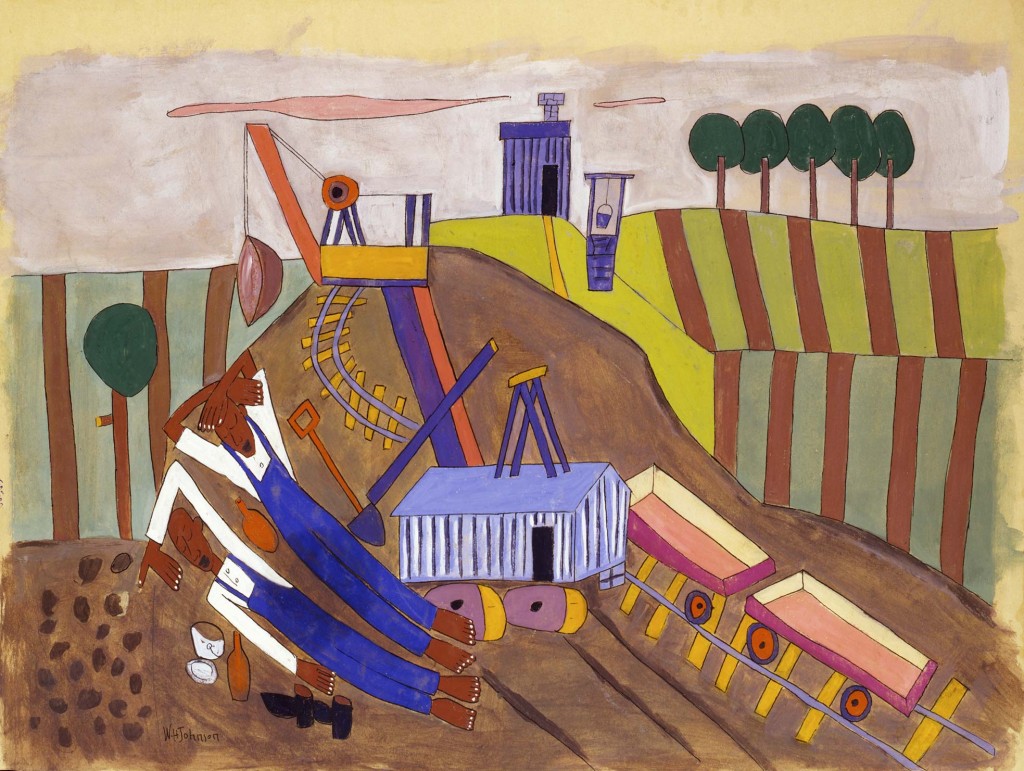
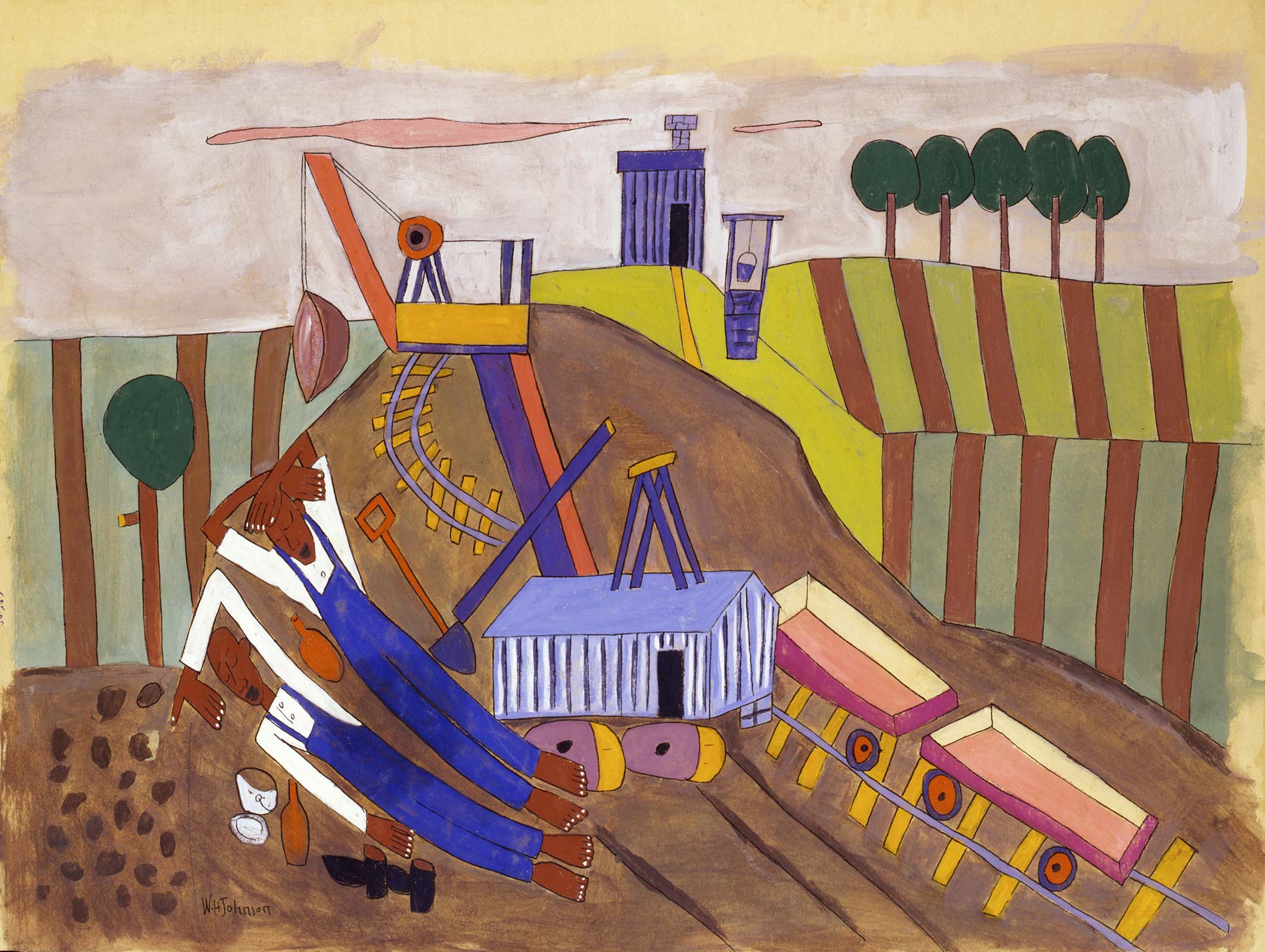
William H. Johnson. Lunchtime Rest. c. 1940–41. Tempera, pen and ink on paper, 13 × 18” (33.0 × 45.7 cm). Smithsonian American Art Museum, Washington, D.C. Born in South Carolina, Johnson moved to New York in 1918 and trained as an artist at the National Academy of Design. In Lunchtime Rest, he portrays a pair of railroad construction workers enjoying a rare moment of downtime.