Black southerners living under Jim Crow spoke again and again of detainment based on little more than whim. Charges of walking along a railroad track, spitting, drinking, loitering, vagrancy, and speaking too loudly in public were applied almost exclusively to African Americans and put thousands in prison. States and counties could then profitably lease these men’s unpaid labor to employers ranging from private plantation owners to U.S. Steel and the Tennessee Coal, Iron and Railroad Company. Convicts were often assigned to the most arduous and dangerous jobs and were treated brutally. Once in the prison labor system, they lived for an average of just seven years. Throughout the first decades of the twentieth century newspapers denounced the convict leasing system as “disgraceful” and “worse than slavery,” but nevertheless it thrived in many parts of the South until World War II.
Another of the social causes of the migrants’ leaving was that at times they did not feel safe, or it was not the best thing to be found on the streets late at night. They were arrested on the slightest provocation.
Migrants left. They did not feel safe. It was not wise to be found on the streets late at night. They were arrested on the slightest provocation.
- 1941 caption
- 1993 caption
- Close
Two sets of captions accompany Lawrence’s Migration Series: the original 1941 texts and a revised version he wrote in 1993 for a tour of the series organized by The Phillips Collection, Washington D.C. Click on each date to compare the two.
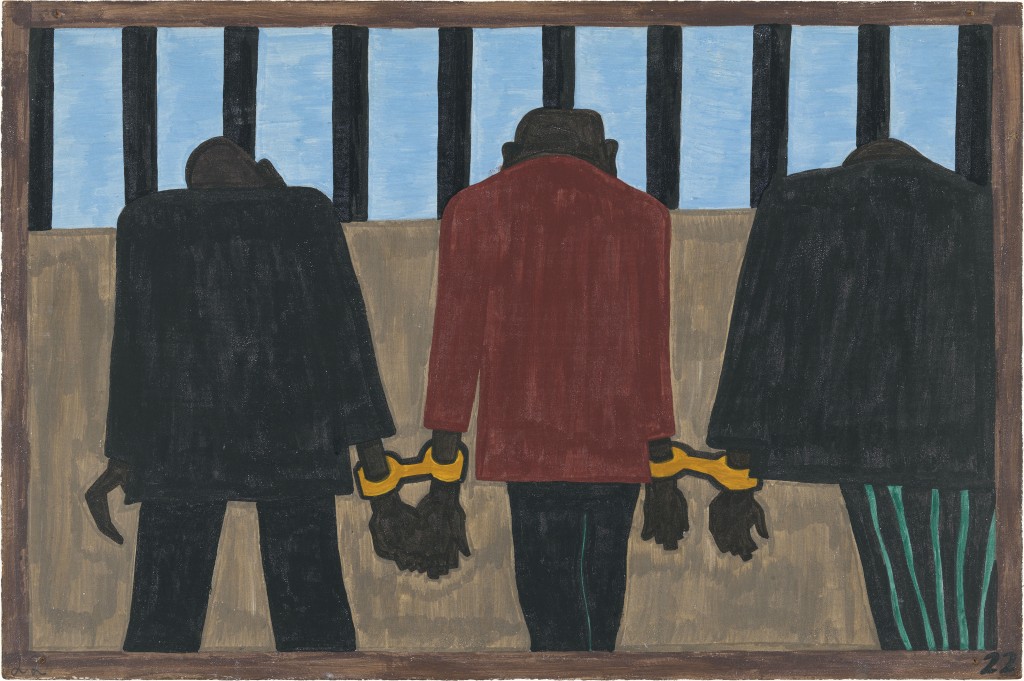
Another of the social causes of the migrants’ leaving was that at times they did not feel safe, or it was not the best thing to be found on the streets late at night. They were arrested on the slightest provocation.
Migrants left. They did not feel safe. It was not wise to be found on the streets late at night. They were arrested on the slightest provocation.
- 1941 caption
- 1993 caption
- Close
Two sets of captions accompany Lawrence’s Migration Series: the original 1941 texts and a revised version he wrote in 1993 for a tour of the series organized by The Phillips Collection, Washington D.C. Click on each date to compare the two.
Cuffed together behind imposing metal bars, the three men in this panel make a human chain that fills the painting’s frame. Their vertical forms create a visual rhyme with the window bars. Lawrence only shows us the men’s backs, but their street attire indicates that they have recently been arrested. The men stand in for the thousands of African American men who were capriciously arrested.
History
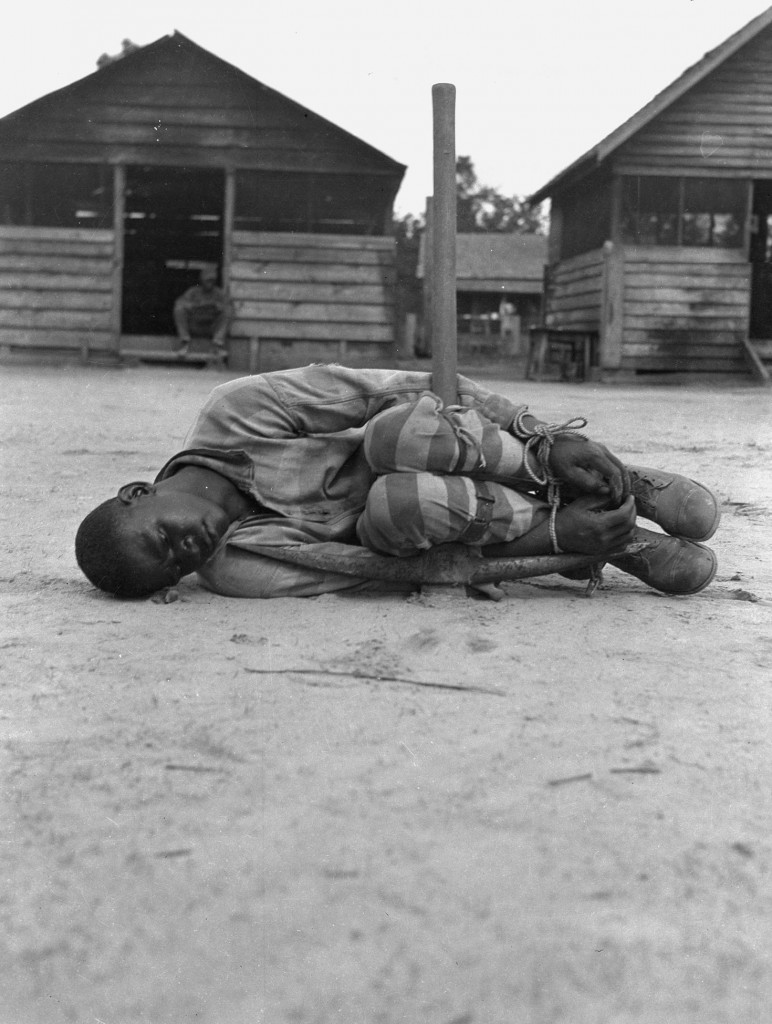
Young prisoner tied around a pickaxe as punishment at a Georgia labor camp, 1932
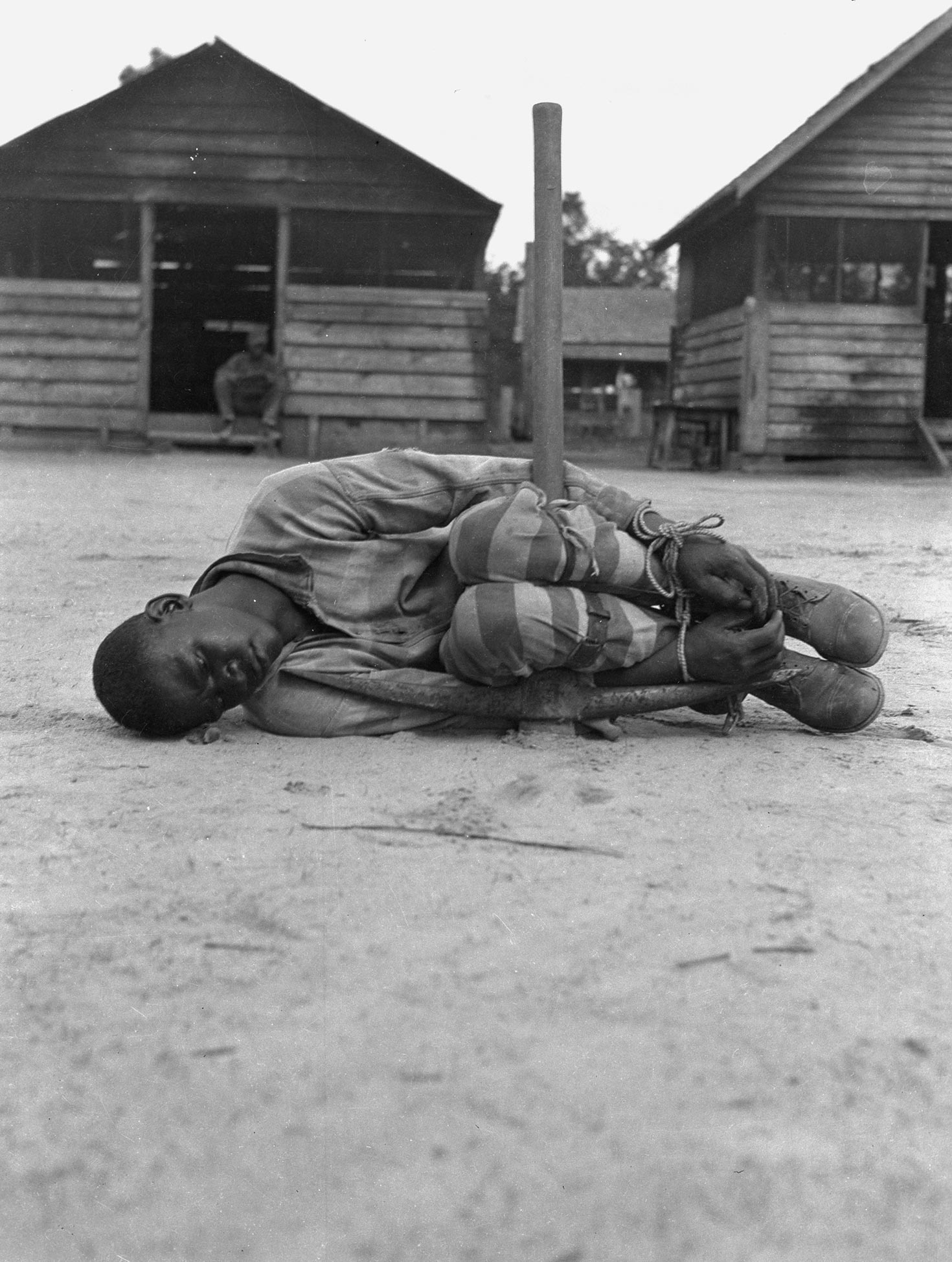
One of the most searing accounts of debt peonage, excessive sentencing, and penal labor is John L. Spivak’s book Georgia Nigger, published in 1932 and later republished as Hard Times on a Southern Chain Gang. Spivak, a communist reporter, was granted access to chain gangs by the Georgia Prison Commission. His book, based in part on his experiences with black prisoners, combines documentary journalism and politicized fiction and is generously illustrated with his own hard-hitting photographs.
The photograph below captures the conditions in which many convicts lived and labored. Claustrophobic wagons equipped with bunks shuttled inmates from worksite to worksite. A white officer, rifle in hand, keeps watch over the men as bloodhounds used to hunt down escapees stand by.
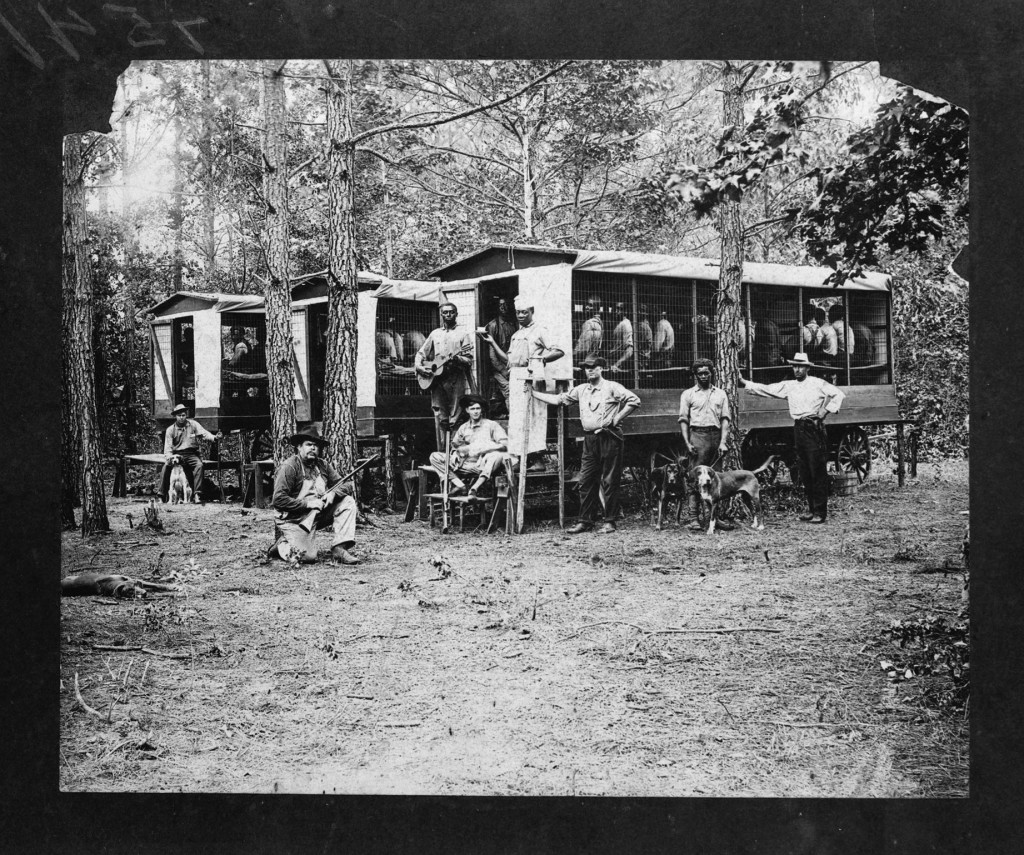
Convicts in a chain gang engaged in road work, Pitt County, North Carolina, 1910

Culture
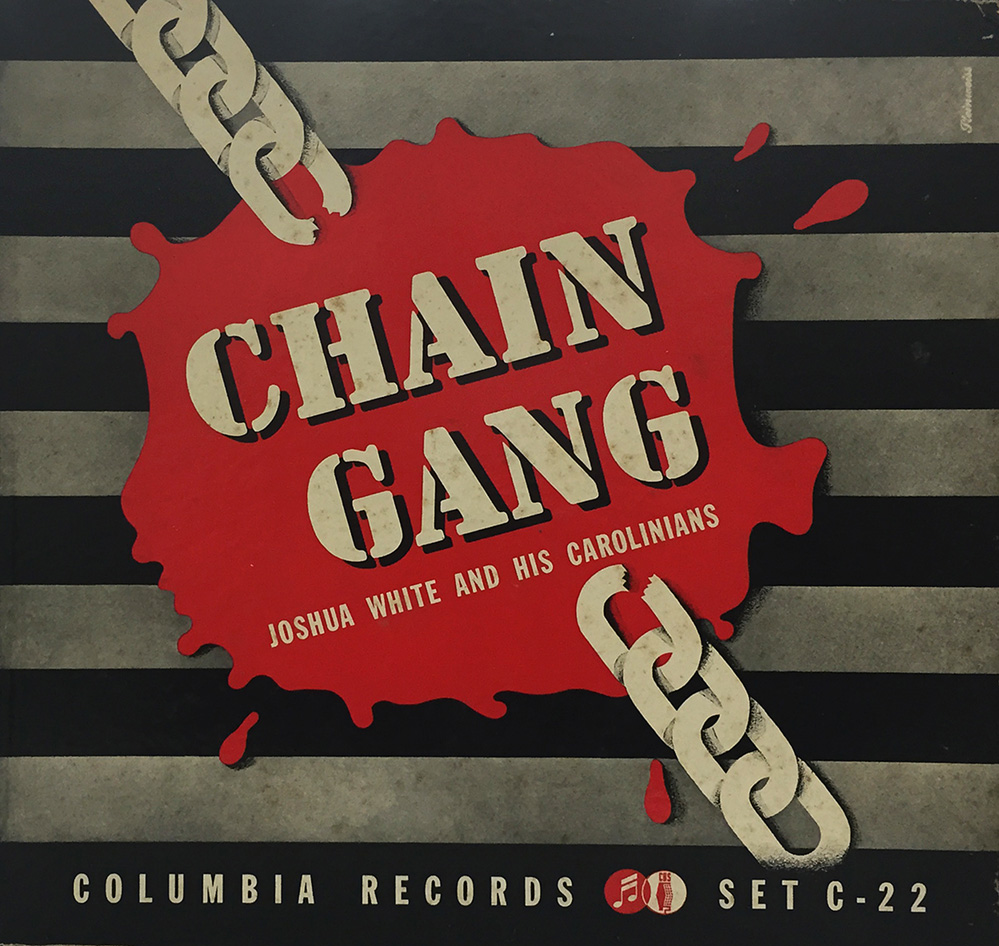
Josh White. Chain Gang: Joshua White and His Carolinians. Design by Alex Steinweiss. New York: Columbia Records, 1940
Many artists of Lawrence’s generation saw the practices of southern courts and prisons as a revival of slavery. In 1940, Columbia Records released blues singer Josh WhiteCharismatic and politically outspoken blues musician Read more’s Chain Gang, an album of prison songs. In “Trouble,” he laments:
Well, I always been in trouble, ‘cause I’m a black-skinned man
Said I hit a white man, locked me in the can
They took me to the stockade, wouldn’t give me no trial
The judge said, “You black boy, forty years on the hard rock pile”
Trouble, trouble, sure won’t make me stay
Trouble, trouble, jailbreak due someday
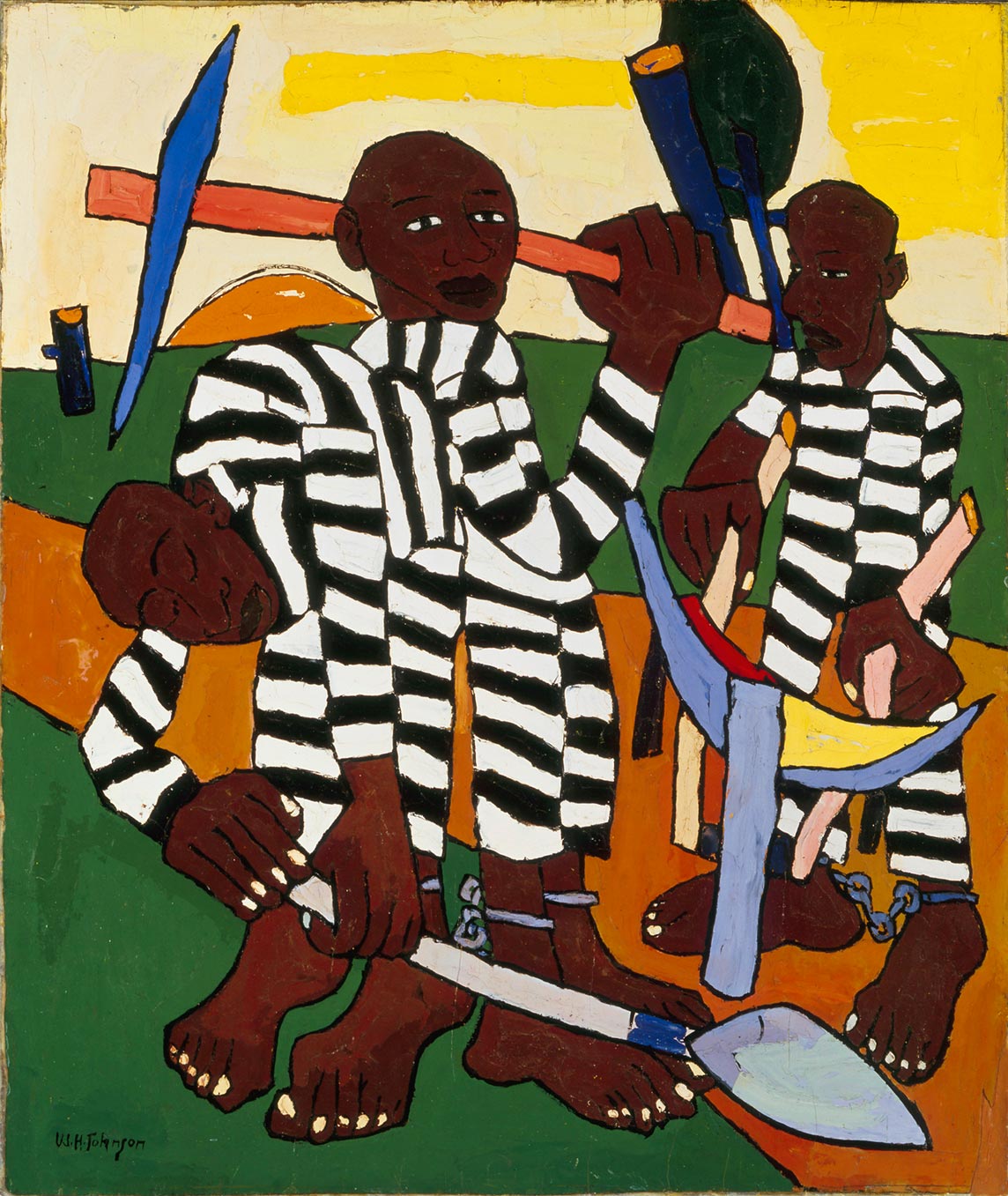
The painter William H. Johnson, who met Lawrence after settling in New York in 1938, also explored this topic, making black chain-gang prisoners the subject of ambitious oil paintings such as Chain Gang (1938), made a few years before Lawrence’s Migration Series.
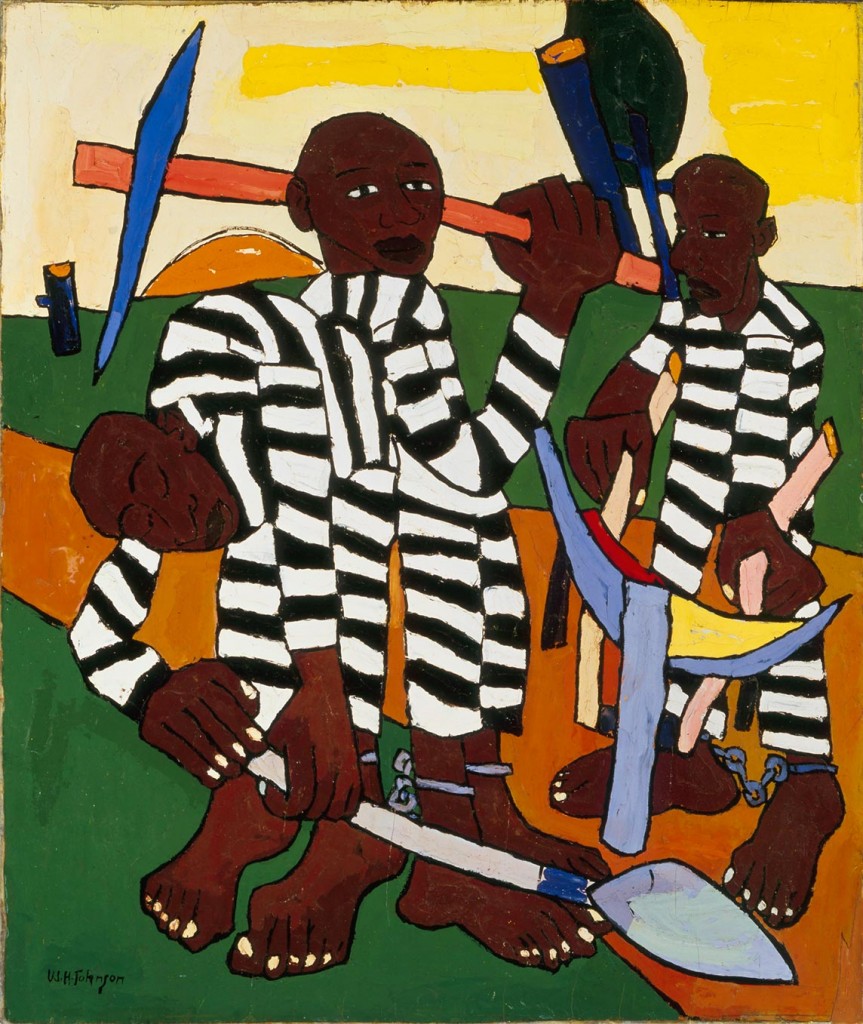
William H. Johnson. Chain Gang. c. 1939–40. Oil on plywood, 45 3/4 × 38 1/2” (116.2 × 97.7 cm). Smithsonian Museum of American Art, Washington, D.C.
Perspectives
For the Migration Series Poetry Suite, ten extraordinary contemporary poets were commissioned to write new poems in response to Jacob Lawrence’s Migration Series.