While working on the Migration Series, Lawrence surely had in mind the landmark Scottsboro Boys trials, which galvanized political advocates and cultural leaders across the country and generated national headlines and public outcry for more than a decade. In 1931, nine young African Americans were arrested after an altercation with a group of white youths on a train to Memphis. They were brought before a court in the town of Scottsboro, Alabama, and charged with raping two white women on the train. The defendants were convicted by an all-white jury and all but the youngest, a twelve-year-old boy, were sentenced to death by electrocution. A travesty of the legal system, the case generated an unprecedented series of appeals and retrials and sparked a clamorous international campaign on behalf of the accused, which continued until 1950, when the last of the prisoners was released. None of the members of the Scottsboro group were pardoned before their deaths except for Clarence Norris, in 1976; campaigns to posthumously clear the names of the other eight men succeeded only in 2013, when Alabama governor Robert Bentley signed legislation officially exonerating all of the defendants.
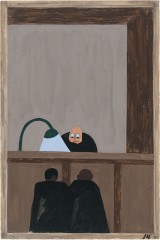
Among the social conditions that existed which was partly the cause of the migration was the injustice done to the Negroes in the courts.
For African Americans there was no justice in the southern courts.
- 1941 caption
- 1993 caption
- Close
Two sets of captions accompany Lawrence’s Migration Series: the original 1941 texts and a revised version he wrote in 1993 for a tour of the series organized by The Phillips Collection, Washington D.C. Click on each date to compare the two.
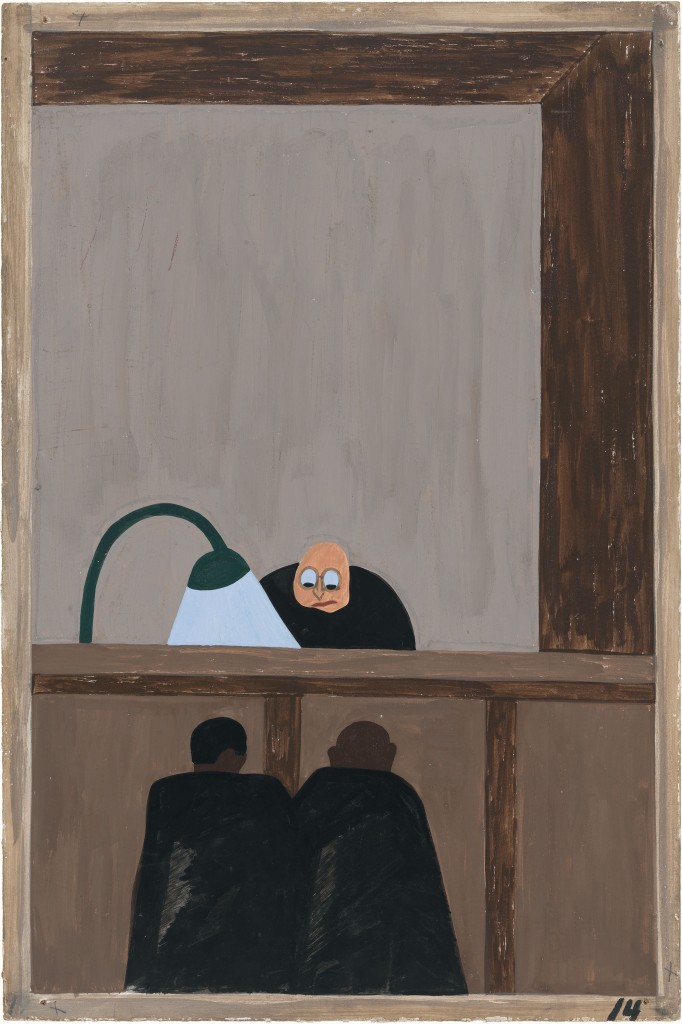
Among the social conditions that existed which was partly the cause of the migration was the injustice done to the Negroes in the courts.
For African Americans there was no justice in the southern courts.
- 1941 caption
- 1993 caption
- Close
Two sets of captions accompany Lawrence’s Migration Series: the original 1941 texts and a revised version he wrote in 1993 for a tour of the series organized by The Phillips Collection, Washington D.C. Click on each date to compare the two.
Looming over two black men from a lofty courtroom bench, this white judge embodies the intimidating legal authority so often wielded against black southerners, which Lawrence also addresses in panel 22. Poring over some document on the desk before him with bulging eyes, he shows no sign of sympathy for the two anonymous defendants. Stories of the South’s prejudiced court system would have been familiar to Lawrence, as they were regularly addressed in the black press and highlighted in early sociological accounts of the Great Migration.
History
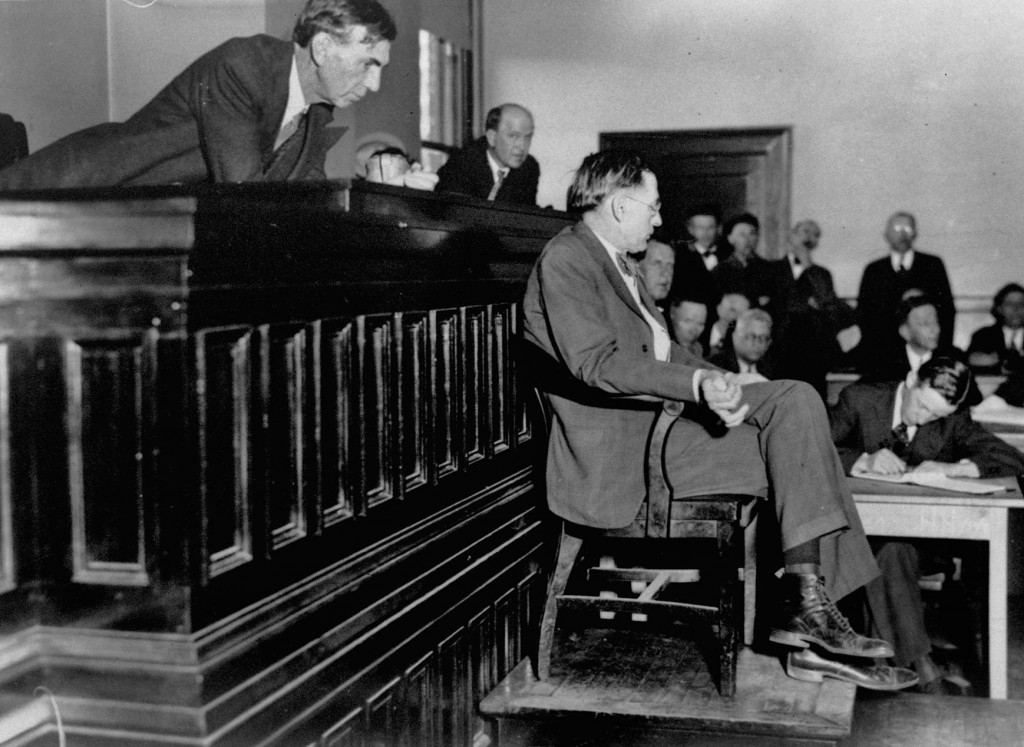
Scottsboro Boys retrial, Decatur, Alabama, April 3, 1933. In the first of a series of retrials of the Scottsboro defendants in 1933, Judge James E. Horton leans over to hear testimony from the physician who examined one of the accusers; the physician reports finding only superficial bruises despite the woman’s claim that she was violently attacked.
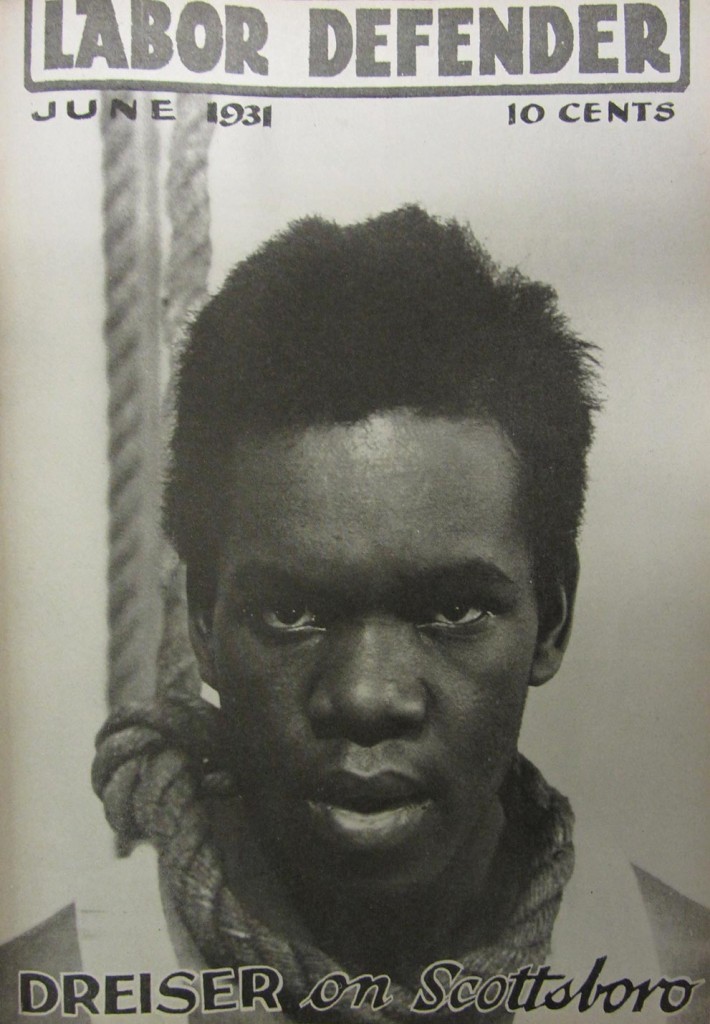
Covers from Labor Defender, June 1931, July 1932, November 1934, and April 1935. The Scottsboro Boys’ case was taken up by the International Labor Defense, the legal wing of the Communist International, which also forcefully advocated for justice in the pages of its magazine, Labor Defender.
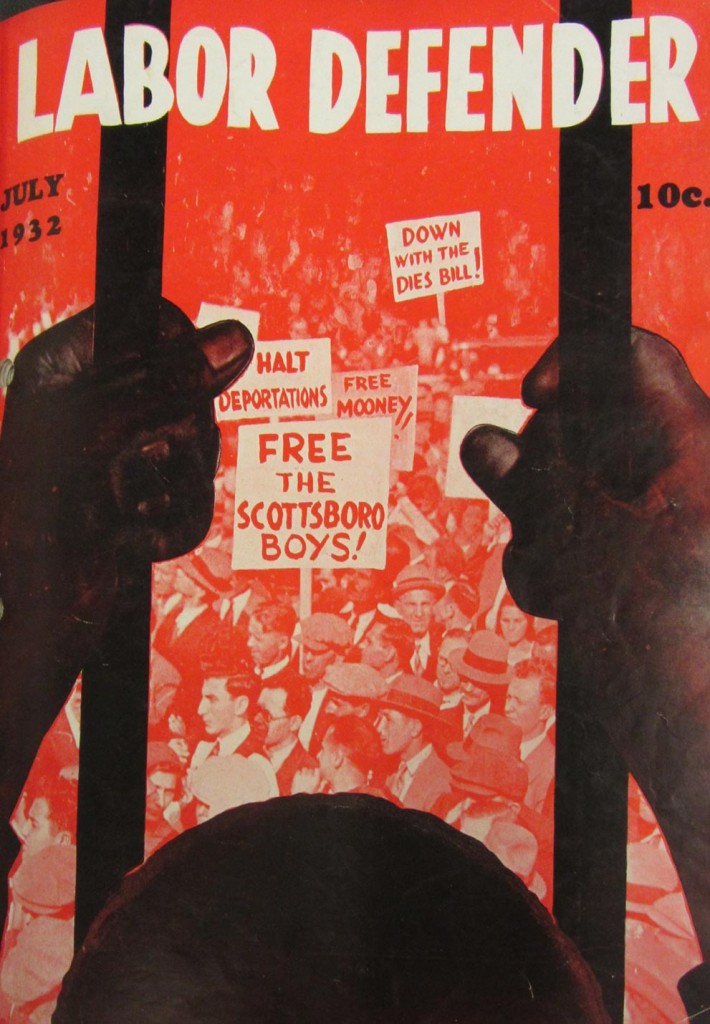
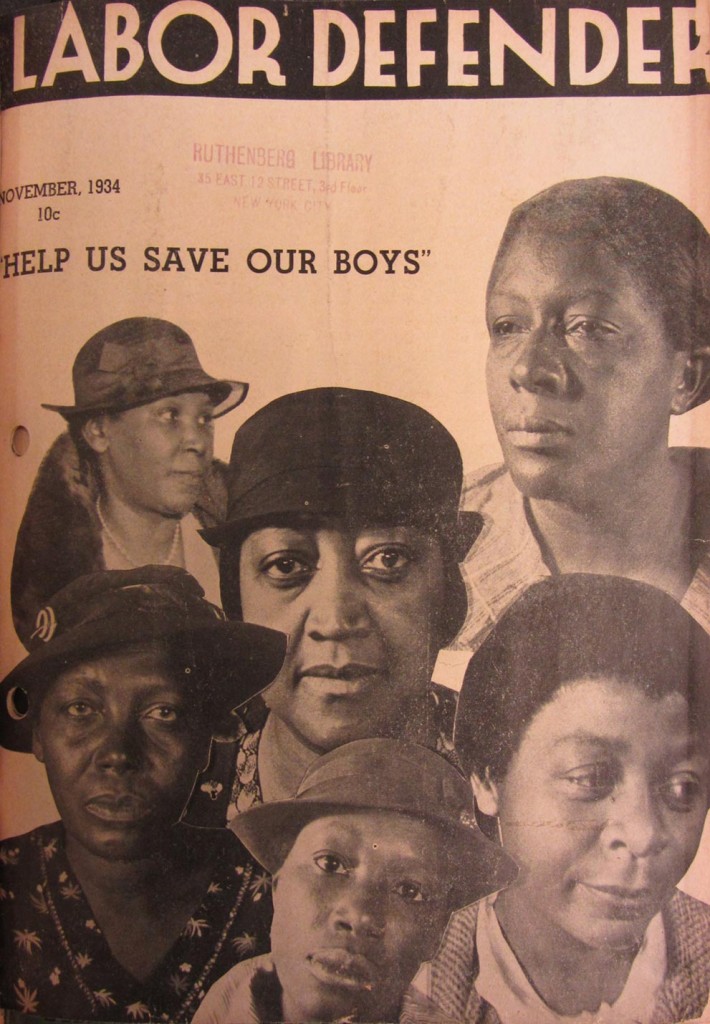
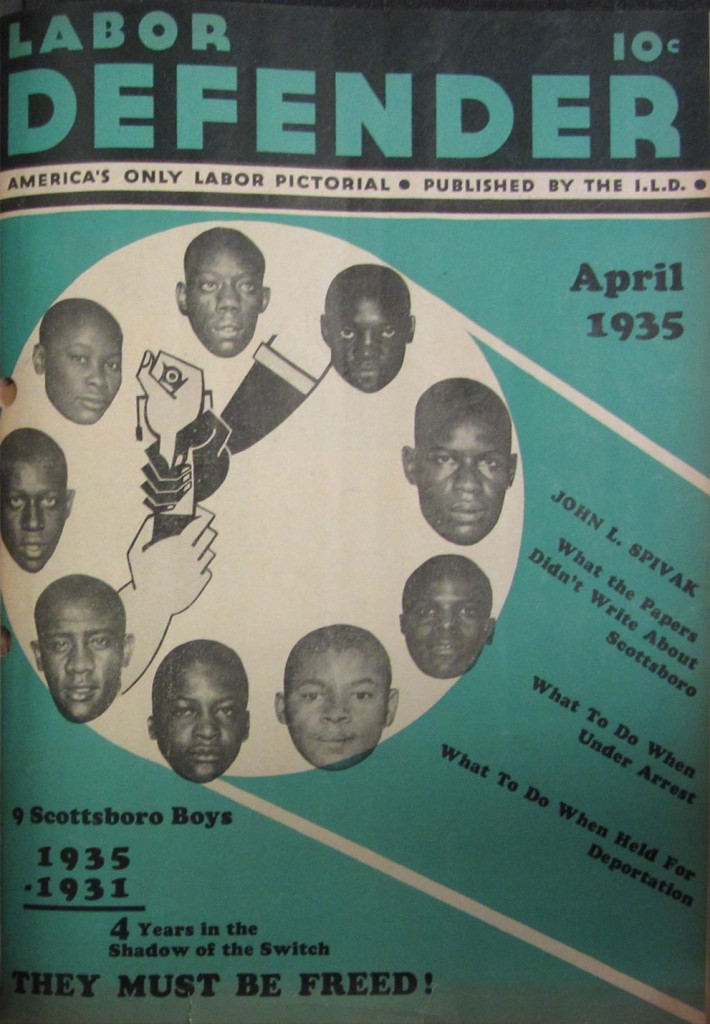
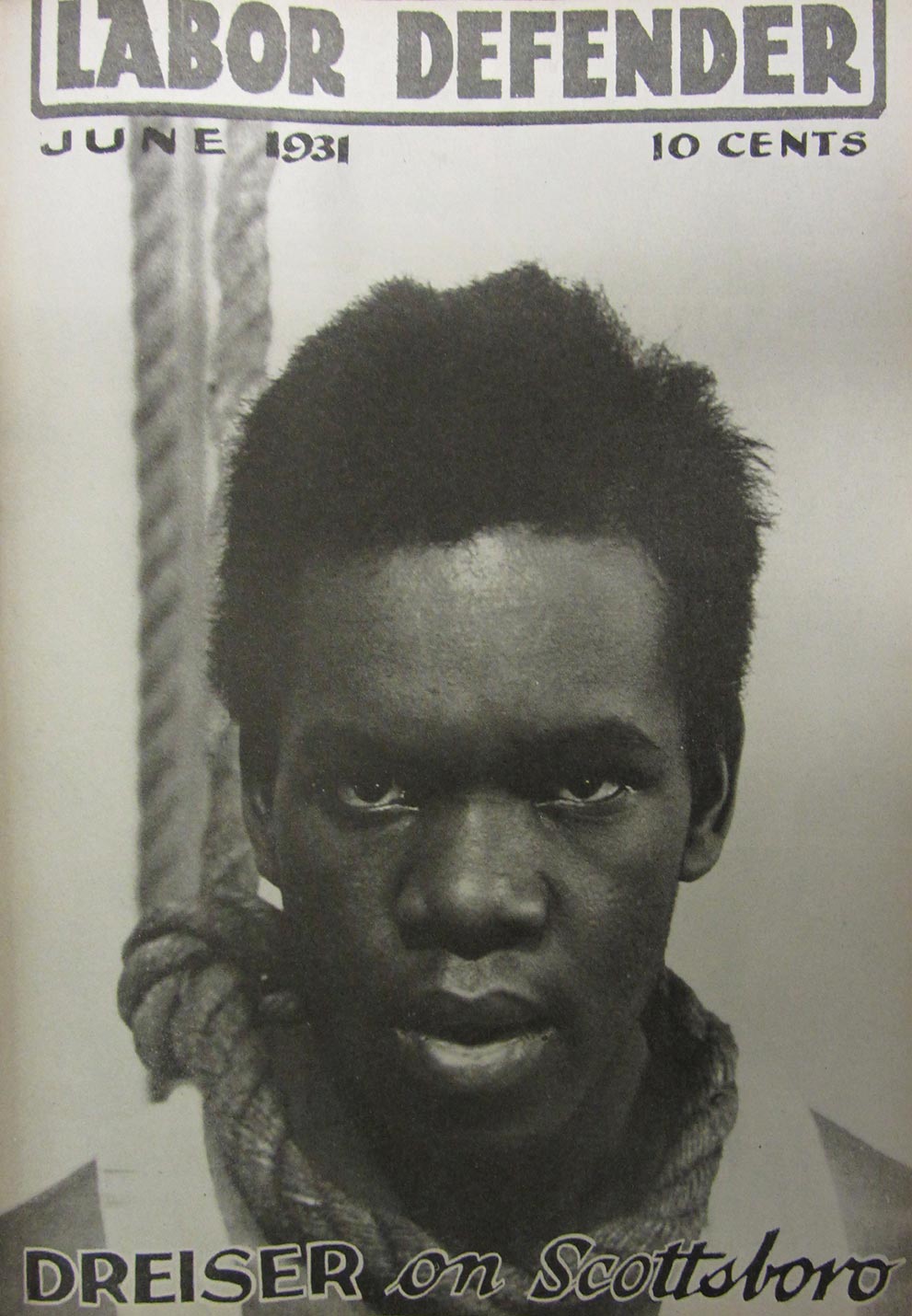
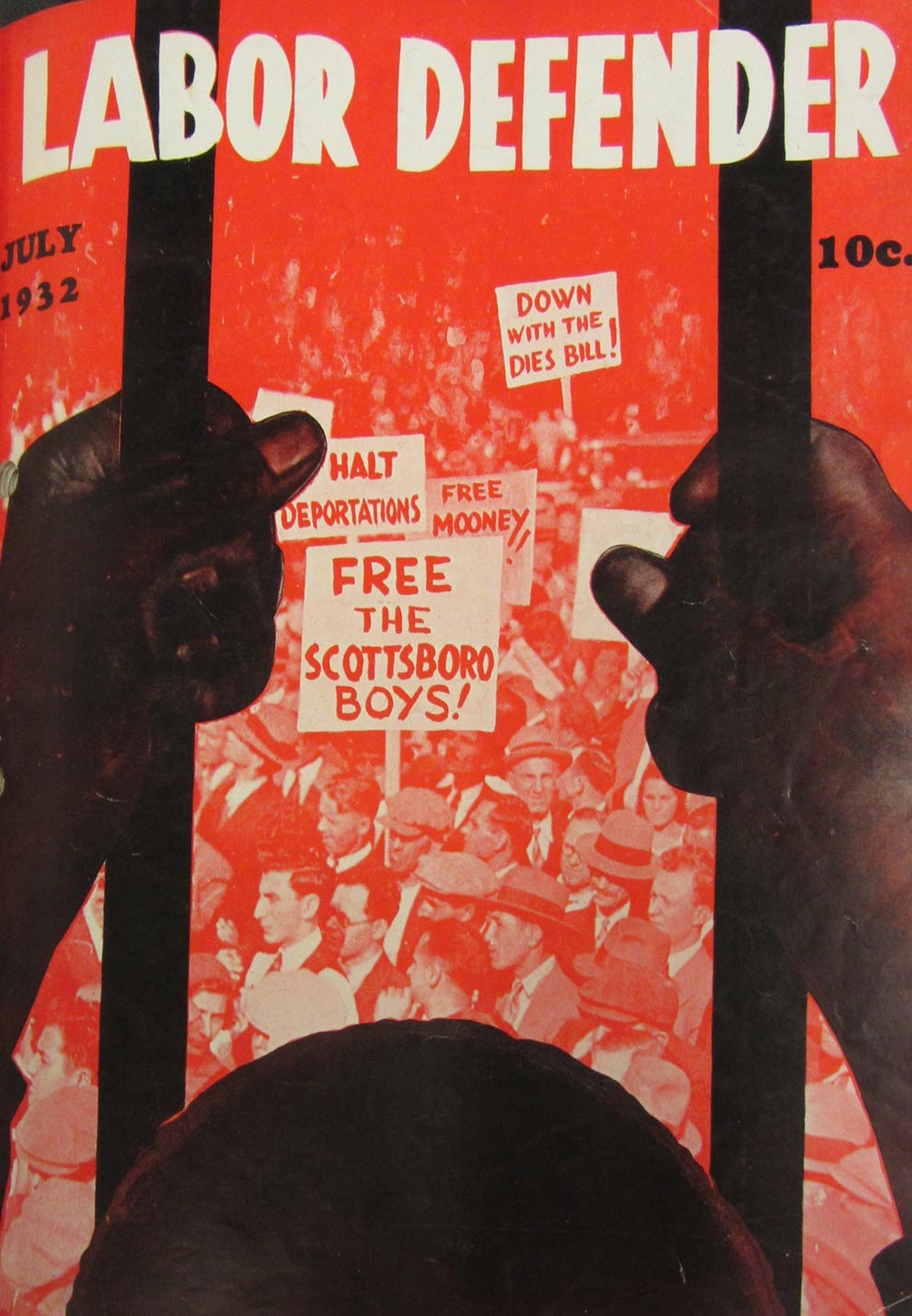
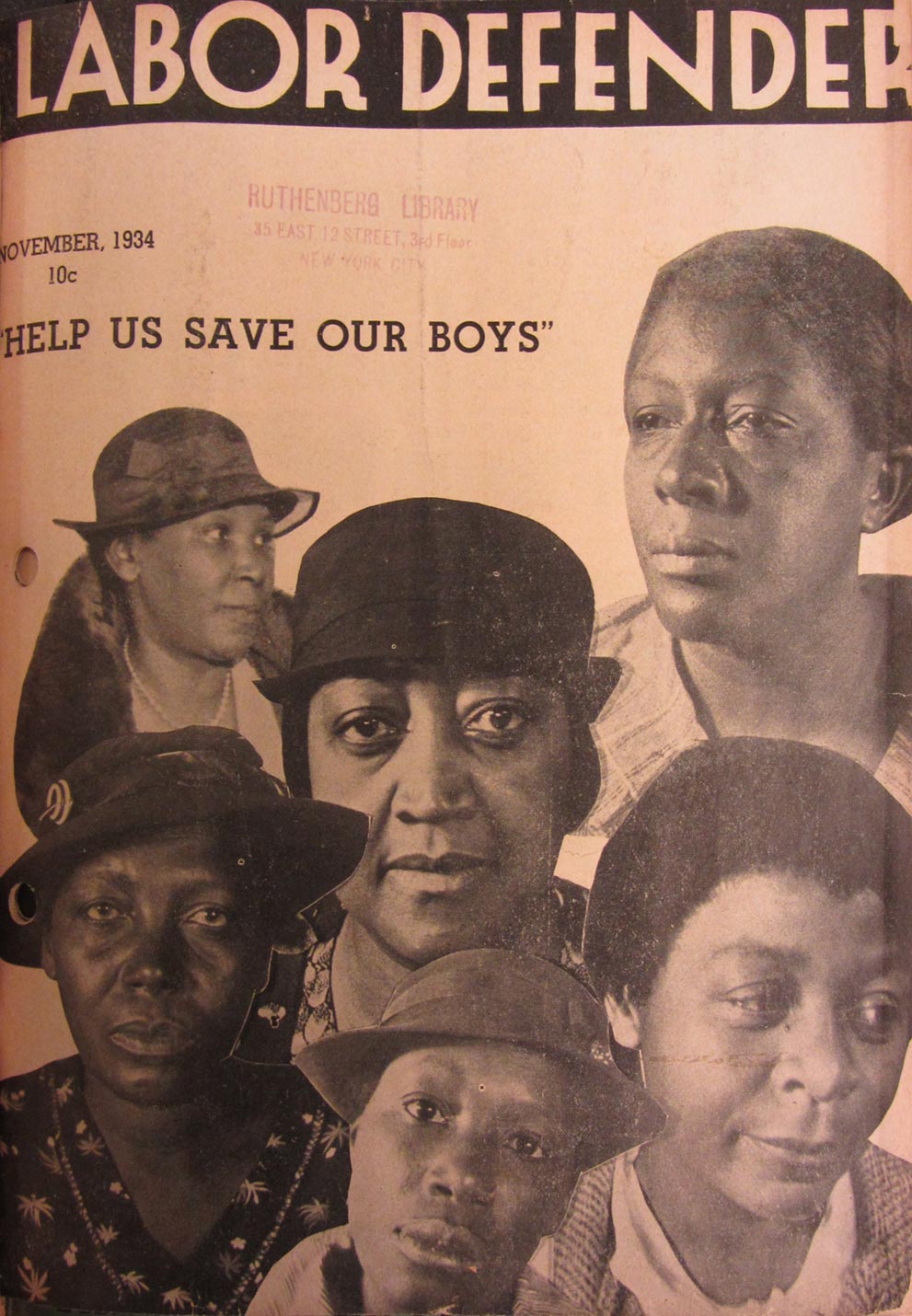
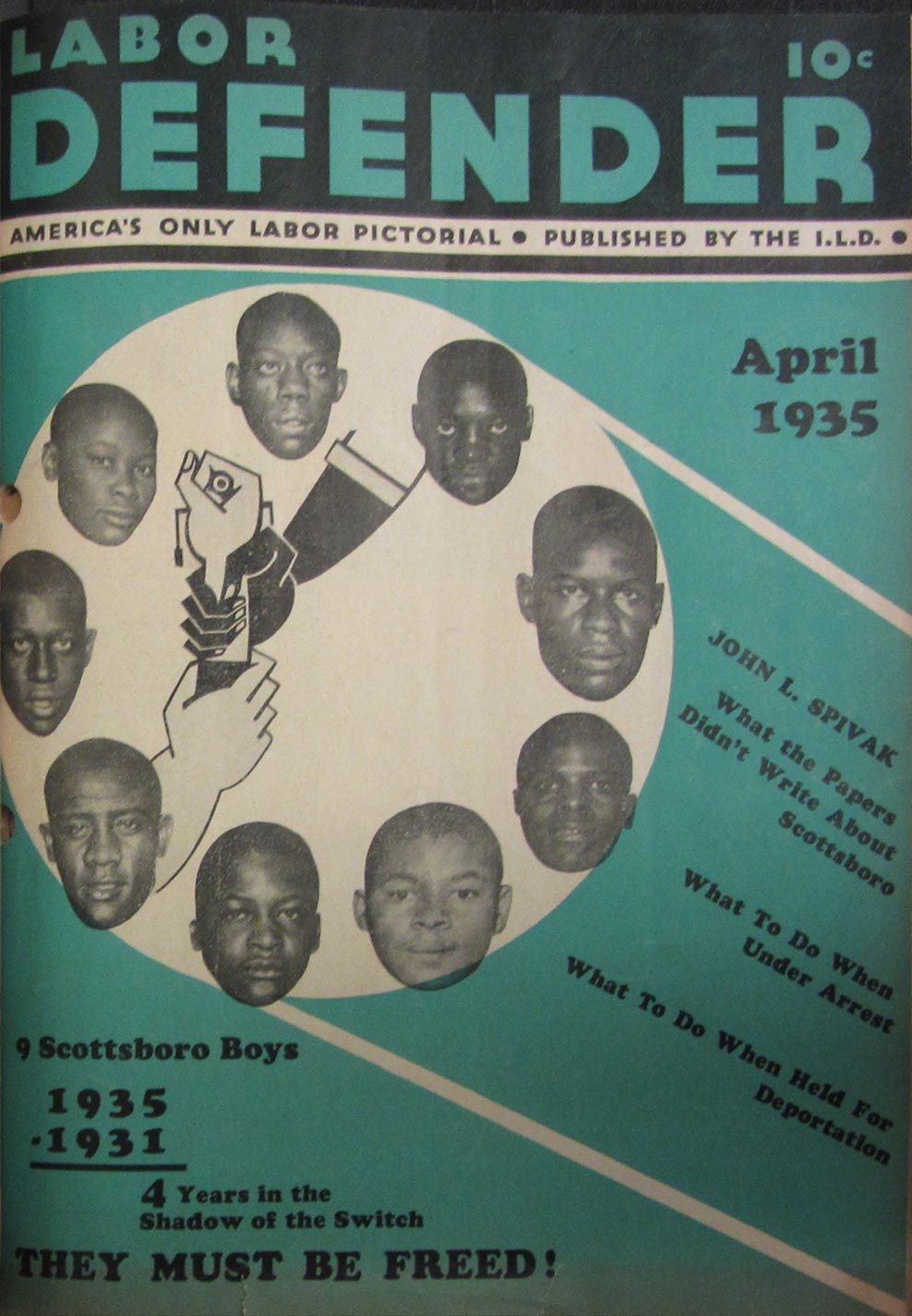
Covers from Labor Defender, June 1931, July 1932, November 1934, and April 1935. The Scottsboro Boys’ case was taken up by the International Labor Defense, the legal wing of the Communist International, which also forcefully advocated for justice in the pages of its magazine, Labor Defender.
Culture
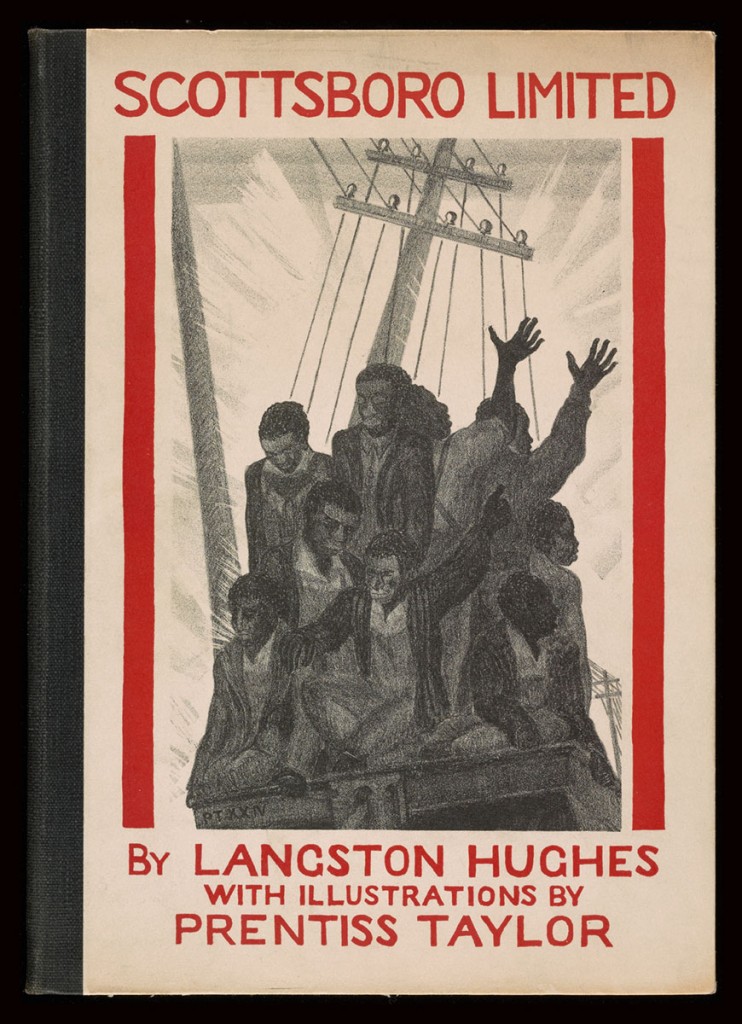
Langston Hughes. Scottsboro Limited. Illustration by Prentiss Taylor. New York: The Golden Stair Press, 1932
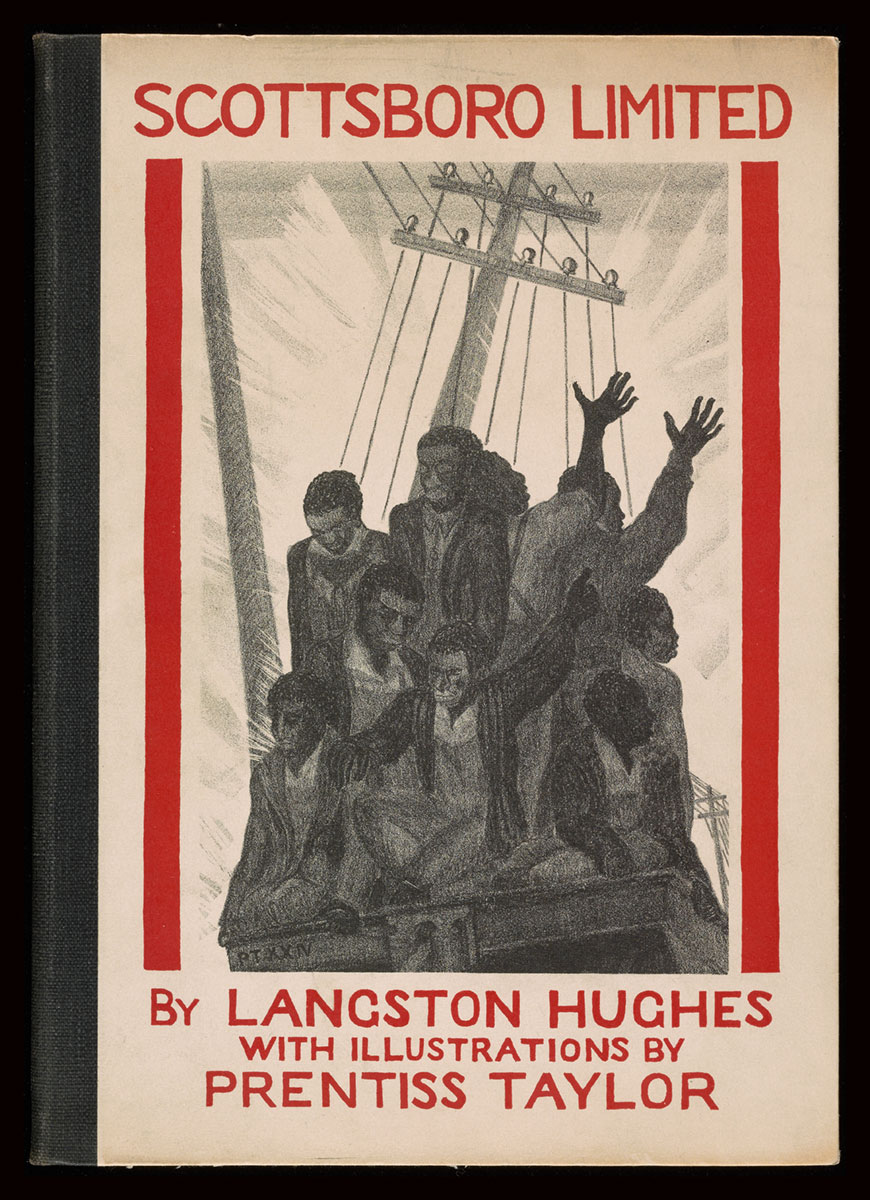
Harlem-based writers were among the first to register their protests against the treatment of the Scottsboro defendants. In 1932, Langston HughesCelebrated poet of the Harlem Renaissance and the Great Migration Read more published Scottsboro Limited, which includes poems and a play inspired by the case. The book was illustrated by Prentiss Taylor, a white artist from Washington, D.C., who became active in the Harlem Renaissance. Two years later, Countee Cullen added his voice to the chorus of outrage with the poem “Scottsboro, Too, Is Worth Its Song,” (see below) which excoriates white artists and commentators for holding their tongues as the young men languish in jail and calls on all writers, regardless of race, to use their creative talents to fight for justice.
Countee Cullen
Scottsboro, Too, Is Worth Its Song (A poem to American poets)
I said:
Now will the poets sing,
Their cries go thundering
Like blood and tears
Into the nation’s ears,
Like lightning dart
Into the nation’s heart.
Against disease and death and all things fell,
And war,
Their strophes
rise and swell
To jar
The foe smug in his citadel.
Remembering their sharp and pretty
Tunes for Sacco and Vanzetti,
I said:
Here too’s a cause divinely spun
For those whose eyes are on the sun,
Here in epitome
Is all disgrace
And epic wrong.
Like wine to brace
The minstrel heart, and blare it into song.
Surely, I said,
Now will the poets sing.
But they have raised no cry.
I wonder why.
In 1938, Lead Belly recorded “The Scottsboro Boys,” interspersing the song with spoken-word commentary such as:
Now I’ll tell you about it in Alabama—must be Jim Crow. If a white woman says something, it must be so. And she can say something about a colored person. If it’s a thousand colored men, they kill all of ‘em for just that one woman. If she ain’t telling the truth, it don’t make any difference. Why? ‘Cause it’s Jim Crow, and I know it’s so, ‘cause the Scottsboro boys can tell you about it.
Perspectives
For the Migration Series Poetry Suite, ten extraordinary contemporary poets were commissioned to write new poems in response to Jacob Lawrence’s Migration Series.