- Transformation of Tour Bois-le-Prêtre
- 2006–11
- Paris, France
- Frédéric Druot, Anne Lacaton, and Jean Philippe Vassal
- OverviewClose
The midcentury modernist housing development has long been the subject of criticism. In particular, high-rise apartment blocks, generally clustered closely together and housing low-income residents, have been characterized as anonymous, isolating, monofunctional containers, and in an effort to ameliorate social problems among the residents many have been torn down. Frédéric Druot, Anne Lacaton, and Jean Philippe Vassal are among the increasing number of architects who reject calls for the demolition of modernist housing projects. Their research demonstrates that renovating these structures rather than rebuilding from scratch can entail significant cost savings and is beneficial in allowing residents to stay in their apartments. In 2005 the architects won a government competition to remodel a public-housing high-rise on the boulevard Périphérique, the highway that circles the city of Paris.
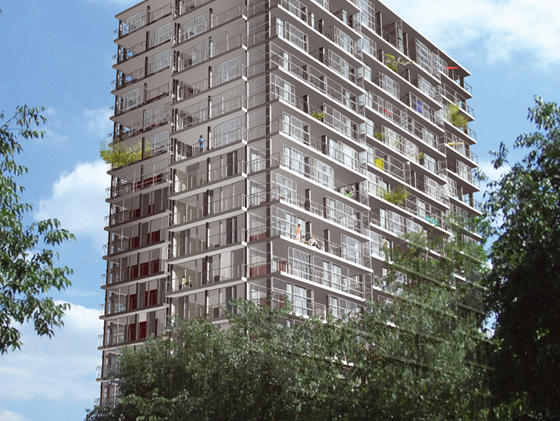
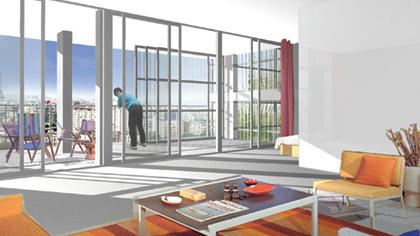
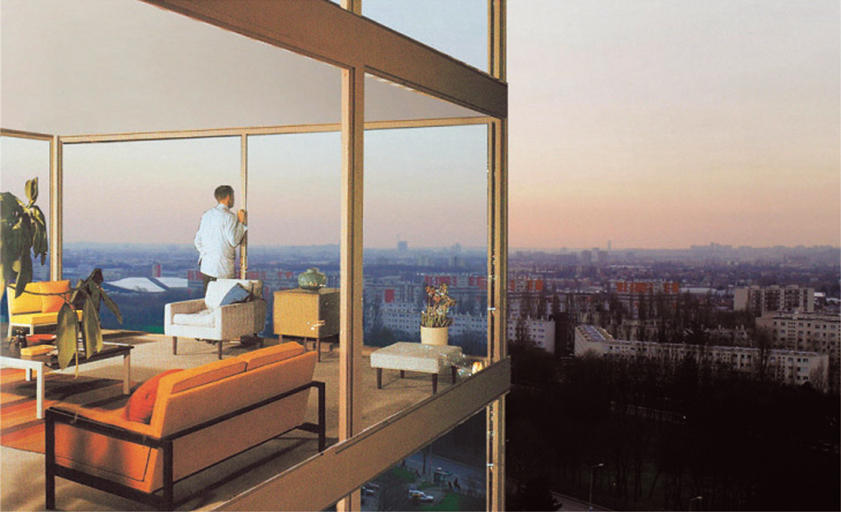
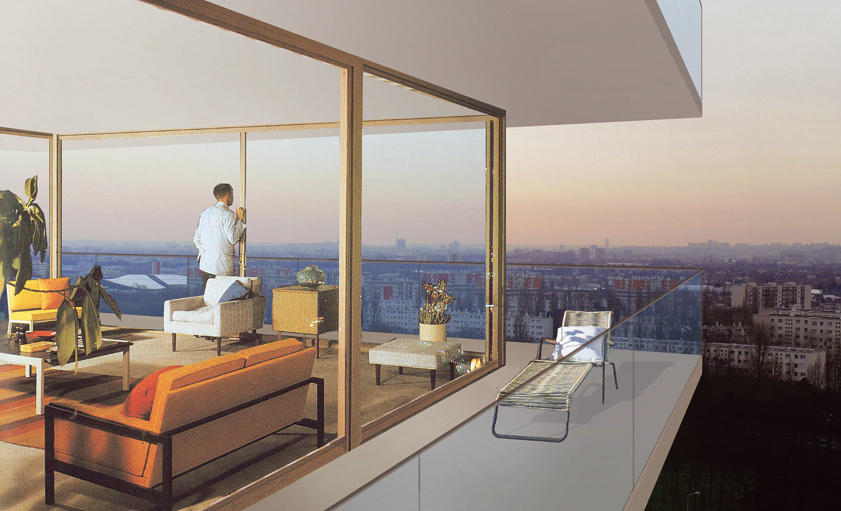
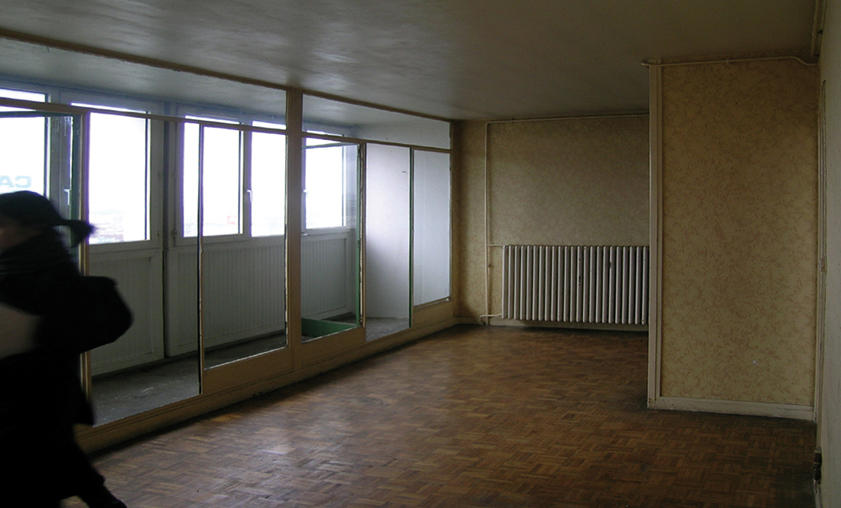
Based on previous research and their interviews with building residents, the architects focused on expanding spaces and increasing natural light to improve living conditions in each apartment. Their design calls for the addition of a new exterior structure—a glass shell of balconies that completely envelops the existing building, breaking up the monotony of the facade and providing the building’s insulation—as well as a series of individualized floor plans for the interiors, increased common space, and a more accessible building overall. The work is being done in two parallel phases: as the prefabricated, modular facade structure takes shape, the apartment interiors are modified and new openings created in the old exterior walls. Further, the architects are proceeding with the work in such a way that residents can stay in their homes or move within the building into one of eight spare apartments during construction. By adapting an existing structure to the present-day needs of its users, Druot, Lacaton, and Vassal are giving new life to a problematic and oft-criticized housing type, with implications that reach far beyond Paris.
-
Architect
Close
Anne Lacaton and Jean Philippe Vassal both graduated from École d’Architecture in Bordeaux in 1980. Lacaton was awarded a Master’s in Urbanism there in 1984. Jean Philippe Vassal worked from 1980 to 1985 as an architect and urbanist in Niger. Together, they opened the office Lacaton&Vassal in 1988. Their work develops the idea of generous spaces, the principle of double space for "program+appropriation," radically increasing the usual standard of social housing or public programs, and the economy to build more. They have completed several private houses in France, such as House Latapie in Bordeaux and House in the Trees on the Arcachon Bay; a social housing program of fourteen apartments in Mulhouse; and cafés for the Architektur Zentrum in Vienna; the Palais de Tokyo Site for contemporary creation in Paris; a management school in Bordeaux; an exhibition hall in Paris; a winery in the Corbières; and recently the architecture school in Nantes.
Currently they work on projects for social housing in St. Nazaire, Paris; the Contemporary Art Collection of the North region (FRAC) in Dunkerque; and the extension of the Palais de Tokyo in Paris.
Together with Frédéric Druot they did the study PLUS, a case study on the future of large-scale housing developments in France and the transformation of a high-rise building of social housing apartments in Paris, currently under construction.
Frédéric Druot received his architecture degree from the École d’Architecture in Bordeaux in 1984. He founded his own studio, l’Épinard Bleu, in 1987, and in 1991 he founded Frédéric Druot Architecture. His work focuses on cost-effectiveness research and the transformation of existing buildings.
-
Audio
Close
- CreditsClose
- Design team: Frédéric Druot, Anne Lacaton, Jean Philippe Vassal (architects); Adis Tatarévic, Miho Nagashima, Florian de Pous, Mario Bonilla, Maria de Oliveira, David Pradel, Caroline Stahl (collaborators)
- Engineers: Inex (systems engineers); VP & Green (structural engineers)
- Consultants: E.2.I (cost consultant); Jourdan (acoustics); Vulcanéo (fire security consultant)
- Construction: Batscop (construction coordinators)
- Client: Paris Habitat
-
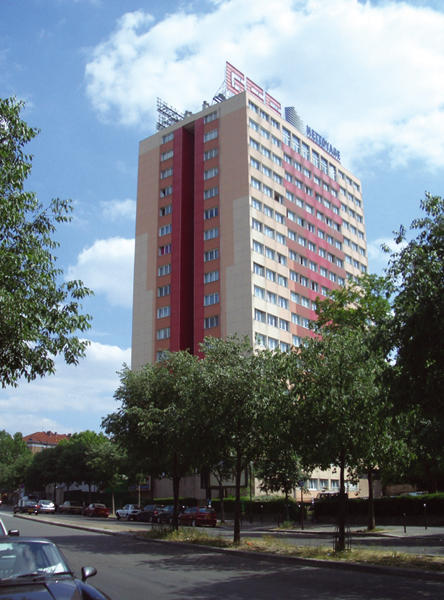
- View of existing tower Image credit: Druot, Lacaton & Vassal Close
- 1 of 2
-
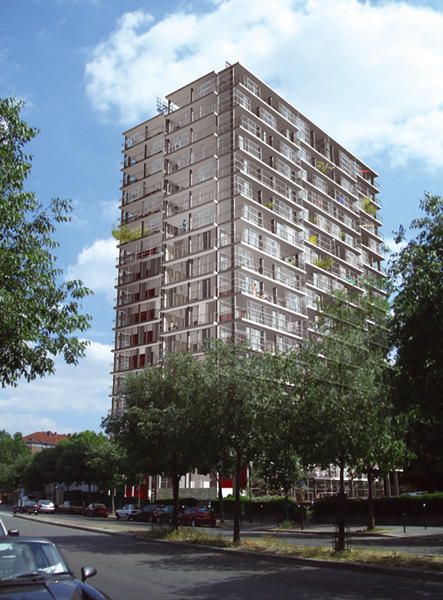
- Rendering of completed transformation Image credit: Druot, Lacaton & Vassal Close
- 2 of 2
-

- Tour Bois le Prêtre, Paris, animation Video credit: Produced by Cité de l’architecture & du patrimoine, Paris, for the exhibition Lacaton & Vassal, November 2008. Lacaton&Vassal and Cité de l’architecture & du patrimoine, Paris Close
- 1 of 1
-
- Existing Image credit: Druot, Lacaton & Vassal Close
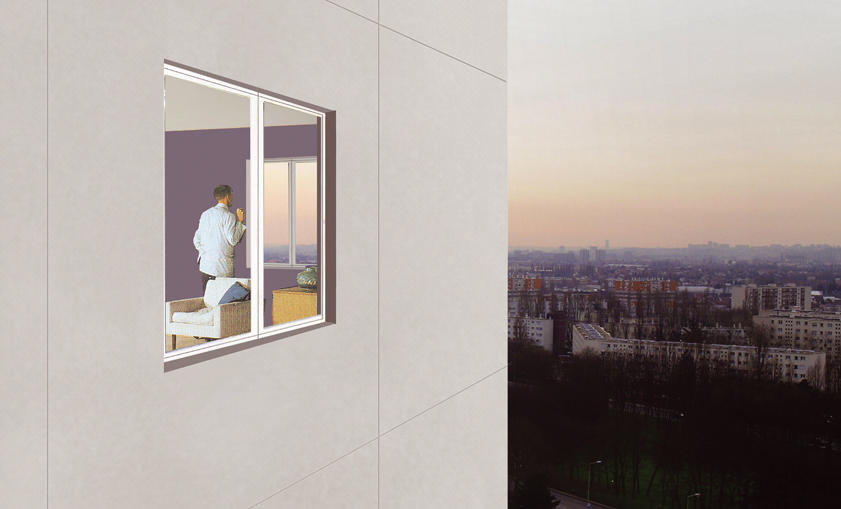
The architects’ strategies of improvement and expansion are not only more economical and more environmentally friendly than demolition, but they also benefit apartment residents, who, when displaced by demolition in Paris, have been offered apartments up to fifteen percent smaller than those vacated.
- 1 of 3
-
- Open the facades Image credit: Druot, Lacaton & Vassal Close
- 2 of 3
-
- Expansion Image credit: Druot, Lacaton & Vassal Close
- 3 of 3
-
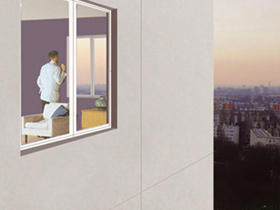
- View of apartment interior before transformation Image credit: Druot, Lacaton & Vassal Close
- 1 of 2
-
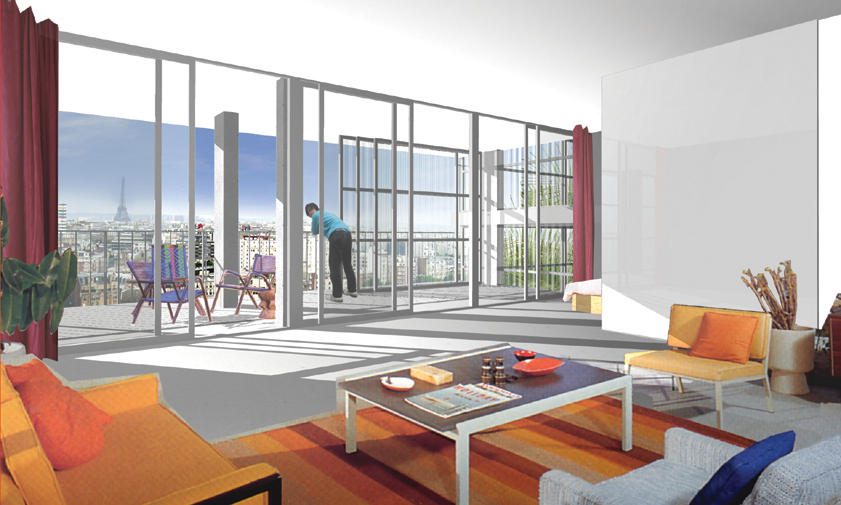
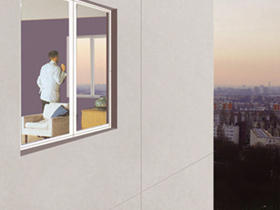
- View of apartment interior after transformation Image credit: Druot, Lacaton & Vassal Close
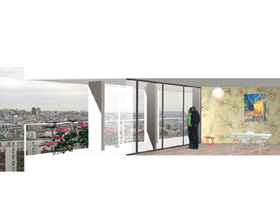
With its layered balconies and winter gardens, the new structure lets more light enter the apartments and common spaces and also acts as a thermal buffer, filtering the sunlight and providing insulation, which reduces cooling and heating costs. The architects also constructed a full-sized model unit, giving residents a chance to visit and better understand the expansion process.
- 2 of 2
-
- Construction slideshow Video credit: Druot, Lacaton & Vassal Close
- 1 of 1
-
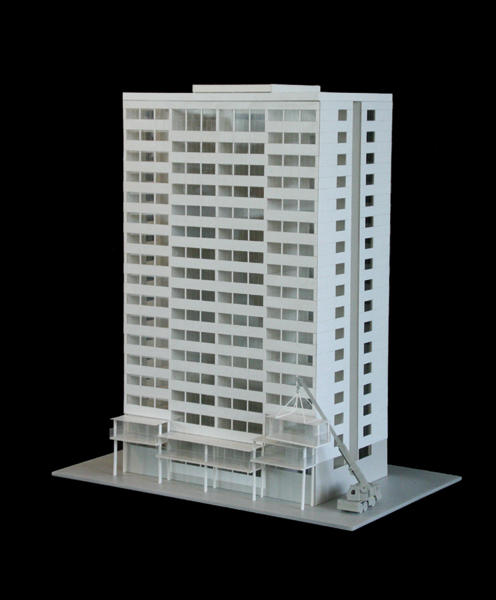
- Model of tower before transformation Image credit: Druot, Lacaton & Vassal Close
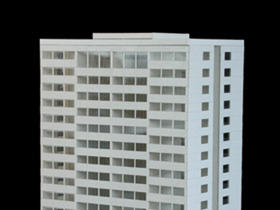
Lacaton and Vassal have studied the benefits of adapting problematic existing structures instead of demolishing and reconstructing them. Their method is based on increasing light and communal space and other improvements that will raise the quality of life for residents without displacing them. Lacaton and Vassal teamed up with Druot for the transformation of Tour Bois-le-Prêtre. The tower, built in 1961, was renovated once previously, in 1990. It is sixteen stories tall and contains ninety-six apartments.
- 1 of 2
-
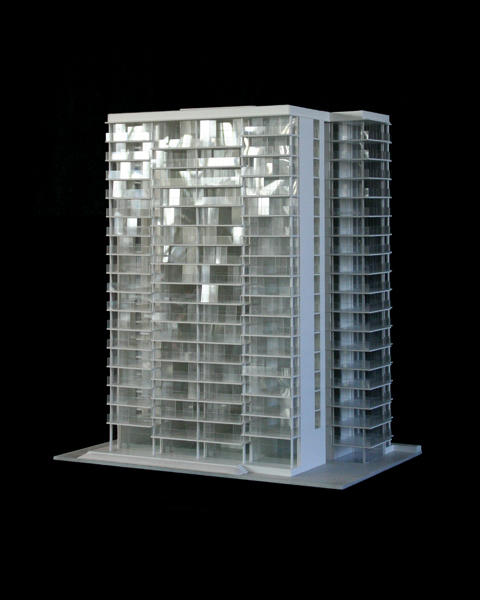
- Model of tower after transformation Image credit: Druot, Lacaton & Vassal Close
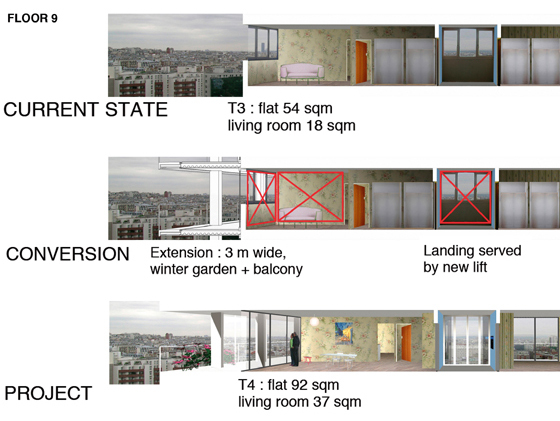
Druot, Lacaton, and Vassal’s expansion plan is based on so-called dry construction, a minimally disruptive process during which residents may continue to live in their apartments. Construction is occurring in three phases: first the building’s original skin is stripped away; then prefabricated additions (winter gardens and balconies) are plugged in to the building’s exterior; lastly, the original external wall is removed and changes are made to individual apartments.
- 2 of 2
-
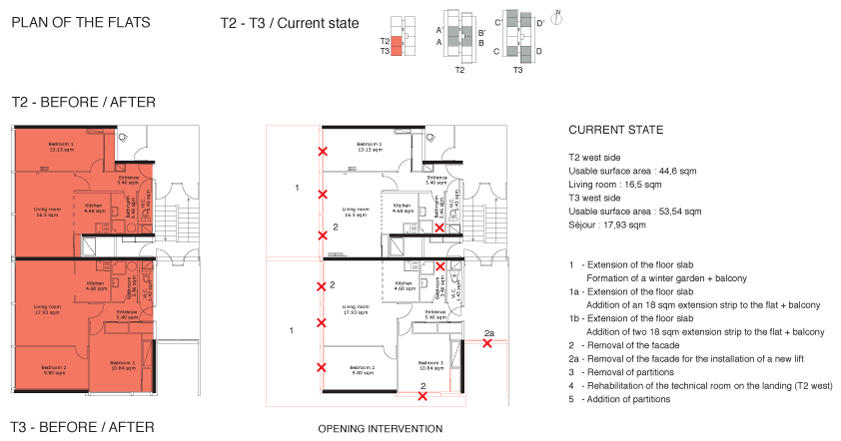
- Proposal for lines A, A' and C Image credit: Druot, Lacaton & Vassal Close
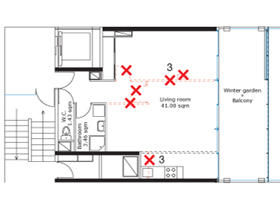
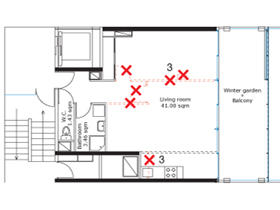
After studying the existing apartment layouts, the team developed a series of transformation strategies aimed at improving individual apartments and enhancing communal spaces. Integrated into the plan is a new elevator that will open at each floor, directly; previously, certain apartments were accessible only by a combination of elevator and stairs.
- 1 of 5
-
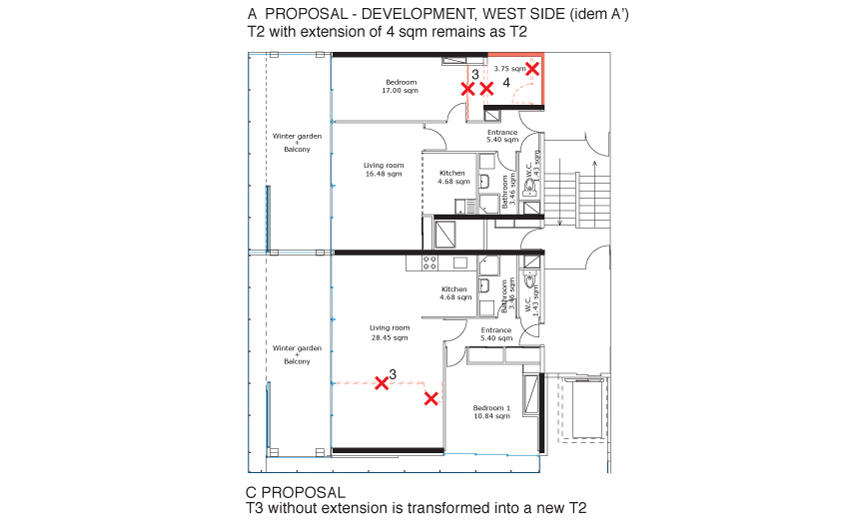
- Proposal for lines B and B' Image credit: Druot, Lacaton & Vassal Close
- 2 of 5
-
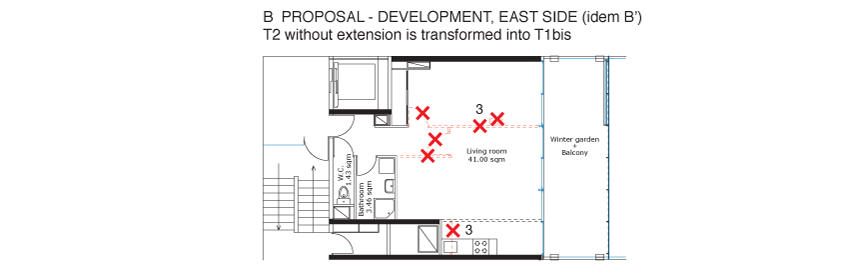
- Proposal for lines C' and D Image credit: Druot, Lacaton & Vassal Close
- 3 of 5
-
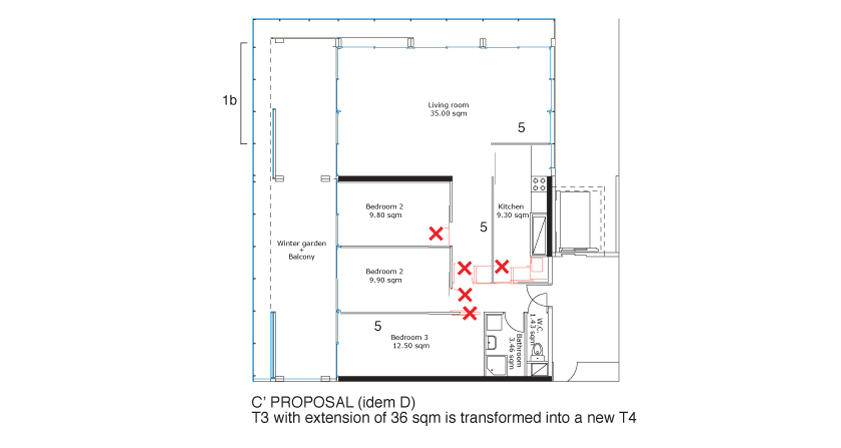
- Proposal for line D' Image credit: Druot, Lacaton & Vassal Close
- 4 of 5
-
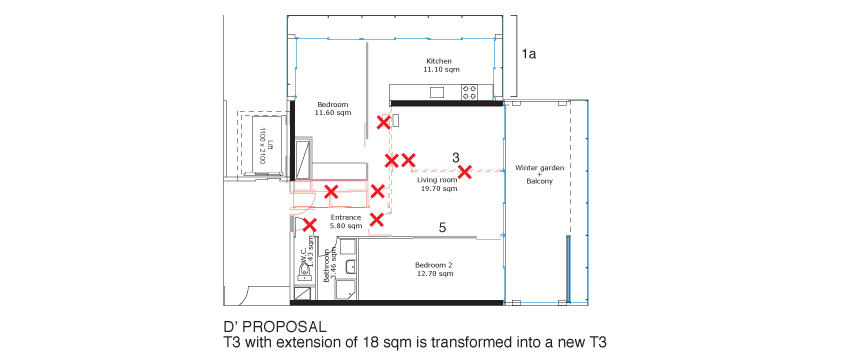
- Current state and opening intervention Image credit: Druot, Lacaton & Vassal Close
- 5 of 5
-
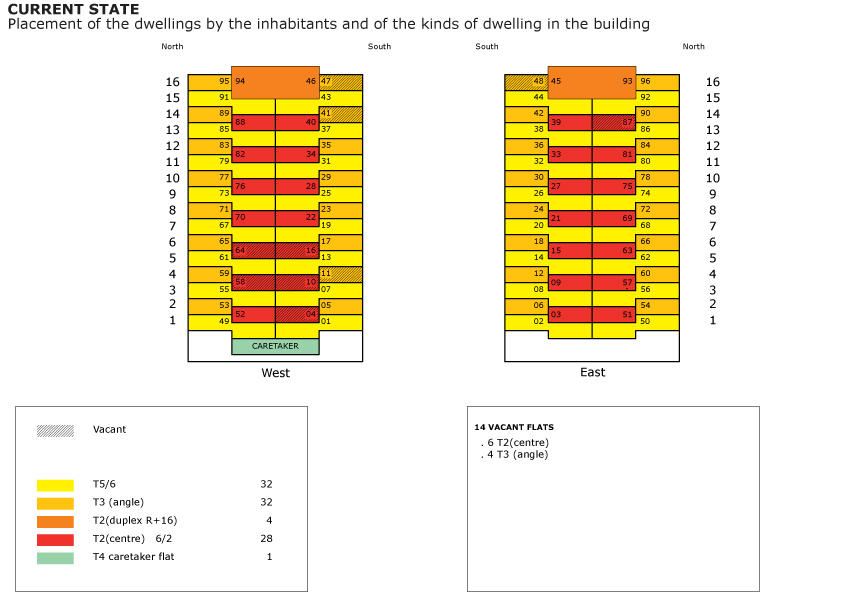
- Before transformation: diagrams of occupancy by unit type Image credit: Druot, Lacaton & Vassal Close
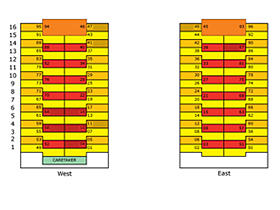
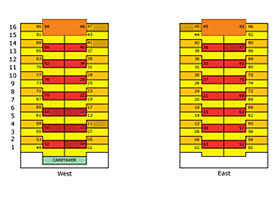
The architects conducted a series of initial workshops in which they asked tenants to consider how their apartments could be transformed. In the original building layout, four basic apartment types were distributed on odd and even floors; Druot, Lacaton, and Vassal designed ten new variations based on residents’ needs, updated for a more contemporary style of living. The first diagram (1 of 2) shows the distribution of unit types before the transformation; the next one (2 of 2) illustrates how the apartments have been redistributed, regrouped, and shifted within the tower layout.
- 1 of 2
-
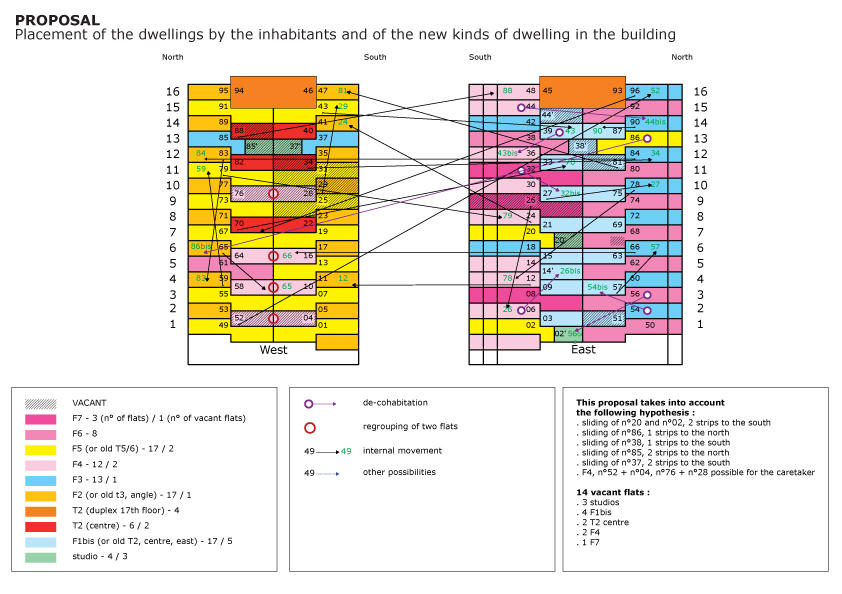
- After transformation: redistribution of occupancy by unit type Image credit: Druot, Lacaton & Vassal Close
The architects conducted a series of initial workshops in which they asked tenants to consider how their apartments could be transformed. In the original building layout, four basic apartment types were distributed on odd and even floors; Druot, Lacaton, and Vassal designed ten new variations based on residents’ needs, updated for a more contemporary style of living. The first diagram (1 of 2) shows the distribution of unit types before the transformation; the next one (2 of 2) illustrates how the apartments have been redistributed, regrouped, and shifted within the tower layout.
- 2 of 2
-
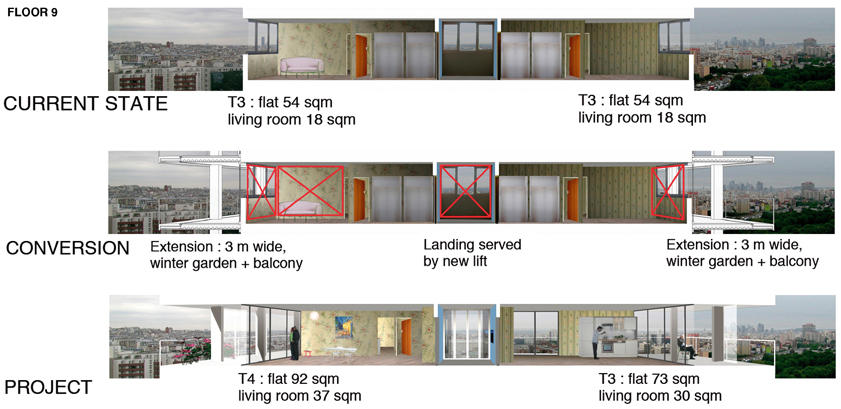
- Typical floor-through panorama Image credit: Druot, Lacaton & Vassal Close
- 1 of 1