
Magazine
-

One on One: Salvador Dalí’s The Persistence of Memory
Inspired by cheese? Probably. Painted in two hours? Doubtful. Read about the “true” story of Dali’s most famous painting.Dec 4, 2025 -
 Member exclusive
Studio Visit: Rashid Johnson on Wifredo Lam
The artist discusses the influence and legacy of a trailblazing modernist, and new ways to think about the surreal imagination.Nov 14, 2025 -
 How to See
How to See an Exquisite Corpse
The famous Surrealist game has taken on a life of its own over 100 years.Oct 16, 2024 -
 Magazine Podcast
The Curious Case of Meret Oppenheim’s Furry Teacup
A hundred years later, a Surrealist artwork continues to inspire curiosity in all who encounter it.Oct 16, 2024 -

The Discovery of René Magritte’s The Enchanted Pose
In preparation for a 2013 Magritte exhibition, MoMA conservators discovered one part of a painting once thought lost. Now, all four sections of the repurposed canvas have been identified under other works.Sep 20, 2024 -

Surreal Love: Unveiling René Magritte’s The Lovers
Love is blind…and suffocating?Feb 7, 2024 -

The Art of Retrospection: Meret Oppenheim’s “Imaginary Exhibition” Drawings, 1983
Read an excerpt from the Meret Oppenheim: My Exhibition exhibition catalogue.Oct 26, 2022 -
 UNIQLO ArtSpeaks
Mia King on Salvador Dalí’s The Persistence of Memory
An iconic Surrealist painting shows what can happen when your subconscious mind is in the driver’s seat.Mar 25, 2022 -
 Poetry Project
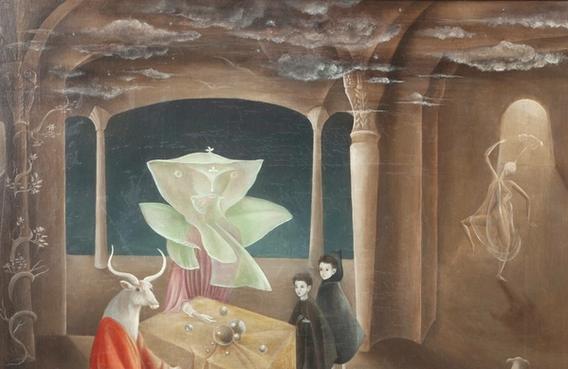
“Not at All What We Expected”
Poet Ada Limón launches this year’s Poetry Project, and reads the poem she wrote, inspired by Leonora Carrington’s painting And Then We Saw the Daughter of the Minotaur.Sep 30, 2021 -

Violet Chachki on the Art of Drag
The drag superstar talks about queerness, families, and her tribute to the transgressive artist Pierre Molinier.Jun 16, 2021 -
 UNIQLO ArtSpeaks
Elba Rodriguez on Leonora Carrington
Take a break from reality with Carrington’s Surrealist painting And Then We Saw the Daughter of the Minotaur.Feb 19, 2021 -
 Activities
Make Your Own Exquisite Corpse
Find creative inspiration with the Surrealist art game.Nov 18, 2020 -
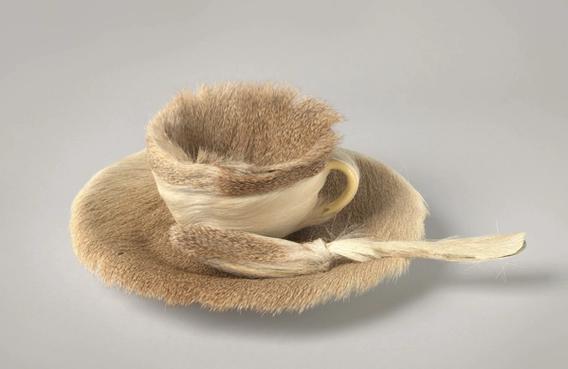
Hounding the Mad Beast of Function
A book excerpt, audio, and a podcast delve into Meret Oppenheim’s fur-covered cup.Nov 18, 2020 -

Safe Passage
Discover the extraordinary story of how one woman, Margaret Scolari Barr, helped MoMA save artist refugees during World War II.Nov 17, 2020 -
 For families
Unreal, Mysterious, Strange
Explore the dreamlike art of the Surrealists with these art activities for kids and families.Nov 12, 2020 -
 New to MoMA
Leonora Carrington and the Visual Language of Mexican Surrealism
Two new acquisitions display the artist’s interest in the occult.Feb 19, 2020 -
 Poetry Project
The Impossible Lesbian Love Object(s)
Brenda Shaughnessy gives voice to Meret Oppenheim’s Object.Nov 5, 2019 -
MoMA Menu
Surreal Supper
A weekly taste of food-inspired works from MoMA's collection.Oct 9, 2019 -
 New to MoMA
Remedios Varo’s The Juggler (The Magician)
How will this new addition to MoMA’s collection shake up conversation in the galleries?Jan 18, 2019
