Art terms
Learn about the materials, techniques, movements, and themes of modern and contemporary art from around the world.
All
A
B
C
D
E
F
G
H
I
J
K
L
M
N
O
P
Q
R
S
T
U
V
W
X
Y
Z
Showing all 360 art terms
-
A
-
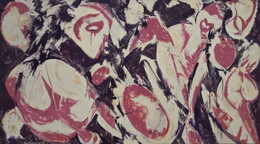
Abstract Expressionism
The dominant artistic movement in the 1940s and 1950s, Abstract Expressionism was the first to place New York City at the forefront of international modern art. The associated artists developed greatly varying stylistic approaches, but shared a commitment to an abstract art that powerfully expresses personal convictions and profound human values. They championed bold, gestural abstraction in all mediums, particularly large painted canvases.
-
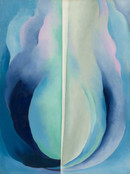
Abstraction
Non-representational works of art that do not depict scenes or objects in the world or have discernible subject matter
-

Acrylic paint
A fast-drying paint made of pigment suspended in acrylic polymer emulsion. A key difference between acrylic paint and oil paint is that acrylics are water-based whereas oils are oil-based.
-

Action painting
Art critic Harold Rosenberg coined the term “action painting” in 1952 to describe the work of artists who painted using bold gestures that engaged more of the body than traditional easel painting. Often the viewer can see broad brushstrokes, drips, splashes, or other evidence of the physical action that took place upon the canvas.
-

Actuality
A nonfiction film, usually lasting no more than one to two minutes, showing unedited, unstructured footage of real events, places, people, or things. Actualities, the predecessor of documentaries, were popular forms of entertainment from the early 1890s until around 1908.
-

African diaspora
Refers to the many peoples of African descent who live across the globe. For many of the people in this diaspora, their present place of residence is the result of forced migration due to historical events like the transatlantic slave trade or contemporary life-threatening events such as war or famine. Other reasons for migration include job opportunities, community finding, political exile, etc.
-

Afrofuturism
First coined in 1993 by the cultural critic Mark Derry, afrofuturism refers to a literary and artistic mode of reimagining Black history and culture—and possible futures—through the lens of science fiction and fantasy. Black artists in many disciplines, including music, dance, painting, and literature, use afrofuturism to recover the past, understand the present, and envision a future on their own terms.
-
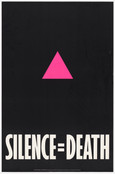
AIDS activism
The start of the AIDS crisis is often identified as June 1981, when the United States’ Centers for Disease Control first reported on cases of the disease in gay men. In the subsequent decades, people living with HIV/AIDS, as well as their family, friends, partners, and caretakers, have led actions to honor people impacted by the disease, condemn governmental neglect of the ongoing epidemic, and resist widespread discrimination against people living with HIV/AIDS. Motivated by this political and public-health crisis, and the profound loss and suffering it has caused, a wide range of artists, working both collectively and individually, have used their artwork to bring attention to and demand support for people living with HIV/AIDS.
-
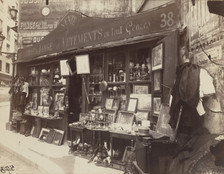
Albumen silver print
A photographic print that uses albumen, more commonly known as egg white, as a binder layer. To make the print, a glass-plate negative is placed in direct contact with the sensitized paper and exposed. The result is that the print and the negative are the same size. Albumen prints are admired for their tonal range and strong blacks. To increase stability, these prints were often toned with gold, which turned the warm yellow image to a lush purple. Albumen silver prints were the dominant process from 1850 through the 1880s, when they were replaced by collodion and gelatin silver prints.
-

Alkyd enamel paint
Common household commercial paint made with a chemically modified version of linseed oil that dries quickly to a hard, often glossy finish
-
Alligator skinning
A texture that often forms on the surface of dry paints that have a very high medium content and an extended drying time.
-
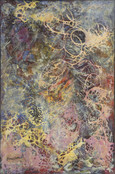
Allover painting
An approach to painting that emerged with the Abstract Expressionists, in which each area of the composition is given equal attention and significance. Compositions vary widely and include canvases entirely covered in layers of paint, or filled with brushstrokes, drips, stains, or other markings, sometimes with unorthodox materials embedded in the surface.
-

Ambrotype
A lightly exposed wet-plate glass negative that appears as a positive when placed on a black backing.
-
Animal skin glue
Natural adhesive created from animal bones, used in woodworking until synthetic glues were invented
-

Animation
-

Appropriation
As an artistic strategy, the intentional borrowing, copying, and alteration of preexisting images, objects, and ideas
-

Aquatint
An intaglio printmaking technique that creates tonal areas. Its name reflects its watercolor-like effects. Powdered resin is sprinkled on a metal plate and adheres through heating. When the plate is submerged in acid, tiny areas unprotected by the resin are “bitten” by the acid, creating recesses. After the resin coating is removed, the plate is inked to fill in these recesses. When damp paper is laid on the plate and run through a press, the tiny ink-filled recesses print as tonal fields.
-
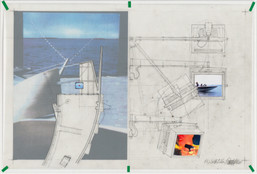
Architectural drawing
Also called a rendering, an architectural drawing is used to illustrate a building or portion of a building. These renderings can be done by hand or using computer software, and can represent different visual perspectives by showing buildings or a portion of a building straight on (e.g., elevation drawing), from above (e.g., plan drawing), etc. Architectural drawings can appear in a variety of forms, from watercolor over a flat structure drawn in pencil to three-dimensional scenes of photorealistic images.
-

Architectural fragment
An object formerly part of a built structure, intended to be part of a built structure, or representing a structural element of a building.
-

Architectural model
A presentation of an architectural concept in three-dimensional form. Can also refer to digital files representing the same.
-
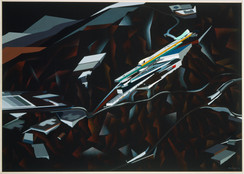
Architecture
The science, art, or profession of designing and constructing buildings and other structures for use or habitation by humans; a building, or buildings collectively; any framework, system, or other organizing structure.
-
Art critic
A person who interprets and evaluates works of art.Art critics speak and write about art—activities that people have undertaken for thousands of years. Yet art critics established their professional identity and gained cultural influence with the emergence of modern art in the 1880s. At the time, new arts institutions, such as commercial galleries, challenged the dominance of older ones, such as royal academies. Artists began to experiment with subjects, styles, materials, and techniques in ways that excited some viewers while confusing and even angering others. Art critics discussed these developments in newspapers, magazines, journals, books, and lectures. In doing so, they positioned themselves as bridges between art and the public.As modern artists continued to build on and break with artistic traditions in the early twentieth century, art critics shared their interpretations of works for the public. Certain critics were supportive of artistic innovations, others were skeptical, and some were openly opposed. Their views, both positive and negative, had a profound effect on public understanding of modern art. Art critics often promoted avant-garde artworks, artists, and artistic movements, making the case for their significance and helping them achieve acceptance. But art critics also left their mark through attacks. For example, Fauvism and Cubism—two radical artistic styles that arose in the first decade of the century—both traced their names to negative reviews by an art critic who disapproved of them.Art criticism continues today as technologies such as the internet expand who can be a critic and how critics connect with audiences.
-
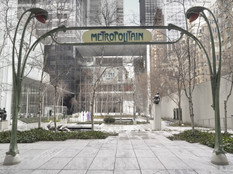
Art Nouveau (New Art)
An international artistic movement of the late 19th and early 20th centuries that emphasized the unity of the arts and sought to reflect the intensive psychic and sensory stimuli of the modern city. Although it influenced painting and sculpture, the movement’s chief manifestations were in design, performance art, and architecture. Variants of the movement in cities throughout Europe and the US accrued labels such as Arte Nova, Glasgow Style, Stile Liberty, and Arte Modernista. The version commonly referred to as Art Nouveau (“New Art” in French) flourished in France and Belgium and was characterized by curving, uneven lines based on organic forms.
-

Arte concreto (Brazilian Concrete art)
Two groups interested in Concrete art emerged in the 1950s in the rapidly industrializing country of Brazil. Based in both São Paulo and Rio de Janeiro, the artists connected to both groups, Grupo Frente and Grupo Ruptura, departed from both abstraction and figuration to create geometric works focused solely on the principles of color, line, and shape. Some Brazilian concrete artists, such as Lygia Clark, Helio Oiticica, and Lygia Pape, grew frustrated with the limits of Concrete art and pushed it to a new level of experimentation. Around 1960 Oiticica said, “All real art does not separate technique from expression.” They called this work, which often included the viewer as a participant, Neo-concrete art. The mostly Rio-based Neo-concretists embraced a more active, participatory relationship to objects.
-

Arte Povera
A movement of young Italian artists who attempted to create a new sculptural language through the use of humble, everyday materials. Meaning “poor art,” the term was introduced in 1967 by Italian art critic and curator Germano Celant to describe the work by these artists. In them, Celant found a shared revolutionary spirit inextricably linked to the increasingly radical political atmosphere in Italy at the time. By using non-precious and impermanent materials such as soil, rags, and twigs, Arte Povera artists sought to challenge and disrupt the commercialization of art.
-

Artist collective
A pair or group of artists who work together under one name.
-
![Tauba Auerbach. Cubearc from [2,3]. 2011](/media/W1siZiIsIjI0NDYwMSJdLFsicCIsImNvbnZlcnQiLCItcXVhbGl0eSA5MCAtcmVzaXplIDI2MHgxNzRcdTAwM2UiXV0.jpg?sha=4164ae36c5291555)
Artist’s book
A term referring to publications conceived, designed, and illustrated by artists, often self-published or published by arts organizations in large or unlimited editions. These books are usually printed commercially with the photolithography (offset) technique and meant to be an affordable art form.
-

Arts and Crafts movement
Founded in England in the 1860s in response to mass industrialization, this design and architecture movement was focused on changing workers’ relationship with machines and the objects they created. In addition to their deep appreciation for handmade labor, makers emphasized functional forms, simple and clear construction, and the use of local or natural materials. The resulting international network of arts and craft knowledge and techniques had widespread influence on the global Art nouveau movement, the Bauhaus school of art and design in Germany, and many others.
-

Assemblage
A three-dimensional work of art made from combinations of materials including found or purchased objects.
-

Audio
Sound as recorded, transmitted, or reproduced. Could include or refer to the use of noise and/or silence.
-

Automatism
Strategies of writing or creating art that aimed to access the unconscious mind. The Surrealists, in particular, experimented with automatist techniques of writing, drawing, and painting.
-

Avant-garde
French for “advanced guard,” originally used to denote the vanguard of an army and first applied to art in France in the early 19th century. In reference to art, the term means any artist, movement, or artwork that breaks with precedent and is regarded as innovative and boundaries-pushing. Because of its radical nature and the fact that it challenges existing ideas, processes, and forms, avant-garde art has often been met with resistance and controversy.
-
-
B
-
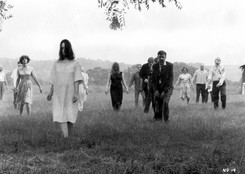
B movie
A low-budget movie, especially one made for use as a companion to the main attraction in a double feature.
-

Bauhaus
The school of art and design founded in Germany by Walter Gropius in 1919, and shut down by the Nazis in 1933. The faculty brought together artists, architects, and designers, and developed an experimental pedagogy that focused on materials and functions rather than traditional art school methodologies. In its successive incarnations in Weimar, Dessau, and Berlin, it became the site of influential conversations about the role of modern art and design in society.
-

Ben-Day dots
An inexpensive mechanical printing method developed in the late 19th century and named after its inventor, illustrator and printer Benjamin Henry Day, Jr. The method relies upon small colored dots (typically cyan, magenta, yellow, and black) that are variously spaced and combined to create shading and colors in images.
-
Binder
The material that holds the pigment together in paint and creates uniform consistency. Binder is often a liquid or an oil, like linseed oil, which is commonly used in oil paint.
-

Biomorphic
Derived from the Greek words bios (life) and morphe (form), the term refers to abstract forms or images that evoke naturally occurring forms such as plants, organisms, and body parts.
-

Black Arts movement
This 1960s and 1970s cultural movement, begun by African American artists and intellectuals based in the United States, arose during a time when Black people around the world were engaged in struggles for liberation and equality—from the Black Power movement to decolonization efforts across the African continent—to promote Black self-determination (or the power to make decisions for oneself) through cultural production. Using literature, theater, and the visual arts, the movement emphasized artmaking rooted in Black history and identity. Work was made for Black audiences and was meant to be easily accessible, both in terms of its figurative content (what it depicted) and where you could find it (public murals, inexpensive prints, etc.).
-
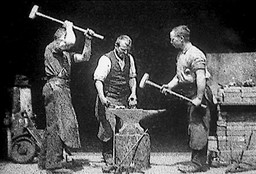
Black Maria
The world’s first film studio, developed in 1892–93 by American inventor Thomas Alva Edison and his assistant and protégé, William K. L. Dickson. Comprised of an armature of wooden planks covered with tar paper, the structure was set on tracks so that it could be moved into optimal sunlight and outfitted with a roof made of panels that could be raised or lowered to control the amount of light coming in.
-

Black Mountain College
A small liberal arts college founded in 1933 by John Rice on a farm in Asheville, North Carolina, and continued under changing leadership until 1957. Courses in painting, weaving, sculpture, pottery, poetry, music, and dance placed the arts at the center of the school’s curriculum. Its program fostered exchange and dialogue between faculty, many of them refugees from World War II Europe, and a younger generation of American artists.
-
Blockchain
A computer system that runs across many traditional computers and is protected by encryption. Blockchains reliably and securely execute programs, known as smart contracts, without the need for trusting any one particular remote computer.
-
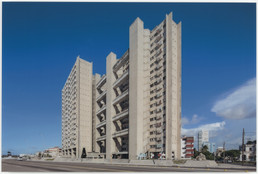
Brutalist Architecture
Brutalism is a mid-20th-century architectural style that emerged in Europe after World War II, when massive reconstruction projects and material shortages demanded more cost-effective building solutions. Architects often eliminated cladding and external ornamentation in favor of exposed building materials such as concrete, and the textures of these raw materials took on an aesthetic quality.English architectural historian Reyner Banham first defined the term in 1955, describing it as a design ethic with materially and socially responsible goals, marked by its formal clarity, structural presentation, and use of raw materials. French artist Jean Dubuffet’s concept of “art brut” and Swiss-French architect Le Corbusier’s use of béton brut (unpolished concrete) inspired the term. Banham credited English architects Alison and Peter Smithson as Brutalism’s pioneers.Brutalist projects spread across the UK, the US, the Eastern Bloc, and postcolonial nations in the Global South in the 1960s and ’70s. The Brutalist design approach began to decline in the early 1980s amid widespread criticism for often monumental scales and an association with large-scale public housing projects and their related bureaucracies. Today, especially in popular culture, the term is often used to summarily describe any large-scale building made of exposed concrete.
-

Built environment
The spaces that human design and actions have shaped. These include infrastructural systems like electricity grids or highway networks, cities, buildings and other structures, landscaped areas, and resource-extraction sites like mines or oil wells. The ways in which these spaces are designed impact our social, cultural, and physical interactions with them. This term came to prominence in the United States and Europe in the 1960s, as the study of relationships between organisms and environments expanded beyond the ecological sciences into such disciplines as anthropology, psychology, urban planning, and architectural design.
-
-
C
-
Calcium white
A white pigment often characterized by a warm tonality and significant transparency
-
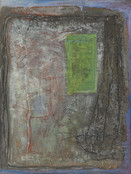
Calligraphy
Calligraphy is the art of creating handwritten text using highly stylized lettering. Its historical origins span millennia and many regions of the world, including East Asia, the Mediterranean, the Middle East, and North Africa. Calligraphic texts may contain letters and/or symbols created using paint, ink, and other, often liquid, materials manipulated with an instrument such as a brush or pen.
-
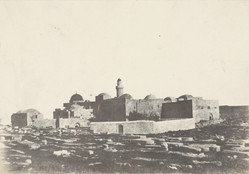
Calotype
William Henry Fox Talbot patented a photographic process in 1841 that led to a stable negative image. The process involves exposing a sheet of sensitized paper in the camera then developing, fixing, and washing it. The stable negative image could be contact printed. Though calotypes are soft and hazy, with visible paper fibers, the invention revolutionized image-making by making it possible to produce multiple prints from one negative image. It was also used as a means of making copies of drawings and documents. The process remained in use through the 1850s, when it was replaced by the albumen silver print.
-

Cameraless photography
Cameraless photographs are created by manipulating light, radiation, and/or chemicals to leave an impression on photo-sensitive paper. Examples include techniques such as cyanotypes (commonly known as blueprints), radiographs (commonly known as X-rays), chemigrams, and photograms. Today, artists continue to experiment with cameraless techniques to find new ways of capturing the world around them.
-

Canvas
A closely woven, sturdy cloth of hemp, cotton, linen, or a similar fiber, frequently stretched over a frame and used as a surface for painting.
-
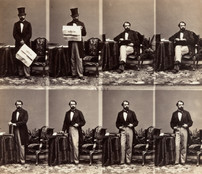
Cartes-de-visite
Small photographs mounted to cardstock, patented in 1854. These “visiting” cards, most often featuring individual or celebrity portraits, were popularly traded and collected in albums.
-

Cast
(verb) To form a material, such as molten metal or plastic, into a particular shape by pouring or pressing into a mold; (noun) something formed in a mold; (noun) a mold or impression taken of an object or of printing type.
-

Celluloid
The first synthetic plastic material, developed in the 1860s and 1870s from a combination of camphor and nitrocellulose. Tough, flexible, and moldable, it was used to make many mass-produced items, including photographic film for both still and motion picture cameras. Despite its flammability and tendency to discolor and crack with age, celluloid was used in motion picture production until the 1930s, when it began to be replaced by cellulose-acetate safety film.
-

Ceramic
-

Charcoal
Among the earliest known drawing materials, charcoal sticks are produced by burning vines or twigs of wood in an airless atmosphere. The black tonality of charcoal varies based on the type of vine or wood it is derived from. Composed of loosely bound, splinter-like particles that sit on the surface, charcoal marks are easily smudged or disrupted. Some artists exploit this quality by manipulating the marks with implements such as erasers, rolled paper stumps, or their fingers to create tonal effects. Charcoal crayons, developed in the 19th century, consist of charcoal powder compressed into sticks that produce a denser, darker mark.
-

Chine collé
A technique, used in conjunction with printmaking processes such as etching or lithography, that results in a two-layered paper support: a tissue-thin paper, cut to the size of the printing plate, and a larger, thicker support paper below. Both the tissue and the support sheet are placed on top of the inked plate and run together through the printing press, sometimes with a thin layer of adhesive between them to reinforce the bond produced through the pressure of the press. The process creates a subtle, delicate backdrop to the printed image. Chine is the French word for China, referring to the fact that the thin paper originally used with this technique was imported from China. In addition to China, paper was also imported from India or Japan. Collé is the French word for "glued."
-
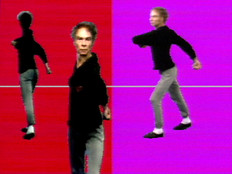
Choreography
The art of creating and arranging a wide range of dance, from classical ballet to experimental performance; a work created by this art. A person who creates choreography is called a choreographer.
-
Chroma
The intensity of a given color
-
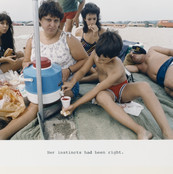
Chromogenic print
The dominant photographic color process of the 20th century is made up of three gelatin layers containing cyan, magenta, and yellow organic dyes. Together, these dyes produce a full-color image. From 1935 to the present day, the chromogenic process has been used to create a range of print, transparency, and film materials. Common branded products such as Kodacolor prints, introduced by Kodak in 1942, use the chromogenic process, as do materials produced by other companies such as Fuji and Agfa. Used by both professionals and nonprofessionals, chromogenic prints, also known as “C prints,” can be unstable and prone to color shift or fading.
-
Cinematographer
The person who sets up both camera and lighting for each shot in a film, the cinematographer has a major influence over the look and feel of a shot or scene, and is often as highly esteemed as the director. Cinematography is the art of positioning a camera and lighting a scene.
-
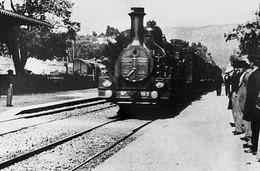
Cinématographe
A combination motion-picture camera, printer, and projector invented by French photographers, photographic equipment manufacturers, and brothers Auguste and Louis Lumière in 1895. The Lumière brothers used the Cinématographe to show their films when they set up the world’s first movie theater, in the back room of a Parisian café. Unlike Thomas Alva Edison and William K. L. Dickson’s electrically powered Kinetograph, the Cinématographe was compact and hand-cranked, so it could be easily transported to shoot films on location.
-

Circle and Square
Cercle et Carré (Circle and Square) was a group founded in Paris in 1929 by Piet Mondrian, Joaquin Torres Garcia, and Michel Seuphor. More than eighty artists from Europe and the Americas working in abstraction came together in this coalition. They advocated a geometric, analytical approach to art making, which they conceived in opposition to Surrealism’s focus on the unconscious and irrational. Key was the notion of “construction,” or logically building a work of art based on, in Joaquin Torres-García’s formulation, “the search for equilibrium, for unity, equivalent relationships between forms, planes, colors, between the simple elements that compose the work of art.”Cercle et Carré edited a magazine of the same name and held one exhibition before it disbanded in 1930. The notion of construction versus the irrational proved important for a generation of artists in South America during the following decades.
-